

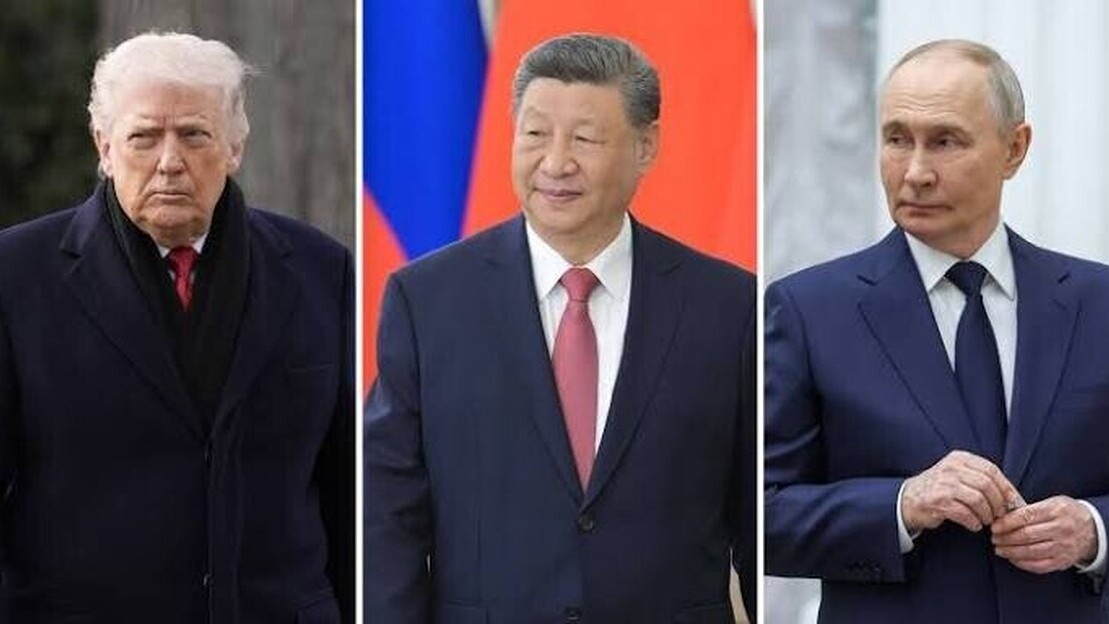
The White House announced on Friday, November 13, a trilateral meeting between Donald Trump, Vladimir Putin , and Xi Jinping, scheduled for Thursday, November 19, in Shenzhen, China. The American, Russian, and Chinese leaders are expected to discuss nuclear disarmament and the situation in Iran. However, Washington maintains that the war in Ukraine will not be on the agenda of this unprecedented diplomatic meeting, which could mark a new stage in relations between the three powers.
The presidents of the United States, Russia, and China are expected to meet on Thursday, November 19, on the sidelines of the Asia-Pacific Economic Cooperation (APEC) summit in Shenzhen. The announcement was made Friday evening by White House Press Secretary Olivia Wales during a briefing with reporters. This meeting, described as the first of its kind between the three leaders, comes amid an international context marked by military tensions, economic rivalry between Washington and Beijing, and uncertainties surrounding relations between Russia and Western powers.
The meeting is expected to be one of the highlights of Donald Trump's trip to Asia. The US president will leave Washington on Monday, November 16, to participate in an Association of Southeast Asian Nations (APEC) summit in the Philippines, before traveling to China. While Washington has officially announced the meeting, Beijing and Moscow had not yet publicly confirmed it as of Saturday morning. Diplomatic preparations are therefore continuing for an event whose scope could extend far beyond the usual APEC economic meetings.
Nuclear disarmament at the heart of the discussions
The issue of nuclear arsenals is expected to be central to the discussions. Donald Trump wants to initiate a debate on reducing the number of nuclear weapons worldwide, given that the United States and Russia possess the two largest stockpiles of nuclear warheads. The expiration, in February 2026, of the last major bilateral strategic arms limitation treaty between Washington and Moscow has heightened concerns about the future of arms control. The White House now hopes to involve China in a broader discussion on this topic.
This ambition, however, faces significant differences. Beijing has so far shown little interest in a trilateral agreement, emphasizing in particular that its arsenal remains considerably smaller than those of the United States and Russia. A US official even warned that Washington did not expect an agreement to be reached at this first meeting. The objective would rather be to open a dialogue that could lead, in the longer term, to further discussions on arms control.
Iran is on the agenda, but not the war in Ukraine.
The situation in the Middle East will be another major issue. According to a senior US official, Donald Trump intends to discuss Iran with Vladimir Putin and Xi Jinping, against a backdrop of persistent tensions surrounding Iranian nuclear activities and US military operations in the region. Russia and China both maintain diplomatic and economic relations with Tehran, giving this discussion a particular strategic dimension.
However, the White House insists that the war in Ukraine should not be discussed at this trilateral meeting. Washington maintains that negotiations concerning the conflict follow a separate process, involving representatives from Ukraine and Russia. This clarification comes as Ukrainian President Volodymyr Zelensky has expressed his concerns about the prospect of major power talks potentially affecting his country's future without his participation. US officials assert their intention to maintain the Ukrainian negotiations within their current framework.
Vladimir Putin returns to a major diplomatic summit
Vladimir Putin's announced participation also represents a significant political event. Since the start of Russia's invasion of Ukraine in February 2022, the Russian president has faced diplomatic isolation from many Western countries. His presence alongside Donald Trump and Xi Jinping would offer him a new opportunity to participate in high-level international discussions. The three leaders have previously maintained bilateral relations, but never in a format that simultaneously brings together the presidents of all three powers.
This summit also comes just over a year after the meeting between Donald Trump and Vladimir Putin in Alaska. However, the two leaders are not expected to hold a separate meeting in Shenzhen. Instead, Donald Trump is scheduled to participate in a working lunch with Xi Jinping on Thursday, marking their fourth meeting since his return to the White House in January 2025. The bilateral discussions are expected to focus on economic relations and strategic technologies, against a backdrop of increased competition between the world's two largest economies.
A symbolic encounter with still uncertain consequences
Beyond the officially announced topics, this meeting could illustrate a shift in the international diplomatic balance. The United States, Russia, and China wield considerable influence over military, energy, and economic issues. Their ability to engage in dialogue on common challenges could help reduce some tensions, but their interests remain deeply divergent, particularly regarding European security, trade, and the organization of the international order.
The White House is seeking to present this meeting as an opportunity to engage in direct dialogue between the major nuclear powers. For China, the host country, the simultaneous presence of the American and Russian leaders could also enhance the diplomatic visibility of the APEC summit. As for Vladimir Putin, this meeting would allow him to reaffirm Russia 's place in global strategic discussions. However, no concrete results are guaranteed.
On Thursday, November 19, all eyes will be on Shenzhen, where Donald Trump, Vladimir Putin, and Xi Jinping are expected to appear together for an exceptional diplomatic meeting. While nuclear arsenal reduction and the situation in Iran are the main topics announced, the significance of this meeting will also lie in the simple fact of bringing the three leaders together. It remains to be seen whether this initial encounter will pave the way for lasting negotiations or whether it will remain primarily a symbolic event in a particularly tense international context.







Respond to the article
Be the first to comment on this article.