

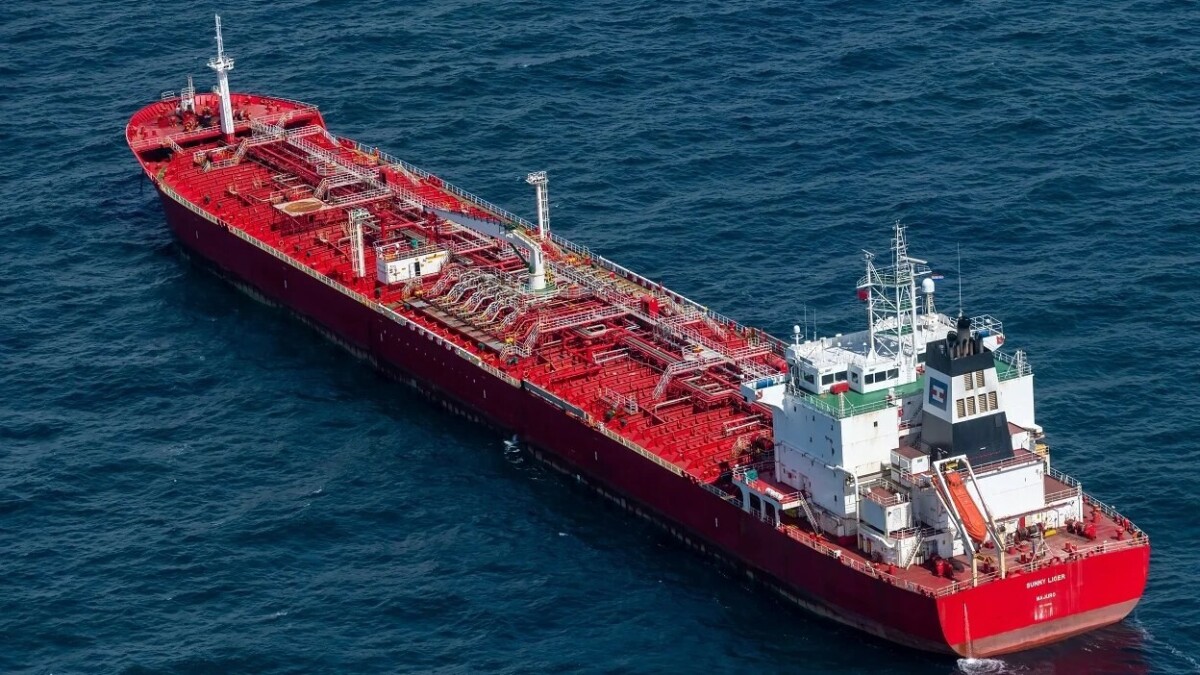
Several ships carrying Russian diesel bound for the United States reportedly changed course, one heading to Brazil, another to the Mediterranean. Moscow disputes these reports, while U.S. lawmakers threaten severe sanctions against anyone attempting to unload this cargo.
Departing from the Baltic port of Primorsk last month with the declared destination of the U.S. East Coast, several sanctioned tankers carrying Russian diesel reportedly altered their routes. Data from maritime analysis company Kpler and the maritime traffic tracking site MarineTraffic.com indicate that one vessel is now heading to Brazil and another to the Mediterranean. A third ship, still in the North Atlantic, replaced New York as its destination with the vague note “under orders,” without specifying an unloading port.
These movements come in the wake of a controversial agreement reached between Donald Trump and Vladimir Putin. The U.S. president eased sanctions on Russian oil last month to secure a direct delivery of diesel to the United States, where fuel prices have risen sharply. The agreement, covering some 300,000 metric tons of diesel, sparked strong disapproval in Ukraine and Europe, especially since U.S. sanctions against Russia largely remain in place and the volume involved represents only a fraction of U.S. daily consumption.
On the Russian side, denials are categorical. Kirill Dmitriev, Russian envoy and negotiator, stated on the social network X that the tankers “continue their route” to the United States, calling contrary information “false.” Kremlin spokesperson Dmitry Peskov refused to comment on delivery details, describing them as a “commercial” matter that cannot be made public, while assuring that “all the diesel will find its buyers.”
In the United States, the agreement faces growing political and legal resistance. New Jersey Governor Mikie Sherrill sent a letter this week to port operators and oil terminals in her state warning that “any attempt to profit from illegal Russian fuel trade will be severely sanctioned.” She contests the legitimacy of the authorization granted by the Treasury Department, arguing that the Trump administration does not have the power to circumvent the import ban passed by Congress more than four years ago.
Connecticut Senator Richard Blumenthal also warned shipping companies in a letter dated October 27, reminding them that “no president can unilaterally repeal a law” and that the license granted by the executive would not exempt them from their “legal and moral responsibility.”









Respond to the article
Be the first to comment on this article.