

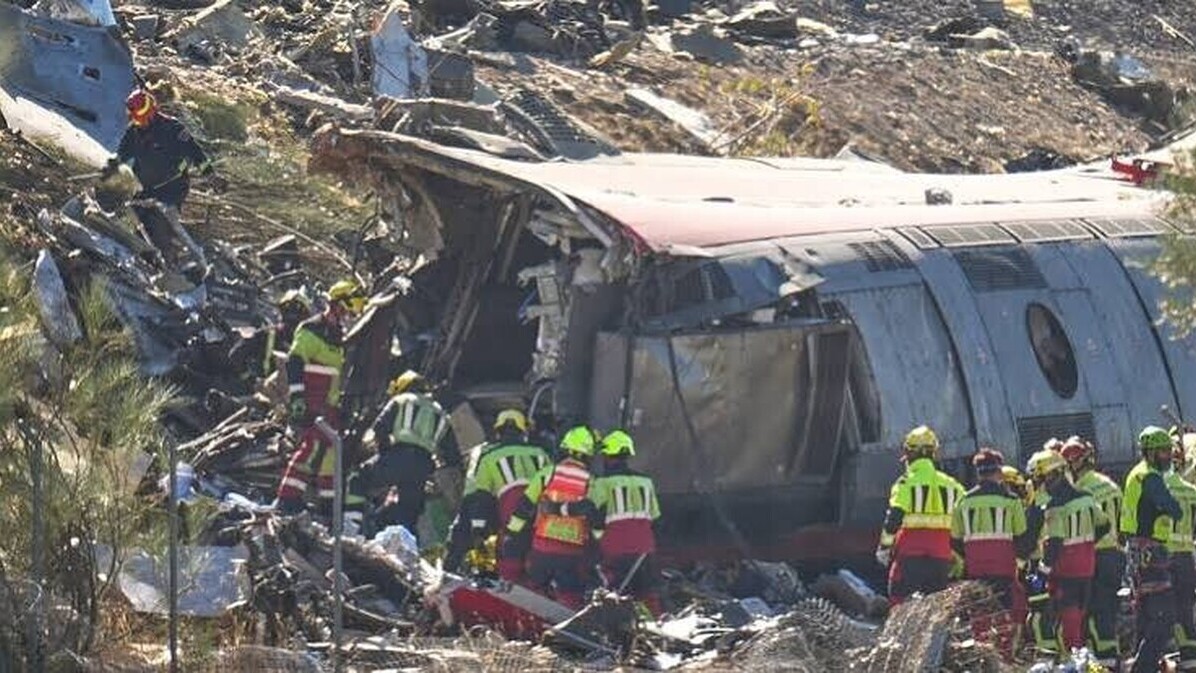
The rail tragedy that occurred on October 28 near Urda, in the Spanish province of Toledo, now takes on a European judicial dimension. The European Public Prosecutor’s Office announced on Friday, November 6, the opening of an investigation into possible irregularities in the use of EU funds intended to modernize the high-speed rail line connecting Madrid to Seville. This decision follows an accident that claimed 69 lives and caused deep emotion in Spain. The investigations focus notably on funds allocated to infrastructure renovation, safety equipment, signaling, and railway communication systems.
Investigators are seeking to determine whether the amounts granted by the European Union were indeed used in accordance with their intended purpose. Agents from the Central Operational Unit of the Spanish Civil Guard have been mobilized to collect documents from several institutions, including Adif, the public manager of railway infrastructures, the National Railway Safety Agency, and the Spanish Court of Auditors. The procedure was initiated by the European Public Prosecutor’s Office without the need for a prior complaint. At this stage, no fraud has been judicially established, and financial investigations do not allow concluding a link between possible irregularities and the technical causes of the accident.
Two disasters in less than a year on the same line
This new investigation takes place in a particularly sensitive context for the Spanish railway network. On January 18, 2026, another accident near Adamuz, in Andalusia, had already caused the death of 46 people. In March, the European Public Prosecutor’s Office had opened a first procedure concerning the use of EU funds allocated to the maintenance of this section of the Madrid-Seville line. The two disasters, occurring nine months apart on the same railway axis, have caused a total of 115 deaths. The repetition of these tragedies heightens questions about the state of infrastructures, modernization programs, and mechanisms for controlling public investments.
The financial stakes are considerable. In June 2024, the European Commission granted more than 111 million euros to contribute to the renovation of this historic connection, inaugurated in 1992. These investments were intended notably to replace some aging equipment and improve the network’s reliability. The investigations will need to establish whether the procedures for awarding, executing, and justifying expenses complied with European rules. Meanwhile, the Spanish judiciary continues its own inquiries to determine the exact circumstances of the Urda disaster. For the authorities, these separate procedures now constitute a major transparency issue, as travelers’ confidence in the safety of Spanish rail transport is weakened.










Respond to the article
Be the first to comment on this article.