

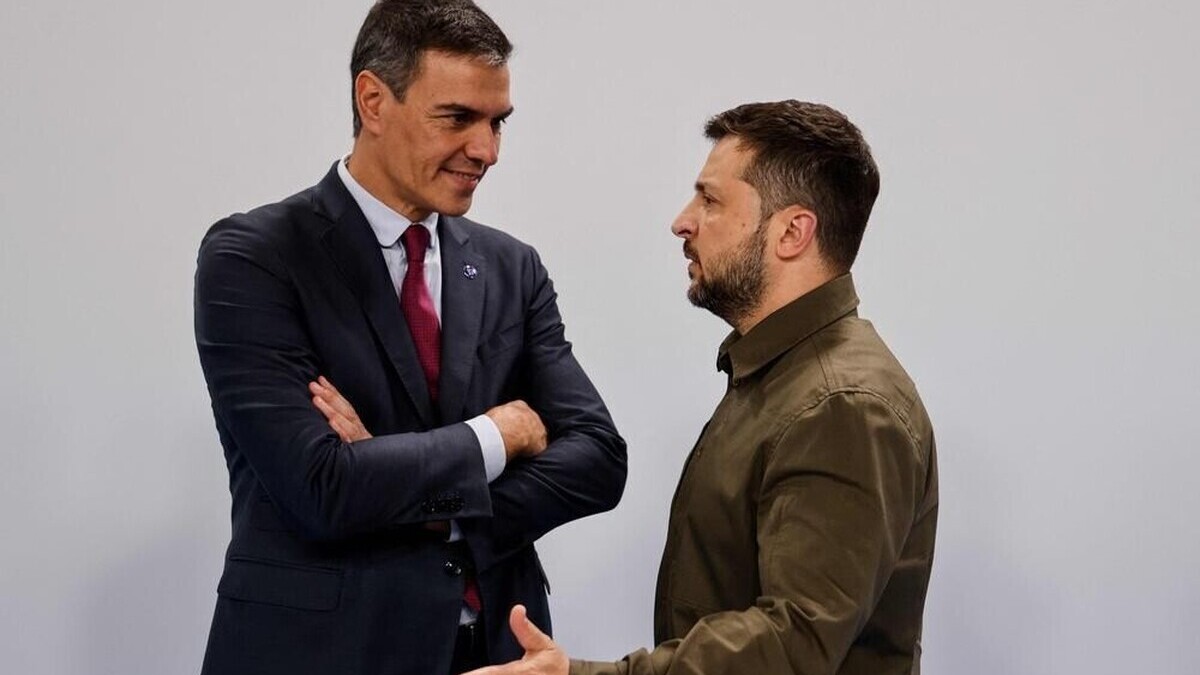
On the sidelines of the Ibero-American Summit, the Ukrainian president made a direct appeal to Latin American countries and Spain to obtain energy equipment compatible with Ukrainian infrastructure, ravaged by Russian strikes.
Volodymyr Zelensky made Madrid an unexpected diplomatic stepping stone, using the 30th Ibero-American Summit to broaden support for Ukraine far beyond the European continent. Addressing Spanish, Portuguese, and Latin American leaders gathered in the Spanish capital, the Ukrainian president made a specific request: transformers, electrical cables, generators, and electronic equipment to repair an energy network systematically destroyed by Russian bombing.
Zelensky specifically named the countries he is requesting assistance from. Brazil, Mexico, Argentina, and Colombia are being asked to supply transformers; Chile, electrical cables; and Spain, electrical equipment and generators. The Ukrainian head of state emphasized a crucial technical point: the delivered equipment must be compatible with the standards of the Ukrainian electrical grid, a constraint that complicates supplies and, according to him, justifies governments establishing direct contact with manufacturers to expedite delivery times.
Zelensky's presence in Madrid also allowed him to hold numerous bilateral meetings. He met with UN Secretary-General António Guterres , participated in discussions alongside Spanish Prime Minister Pedro Sánchez, Honduran President Nasry Asfura, and other leaders attending the summit. An audience at the Zarzuela Palace with King Felipe VI, in the presence of Spanish Defense Minister Margarita Robles, rounded out this busy schedule.
This call for broader transatlantic solidarity reflects a Ukrainian strategy to diversify its support in the face of Russian strikes that continue to target critical infrastructure. By placing the energy issue at the heart of discussions at a summit traditionally focused on Ibero-American relations, Zelensky succeeded in bringing the Ukrainian crisis into a diplomatic agenda that was, a priori, foreign to him.





Respond to the article
Be the first to comment on this article.