

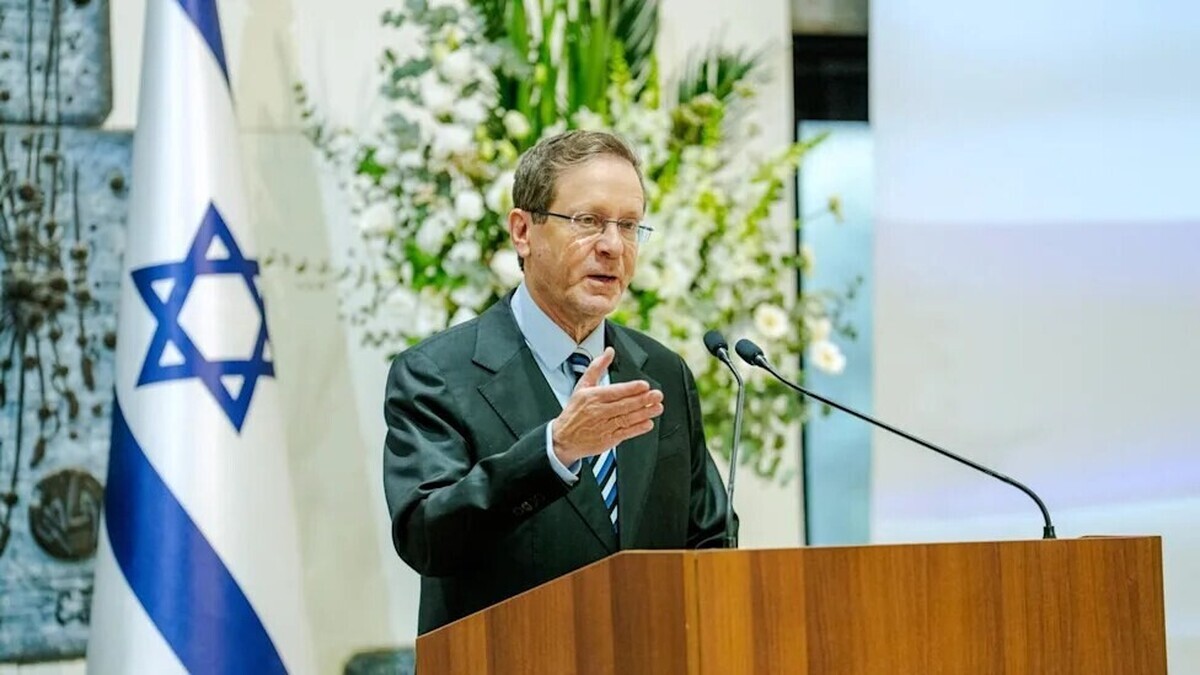
After legislative elections with no clear winner on October 27, Israeli President Isaac Herzog opened consultations with political parties on Wednesday to appoint someone tasked with forming a coalition government, amid tensions surrounding allegations of foreign interference.
The result of the Israeli legislative elections on October 27 left no camp in a position to govern alone. Benjamin Netanyahu’s Likud and its far-right and ultra-Orthodox allies won 53 seats in the Knesset, where the majority threshold is set at 61 out of 120. The centrist bloc led by Gadi Eisenkot, gathered around his party Yashar and three opposition formations, won only 48 seats. Ultimately, two Arab-Israeli alliances, the United Arab List and the Joint List, hold the key to the election with a total of 19 seats, an unprecedented score driven by strong mobilization of Arab voters.
However, this potential role as arbiter faces a significant political obstacle: with one exception, all Jewish parties had excluded before the election any alliance with these groups to form a government. This situation places President Herzog in a delicate position, as he has broad discretion to appoint the parliamentarian he deems best able to build a majority, without being required to choose the leader of the party that came first.
On Wednesday morning, the president received the official certification of the results during a ceremony in Jerusalem from the chairman of the Central Elections Committee, Judge Noam Sohlberg. The latter warned against attempts to destabilize the democratic process. “In recent days, we have heard voices trying to cast doubt on the election results and undermine their legitimacy. This is a real danger,” he said, recalling that “the will of the electorate obliges us all.”
Opening the consultations in the evening, Herzog sent a message of pragmatism to party leaders. “To avoid a new electoral cycle and to build a stable and good government for the people of Israel, I expect factions and their representatives to understand that, in the current reality, not all commitments and promises can be kept,” he stated. Once appointed, the chosen parliamentarian will have 28 days to form a government, with a possible extension of 14 days.
The election is also marred by accusations of foreign interference, which the Shin Bet, the internal security service, is tasked with investigating. Judge Sohlberg mentioned before the Committee elements pointing to “a widespread phenomenon involving the influx of substantial funds into Israel from foreign states,” some of which are hostile. Last week, Israeli media reported that an allegation of Qatari funding aimed at boosting participation in Arab communities had been submitted to the Committee. Doha categorically denied these accusations.
These allegations have fueled a particularly intense war of words. Far-right National Security Minister Itamar Ben-Gvir demanded the arrest and interrogation of all Arab party leaders. The chairman of the Joint List, Yousef Jabareen, accused Ben-Gvir and the prime minister of trying to “steal the election from the people.” Eisenkot, for his part, denounced on Tuesday an attempt by Netanyahu and Likud to “carry out a real pogrom against democracy and the rule of law,” after Attorney General Gali Baharav-Miara refused to authorize the interrogation of four Arab lawmakers due to insufficient evidence.
Herzog took care to condemn verbal abuses targeting Arab citizens of Israel, who represent about one-fifth of the population. “I condemn the rudeness and racist expressions we have heard recently. They have no place towards any community in Israel,” he declared, while expressing confidence in the Shin Bet’s ability to complete its investigations.




Respond to the article
Be the first to comment on this article.