

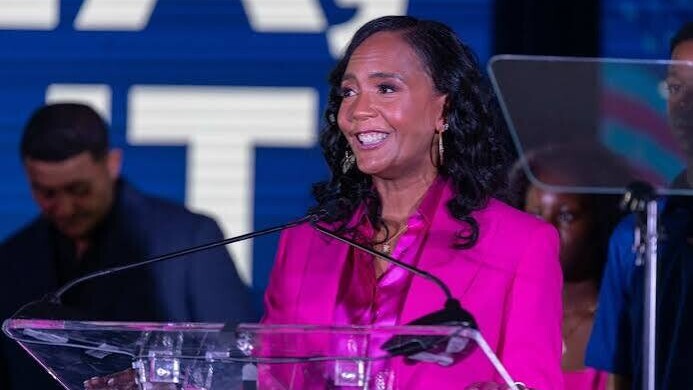
The U.S. midterm elections on November 3, 2026, were marked by several historic firsts for minorities. Chris Pappas became the first openly gay man elected to the Senate, while Keisha Lance Bottoms will be the first Black woman to govern a U.S. state. These results reflect a diversification of political representation in the United States, among both Democrats and Republicans.
Beyond the balance of power between the two major American parties, the 2026 midterm elections will be remembered for several unprecedented victories. In New Hampshire, Democrat Chris Pappas won his contest against Republican John Sununu to succeed Senator Jeanne Shaheen. At 46 years old, this representative since 2019 becomes the first openly gay man to join the United States Senate. His victory represents another step forward in the representation of LGBT individuals within federal institutions. Until now, no male figure who had publicly disclosed his homosexuality had served in this chamber of Congress.
In Georgia, former Atlanta mayor Keisha Lance Bottoms also achieved a historic breakthrough. The Democrat defeated Republican candidate Rick Jackson and becomes the first Black woman elected governor in U.S. history. She will also be the first woman and first Black person to lead this southern state. Former mayor of Atlanta from 2018 to 2022, she later held positions within the Joe Biden administration. Her campaign notably focused on healthcare access, education, and household economic challenges. Her election ends more than two decades of Republican dominance at the head of Georgia.
Historic victories for women from minority backgrounds
In New Mexico, Deb Haaland was elected governor against Republican Gregg Hull. A member of the Laguna Pueblo Native American community, she becomes the first Indigenous woman to hold the office of governor of a U.S. state. This victory continues a political career already marked by several firsts. In 2018, she was one of the first two Native American women elected to the House of Representatives, before becoming, in 2021, the first Indigenous person appointed as a federal government minister. She then led the Department of the Interior under President Joe Biden. Her election is a particularly symbolic event for Native American communities, long marginalized in American political institutions.
Minnesota also elected Peggy Flanagan to the Senate, making her the first Native American woman to join this institution. From the White Earth Ojibwe nation, this Democrat previously served as her state’s lieutenant governor. In Texas, Gina Hinojosa won a notable victory against outgoing Republican Governor Greg Abbott. She becomes the first woman of Latino origin elected to lead this state. In California, Xavier Becerra was elected governor, becoming the first Latino elected to this position in the state’s modern history. These results illustrate the evolving representation of various communities within regional executives.
Firsts also among Republicans
These advances are not limited to the Democratic Party. In Florida, Republican Byron Donalds won the gubernatorial election, succeeding Ron DeSantis, who was ineligible for re-election. Supported by Donald Trump, he becomes the first Black governor in Florida’s history. A former member of the House of Representatives, Donalds campaigned on fiscal issues, data center regulation, and continuing the conservative directions of the Republican administration. His victory underscores that diversification of the American political class is observed in both major parties, even though their programs and positions on social issues remain deeply different.
In Wisconsin, Democrat David Crowley was also elected governor, becoming the first African American to lead this state. In Ohio, Amy Acton won the election against Republican Vivek Ramaswamy and becomes the first woman to hold the governor’s office. A physician by training, she became known for her role in managing the Covid-19 pandemic within Ohio’s health authorities. These elections reflect a gradual evolution in the profiles of American political leaders. Several positions long held almost exclusively by white men will now be occupied by women or minority representatives.
An evolving American political representation
The U.S. Senate is also experiencing other significant changes. In Michigan, Democrat Abdul El-Sayed won a highly contested election against Republican Mike Rogers, becoming the first Muslim elected to the upper chamber of Congress. A former public health official, he made healthcare access a priority of his campaign. In Illinois, Juliana Stratton also won a Senate seat. She will join Tammy Duckworth, making this state the first represented simultaneously by two senators from racial minorities. These victories occur amid increased political participation from several historically underrepresented communities.
However, these results do not mean that representation inequalities have disappeared. Women and certain minorities remain proportionally less present in major American political institutions than in the general population. The victories recorded in the 2026 elections nevertheless represent important milestones in the country’s electoral history. They also show that candidates from groups long marginalized in positions of power can now access the highest responsibilities, in states with very different political traditions. Beyond their symbolic significance, these newly elected officials will now be expected to deliver on their economic, social, and institutional policies. Their terms will allow assessment of how this evolution in representation translates into the concrete exercise of power.









Respond to the article
Be the first to comment on this article.