

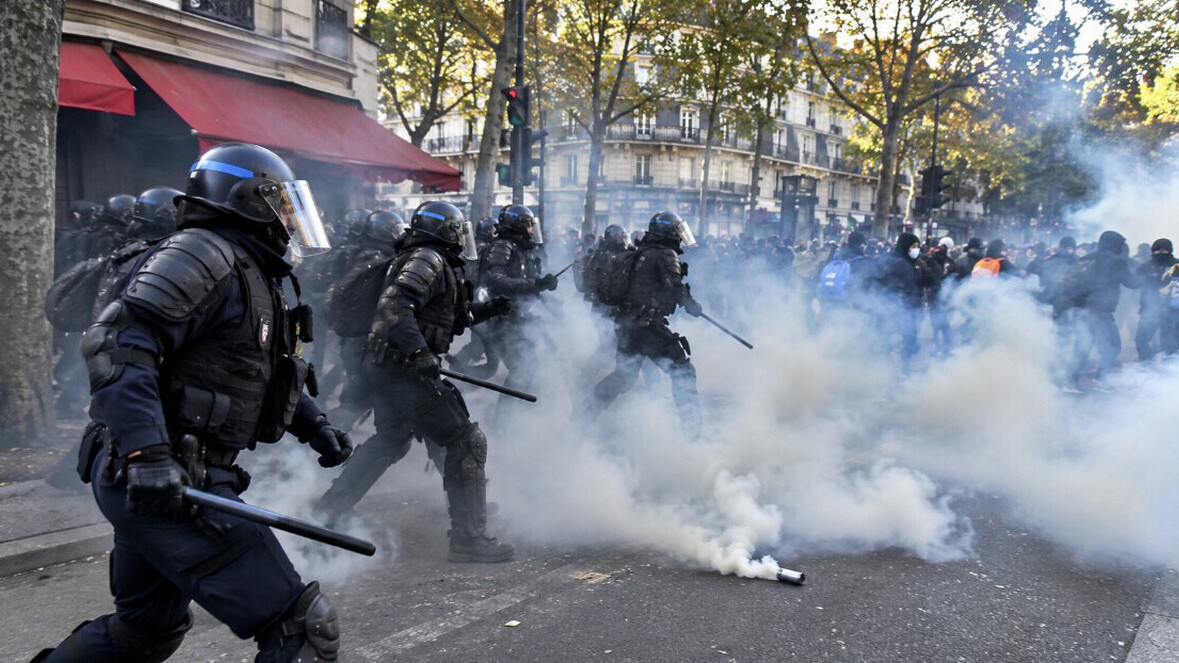
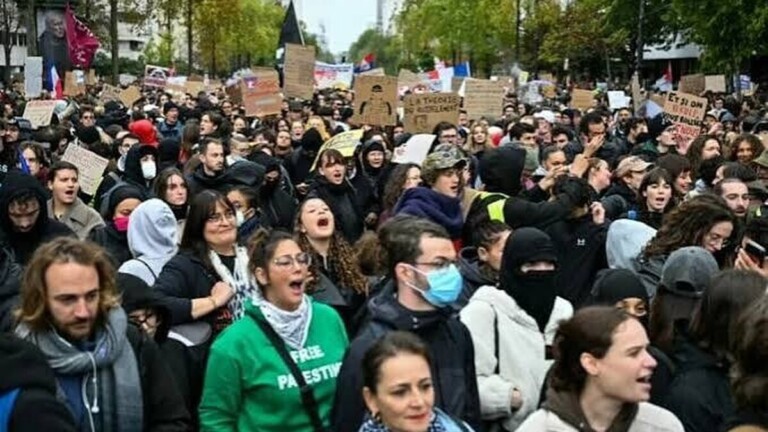
Thursday's day of strikes and demonstrations brought together nearly 600.000 people across France, according to a preliminary count from the Interior Ministry. Large marches took place in Paris, Marseille, Lyon, Toulouse, Nantes, Bordeaux, and numerous other cities to demand wage increases, defend public services, and denounce the erosion of purchasing power. While most of the gatherings were peaceful, several cities experienced clashes. In Lyon, 40 people were injured, including 34 members of the security forces, and 24 people were arrested. In Paris, Raphaël Glucksmann left the demonstration after being confronted by activists.
Nearly 600.000 protesters across France
The nationwide mobilization brought together several hundred thousand employees, civil servants, teachers, students, high school students, and retirees. More than 220 actions had been announced by the authorities, while the CGT union had counted approximately 260 planned rallies across the country.
By midday, the Interior Ministry had already counted 270.000 demonstrators in 180 marches, not including Paris . The CGT, for its part, claimed more than 250.000 participants in 73 cities at 13 p.m., before including numerous demonstrations organized in the afternoon.
Trade unions are demanding wage increases, additional resources for public services, measures to promote employment, and improved working conditions. In the national education system, demands also concern staffing levels, resources allocated to schools, and reforms to the education system.
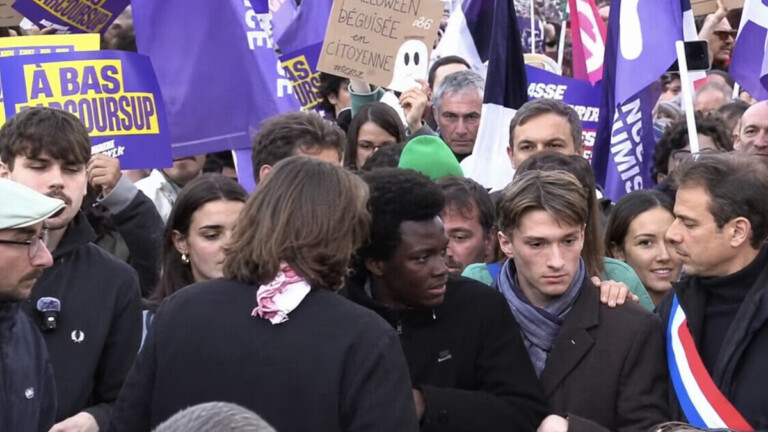
In Paris, Raphaël Glucksmann was confronted by activists.
In the capital, the main procession set off from Place de la République around 14:10 p.m., heading towards Nation, after a minute of silence in tribute to the victims of the racist attack in Trappes.
The demonstration was also marked by political tensions. Raphaël Glucksmann, the Place Publique candidate for the 2027 presidential election, was confronted by activists hostile to his presence. The politician eventually left the demonstration after being blocked in the Place de la République.
Earlier in the day, he had responded to criticism of his participation in the rally: "If there are political activists who are hostile to our presence, I couldn't care less."
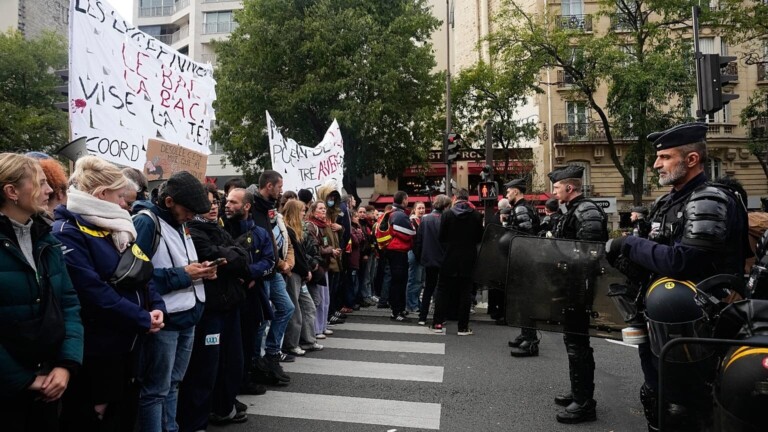
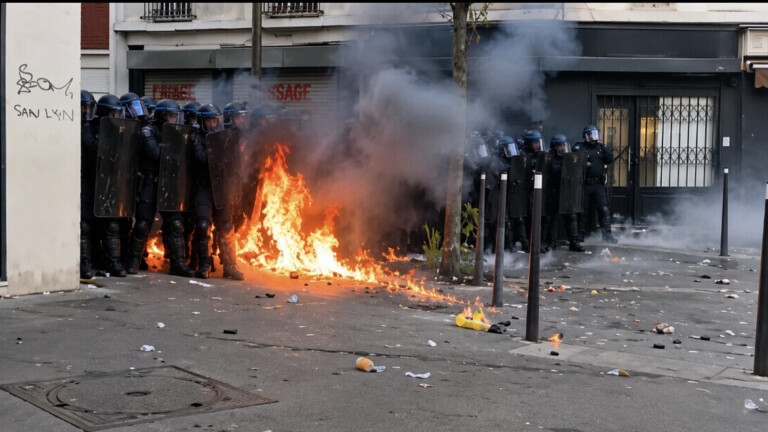
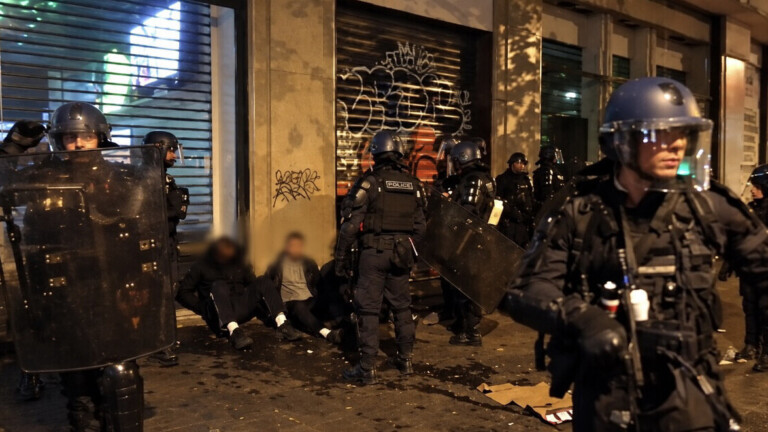
Tensions also arose between groups of protesters and law enforcement in several parts of the capital. Unauthorized marches were dispersed or redirected towards Place de la République. Tear gas was used during clashes with demonstrators.
The route of the Parisian march had been the subject of discussions between the unions and the police headquarters. Several businesses located along the route had boarded up their windows with wooden panels for fear of damage.
In Lyon, 40 people were injured, including 34 police officers and gendarmes, and 24 were arrested.
Lyon saw one of the highest casualty figures of the day. According to the Rhône prefecture, the clashes left 40 people injured, including 34 members of the security forces.
A group of approximately 500 people, organized as a black bloc, positioned themselves at the front of the procession. Individuals committed acts of vandalism and clashed with police and gendarmes tasked with securing the demonstration.
Five shops were damaged. The violence led to 24 arrests.
The demonstration had nevertheless gathered a vast majority of peaceful participants, who came in particular to support the high school student mobilization and defend public services. Authorities reported approximately 20.500 demonstrators in the streets of Lyon.
The route had been changed before the demonstration, as the prefecture had prohibited passage through the city center. This decision was upheld by the administrative court.
Marseille, Toulouse, Bordeaux, Nantes: a mobilization in the major cities
In Marseille, unions announced a particularly large turnout. The CGT union in the Bouches-du-Rhône region claimed 150.000 demonstrators, a figure distinct from the official count. The march, initially planned to end at Place Castellane, was extended to Boulevard Périer due to its size.
In Toulouse , the day was marked by tensions from the morning onward around several schools. A fire broke out at a high school, leading to an evacuation. The route of the demonstration also sparked a standoff between the unions and the prefecture, which had banned the march through certain streets in the city center.
In Bordeaux , an agreement was finally reached on a route allowing demonstrations in the city centre, while maintaining restrictions in the main shopping streets.
In Nantes, large marches also took place, with a strong presence of young protesters. Rallies were also organized in Lille, Rennes, Strasbourg, Clermont-Ferrand, Caen, Chambéry, Bayonne, Toulon and Saint-Brieuc.
In Rennes , incidents of pétanque balls being thrown were reported. In Pau and Orléans, projectiles were aimed at staff members and law enforcement officers.
In Tours, 16.200 demonstrators according to the police
In Tours, the demonstration brought together 16.200 people according to the police, compared to more than 20.000 claimed by the unions. Turnout exceeded that of the October 31st rally, which had attracted approximately 12.000 people.
The procession reached the town hall peacefully. A large contingent of riot police had been positioned at the entrance to Rue Nationale, the main shopping street in the city center.
However, a few mortar shots were heard near a small group of masked protesters, without disrupting the overall peaceful nature of the gathering.
Schools, transport, civil service: disruptions in several sectors
The strike also disrupted the operation of several public services. In the national civil service, the strike rate reached 9,89% at midday, compared to 4,60% in local government and 3,93% in hospital services.
In the national education system, schools were closed or disrupted. Teachers and high school students participated in marches to demand more resources and denounce job cuts and teaching conditions.
At SNCF, the four main unions had called for a strike. Several suburban train lines experienced service cancellations, particularly in the Île-de-France region . RATP services remained largely normal on the metro, bus, and tram lines, with the exception of some disruptions on the RER B.
The Eiffel Tower was also closed due to the social movement.
70.000 police officers and gendarmes mobilized throughout the country
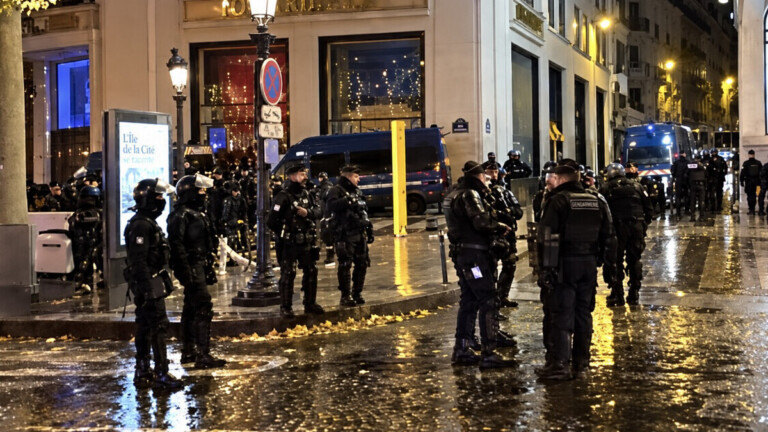
Faced with the risks of violence and damage, the Ministry of the Interior had deployed 70.000 police officers and gendarmes across the entire territory.
The deployment included 110 mobile force units, specialized personnel from RAID, BRI and GIGN, as well as drones, helicopters, canine units, mounted brigades, 26 Centaure armored vehicles and about fifteen water-launching vehicles.
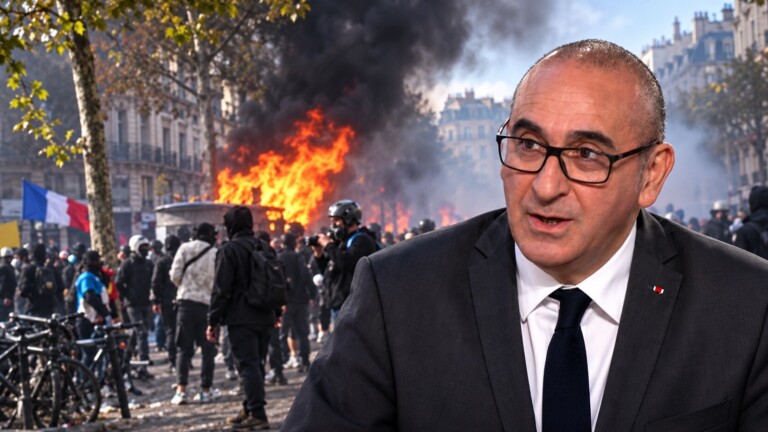
The Minister of the Interior, Laurent Nuñez , had announced the day before a response of "extreme firmness" in the event of violence.
The general secretary of the CGT, Sophie Binet, had for her part called on the government to respond to wage and social demands. "It is not with security measures that we will end the demonstrations, it is by responding to the demands ," she had declared.
The unions are now considering further action, with calls to continue the strikes and blockades starting this Friday, followed by more demonstrations on Saturday. The national tally of arrests and injuries remains likely to change as the latest gatherings conclude.


Respond to the article
Be the first to comment on this article.