

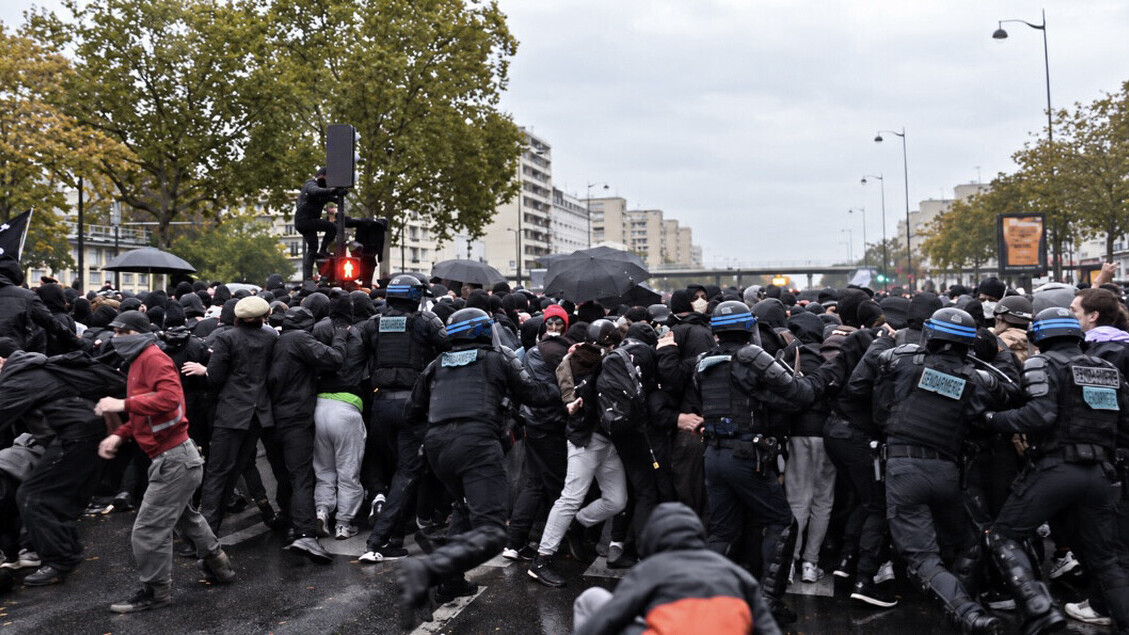
France experienced another day of social mobilization this Saturday, October 24. A week after the violence and looting of October 17, several hundred thousand demonstrators marched in major cities to protest the high cost of living, the difficulties facing the education system, and the policies of Emmanuel Macron . The Ministry of the Interior counted 410,000 participants nationwide, while the CGT union estimated nearly 800,000. Despite an exceptional police presence and numerous bans on gatherings, clashes broke out in Paris, Marseille, Nantes, and several other cities.
410,000 demonstrators according to the Interior Ministry, nearly double that according to the CGT union
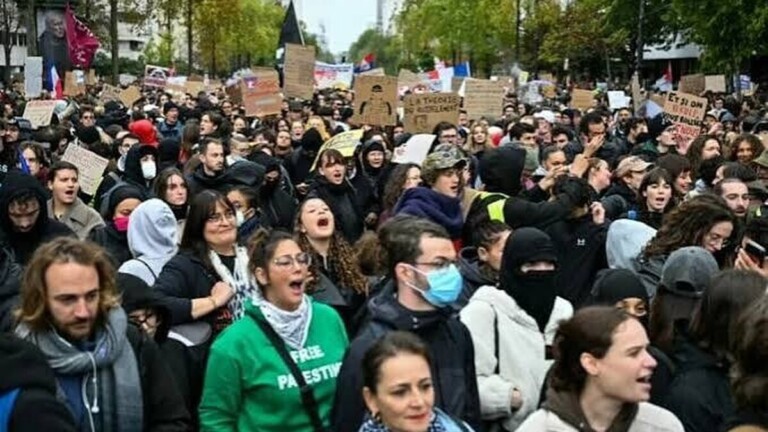
The figures confirm the scale of the mobilization. The Ministry of the Interior announced 410,000 demonstrators nationwide, while the CGT claimed nearly 800,000. In Paris , the difference is also considerable: the police prefecture counted 110,000 people, compared to 250,000 for the union.
In Bordeaux, authorities counted 15,500 demonstrators, compared to 60,000 according to the CGT, FSU, and FO unions. In Marseille , the prefecture announced 17,000 participants, while several thousand people were still arriving at the march's endpoint.
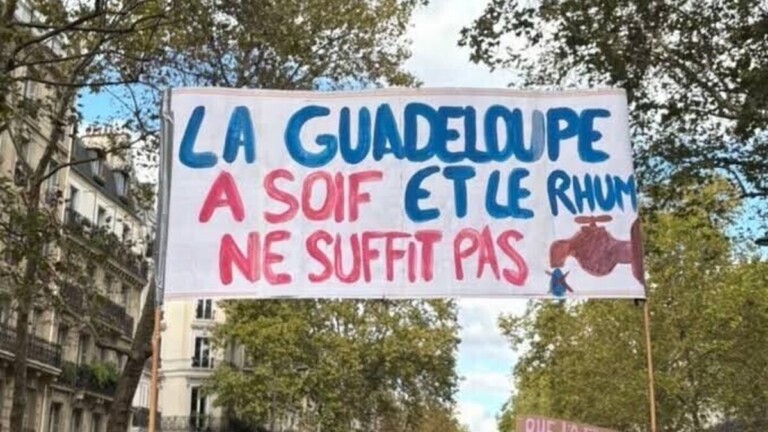
This second major day of mobilization brought together high school students, university students, workers, labor unions, and Yellow Vest protesters. Their demands focused on purchasing power, resources allocated to the national education system, public services, and social inequality.
Paris: 110,000 protesters, tear gas and water cannons
In the capital, the initially planned route between Bastille and Nation was banned by the police prefecture. Organizers had to take a route linking Porte d' Italie to Porte de Vincennes after their appeal to the administrative court was rejected.
The procession, which set off around 14 p.m., proceeded relatively calmly for several hours. However, tensions erupted upon arrival at the Porte de Vincennes, where projectiles were thrown at the police. Officers responded with tear gas and a water cannon to disperse the groups involved.
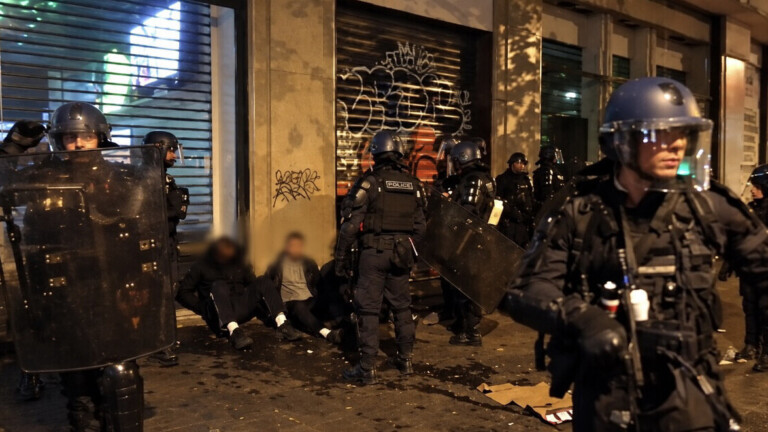
The Paris police prefecture announced over 3,000 checks and 65 arrests in Paris. Among the reasons cited were suspicions of carrying weapons and participation in groups likely to commit violence or vandalism.
Toulouse: A protester seriously injured in the hand
One of the most serious incidents of the day occurred in Toulouse . A protester was seriously injured in the hand during clashes with police in the Arènes district, at the time of the dispersal of a gathering.
According to a first responder at the scene, the victim suffered severe injuries to his right hand, with several fingers torn off, after a nearby device exploded. The exact circumstances of the explosion are still under investigation.
The Haute-Garonne prefecture confirmed the seriousness of the injury and announced an investigation under judicial authority. The origin of the device and any potential liability had not been established at the time of this report.
Marseille, Nantes, Bordeaux: new clashes
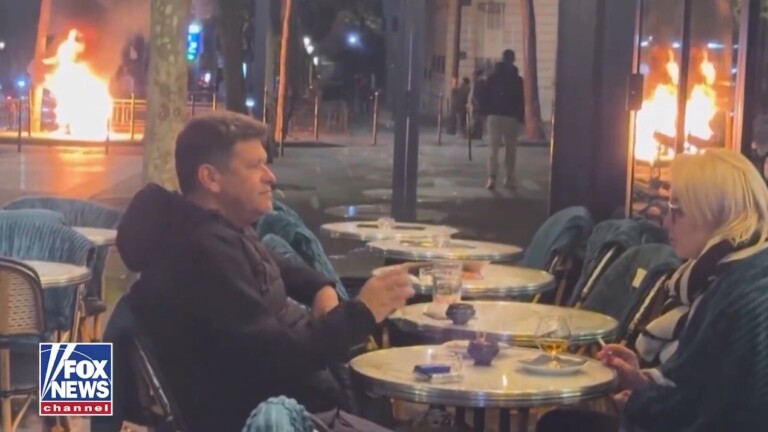
In Marseille, tensions were concentrated around the Porte d'Aix at the end of the demonstration. Groups attempted to break through a line of riot police blocking access to certain streets. Law enforcement used tear gas, while construction barriers were used as cover from gunfire. A rubbish fire also required the intervention of the Marseille fire brigade.
In Nantes , clashes broke out between police and demonstrators when participants attempted to reach the city center, despite a ban on gatherings. The procession, which had set off from Île de Nantes, encountered law enforcement as it crossed the Loire River.
In Bordeaux , the demonstration ended largely peacefully, but tear gas was used in Place de la Bourse to disperse some participants. In Lille, traffic restrictions and police blockades of the route also caused tension, though without clashes comparable to those in Paris or Marseille.
Nearly 1,000 arrests and 70,000 police officers mobilized
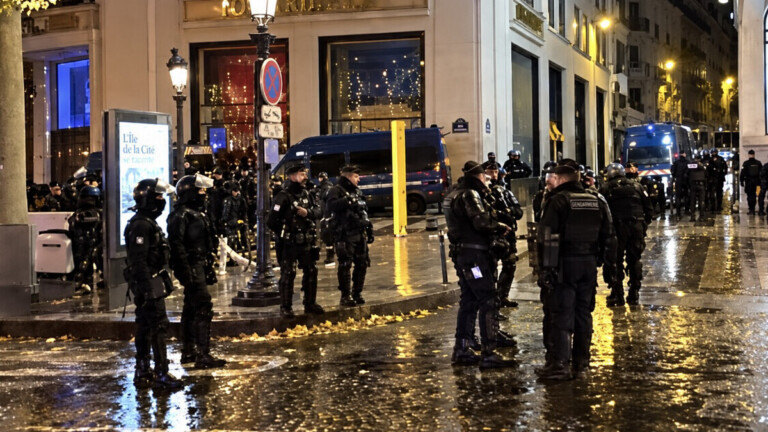
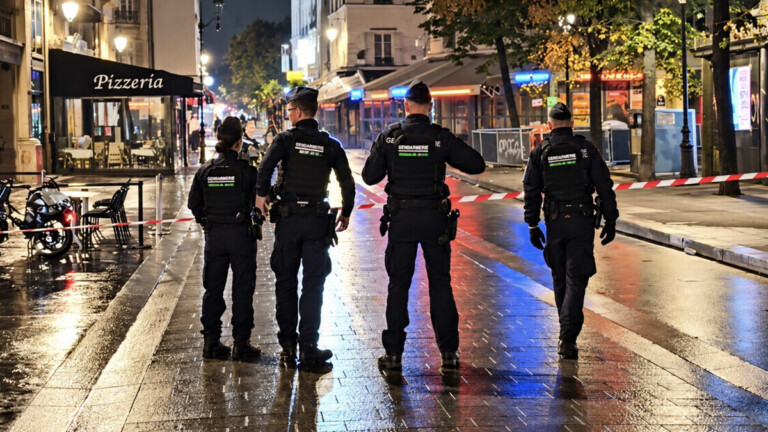
The government deployed approximately 70,000 police officers and gendarmes across the country, supported by specialized units, Centaure armored vehicles, water cannons, and air assets. Soldiers from Operation Sentinelle were also mobilized to protect certain sensitive sites.
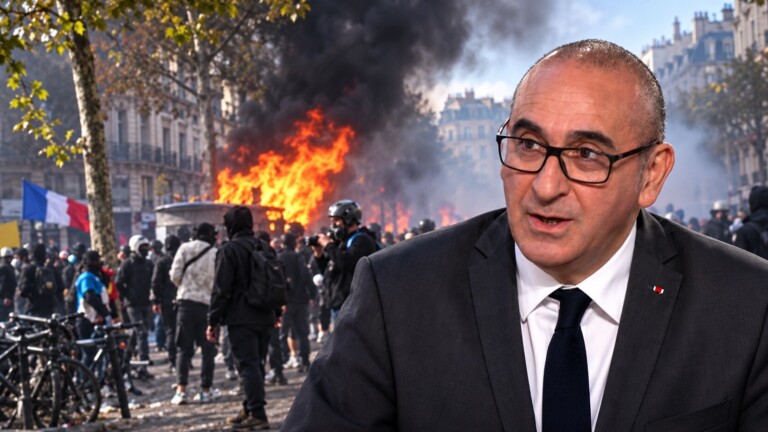
At 1 p.m., Interior Minister Laurent Nuñez announced 135 arrests. The national tally then approached 1,000 arrests throughout the day. Authorities notably carried out preventative checks and seized objects that could be used as weapons.
In Lyon, approximately 10,000 demonstrators were counted despite the ban on gatherings. Law enforcement carried out numerous dispersal operations to prevent the marches from reaching the Presqu'île. In Rennes , looting was reported on Rue d'Orléans, while police used a water cannon and tear gas in Place de la République.
The violence was less severe than on October 17th, but there was further damage.
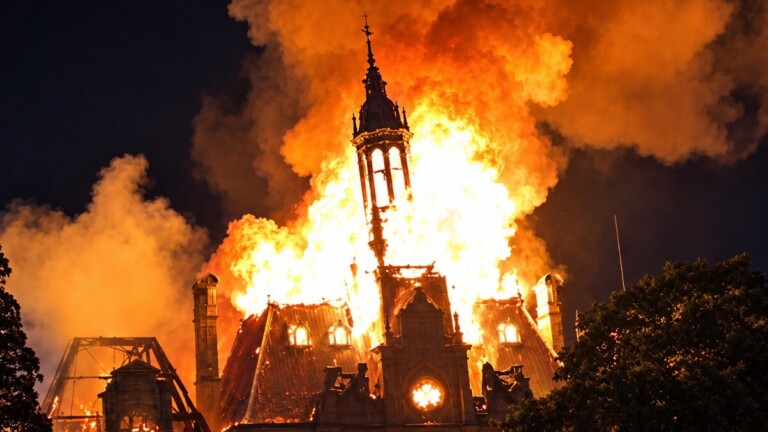
The mobilization on October 24 did not replicate the scale of the violence of the previous Saturday. On October 17, authorities counted approximately 550,000 demonstrators and more than 2,700 arrests, in a day marked by fires, looting, and significant destruction of businesses and public buildings.
On Saturday, the marches were mostly peaceful, but incidents were reported in several towns and cities. Fires, projectiles being thrown, clashes with police, and vandalism accompanied some of the dispersals.
The restrictions imposed by the prefects have also fueled the protests. As announced before this latest day of mobilization, Emmanuel Macron had called for stricter security measures, including against certain officially declared marches . Several labor unions and civil liberties organizations denounced the bans on demonstrations and the restrictions on access to city centers.
New demonstrations announced for October 31st and November 5th
Despite restrictions and arrests, organizers intend to continue the mobilization. The Yellow Vests have announced a new day of action on October 31, dedicated in particular to the defense of civil liberties. Unions are also preparing a new joint mobilization on November 5.
The protest, initially led by high school students against the lack of resources in the national education system, now encompasses several segments of the population. Their demands concern wages, prices, housing, public services, and government decisions.
The results from Saturday, October 24th, confirm the continued high level of mobilization, despite lower turnout than on October 17th, according to figures from the Ministry of the Interior. With nearly 800,000 participants claimed by the CGT union, almost 1,000 arrests, and several cities affected by renewed clashes, the social crisis remains unresolved.


Respond to the article
Be the first to comment on this article.