

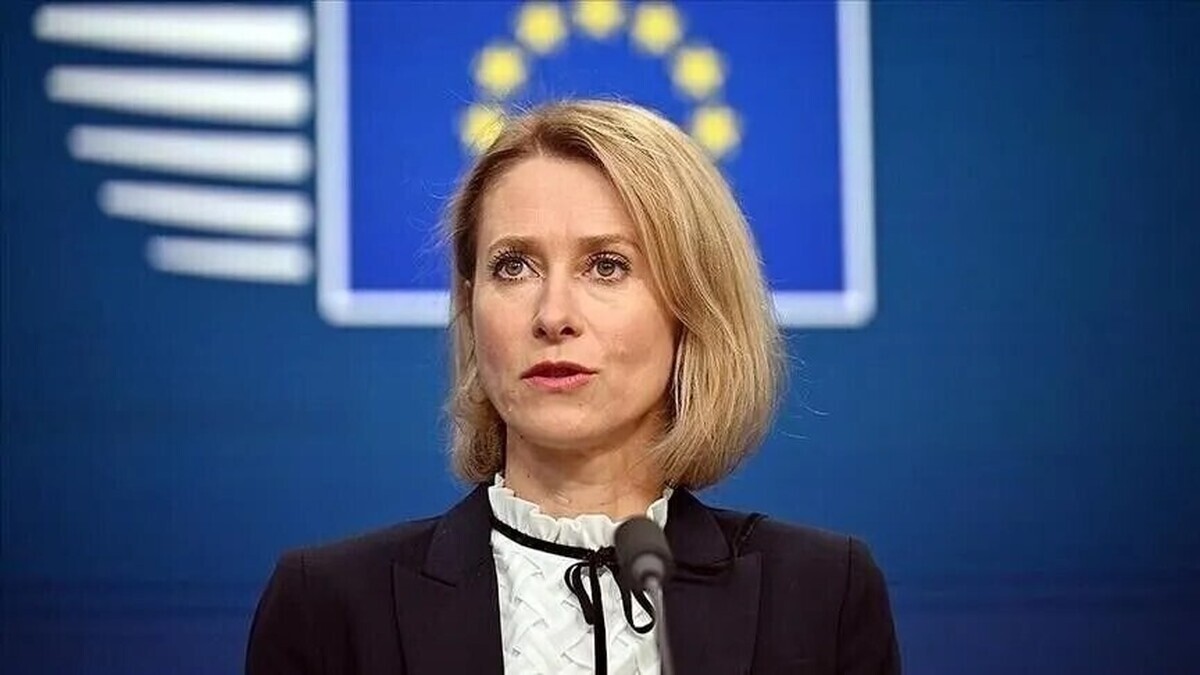
Meeting in Dublin, European leaders finalized on Friday the composition of their team for peace talks on Ukraine, including Italy and Poland alongside France, Germany, and the United Kingdom. The EU’s top diplomat, Kaja Kallas, will not obtain the special envoy role she sought.
It is a compromise, not a revolution. At the end of an informal summit held Friday in Dublin, the Twenty-Seven resolved the question that had stirred European capitals for several weeks: who will represent Europe in negotiations aimed at ending the war in Ukraine? The answer is collective. The selected team includes France, Germany, the United Kingdom, Italy, and Poland, along with the institutions of the European Union and NATO.
This formula expands the existing negotiation group, called E3, by including Rome and Warsaw. Poland had exerted all its influence to avoid being excluded from decisions involving the entire continent, arguing that Central and Eastern European countries should not be represented solely by their Western counterparts. Italy, for its part, had already participated in the last round of talks in Abu Dhabi.
The decision simultaneously dismisses the hypothesis of a single envoy, which had been requested by Ukraine, the United States, and even Russia. Giorgia Meloni herself had denounced, before the meeting, the “disorder” of European voices in the diplomatic process. The leaders preferred expansion over simplification.
The biggest loser of the day is Kaja Kallas. The EU High Representative for Foreign Affairs had argued Friday morning to take on the role of special envoy, asserting that her mandate fully authorized her to do so. “In June 2024, there was a decision by the leaders on who represents the EU regarding security and foreign policy,” she recalled, adding that if the leaders wished to modify this agreement, “they can, because it is the leaders’ decision.”
Neither the President of the European Council António Costa nor the President of the Commission Ursula von der Leyen supported her. Costa referred to the treaties, reminding that it is the President of the European Council who represents the Union in matters of foreign and security policy at the level of heads of state and government. Von der Leyen was more succinct: “We have made our decision.” Kallas herself acknowledged that “the Russians do not want me” because of her positions considered too firm towards Moscow.
The format chosen in Dublin largely corresponds to the one Washington had already shaped through the last negotiation cycles held in Miami, Oslo, Brussels, and Abu Dhabi. German Chancellor Friedrich Merz also dismissed any further institutional debate, stating that the E3 format “has proven very effective” and that there is “no need” to change it.
The central question remains: will Russia agree to sit at the same table as European representatives after having repeatedly refused to do so? American envoys Steve Witkoff and Jared Kushner traveled to Moscow on Thursday to try to convince Vladimir Putin to engage. They stated after the meeting that the Kremlin appeared willing to hold direct talks with Europeans. Moscow immediately downplayed these statements, casting serious doubt on the continuation of the process.





Respond to the article
Be the first to comment on this article.