

Russia, Ukraine, and the United States meet Tuesday and Wednesday in Abu Dhabi for a new round of negotiations on the Ukrainian conflict. Observers remain cautious about the chances of concrete progress.
After several months of interruption, trilateral negotiations on the war in Ukraine resume in the United Arab Emirates. U.S. special envoy Steve Witkoff announced last week that these talks in Abu Dhabi would focus, according to him, on « post-war security arrangements, de-escalation, humanitarian efforts, and next steps toward peace. »
On the Ukrainian side, President Volodymyr Zelensky outlined his priorities: obtaining security guarantees, establishing a truce on energy infrastructure, reopening the Black Sea, expanding prisoner exchanges, and preparing a summit meeting between the Ukrainian, American, and Russian leaders. The Kyiv delegation will be led by Rustem Umerov, head of the Ukrainian Foreign Intelligence Service, accompanied by MP Davyd Arakhamia and diplomatic and military officials.
Arakhamia, reached before departure, tempered expectations: « I do not think there will be a breakthrough after such a long interruption of the negotiation process. The mere fact that trilateral talks resume can already be considered a success. »
The Russian delegation is led by Vladimir Medinski, advisor to President Vladimir Putin and experienced in negotiations with Kyiv, surrounded by senior military and intelligence officials. On the American side, Steve Witkoff will be joined by Jared Kushner, son-in-law of President Donald Trump and special envoy.
European representatives will participate in separate formats without being formally integrated into negotiations on a possible peace agreement. Among them are Günter Sautter, diplomatic advisor to German Chancellor Friedrich Merz; Emmanuel Bonne, director of the Élysée diplomatic service; Jonathan Powell, British national security advisor; and Fabrizio Saggio, diplomatic advisor to Italian Council President Giorgia Meloni. Björn Seibert, chief of staff to Ursula von der Leyen at the European Commission, and Geoffrey van Leeuwen, chief of staff to NATO Secretary General Mark Rutte, will also be present.
Hanna Shelest, director of security studies at the Ukrainian Prism foreign policy network, believes these European representatives will « at best play an observer role. » She recalls that Moscow has so far sought to confine discussions to a face-to-face with Washington, to maintain the image of a dialogue « between two superpowers » and increase pressure on the United States. « I doubt the Russian delegation will allow Europeans to have a say, » she says.
The researcher is also skeptical about Moscow’s real intentions: « The experience of recent years has taught us that whenever Medinski leads negotiations, the goal becomes to show the United States that Russia is ready to talk, without actually reaching an agreement. » However, she notes a « fairly positive » signal in the presence of high-ranking intelligence officers within the Russian delegation, which could open the way to more substantive discussions on prisoner exchanges or localized humanitarian pauses.
One precedent draws negotiators’ attention: the temporary truce obtained at the end of October in the Kherson region, around the city of Oleshky, occupied by Russia, which allowed the delivery of humanitarian aid and evacuation of civilians. Ivan Us, an expert in economic diplomacy at the Ukrainian National Institute for Strategic Studies, believes this model could serve as a basis for other local humanitarian ceasefires. He emphasizes, however, that Russia continued its attacks during this truce and took advantage of the pause to strengthen its positions around the city.
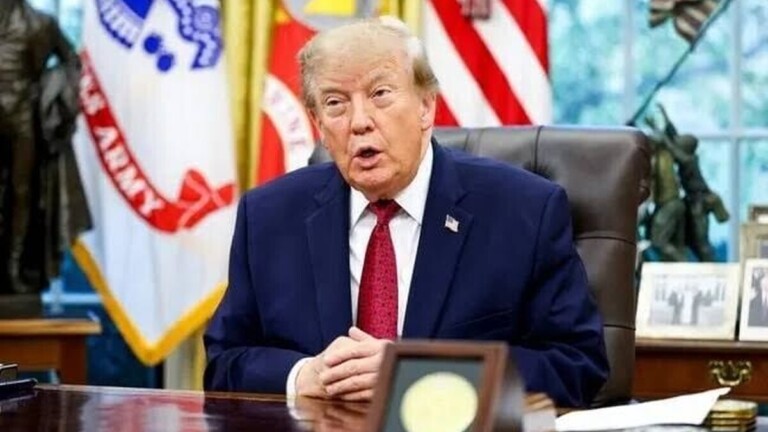
Donald Trump mentioned last week a « big and beautiful deal » potentially involving « all of Europe, » after a meeting with Russian envoy Kirill Dmitriev. Jared Kushner specified that this new security architecture would rely on permanent consultations, reliable crisis communications, greater military transparency, and a sustainable framework for European stability. Hanna Shelest considers these formulations unoriginal: « These points contain nothing that the Russians haven’t said since 2009. »





Respond to the article
Be the first to comment on this article.