

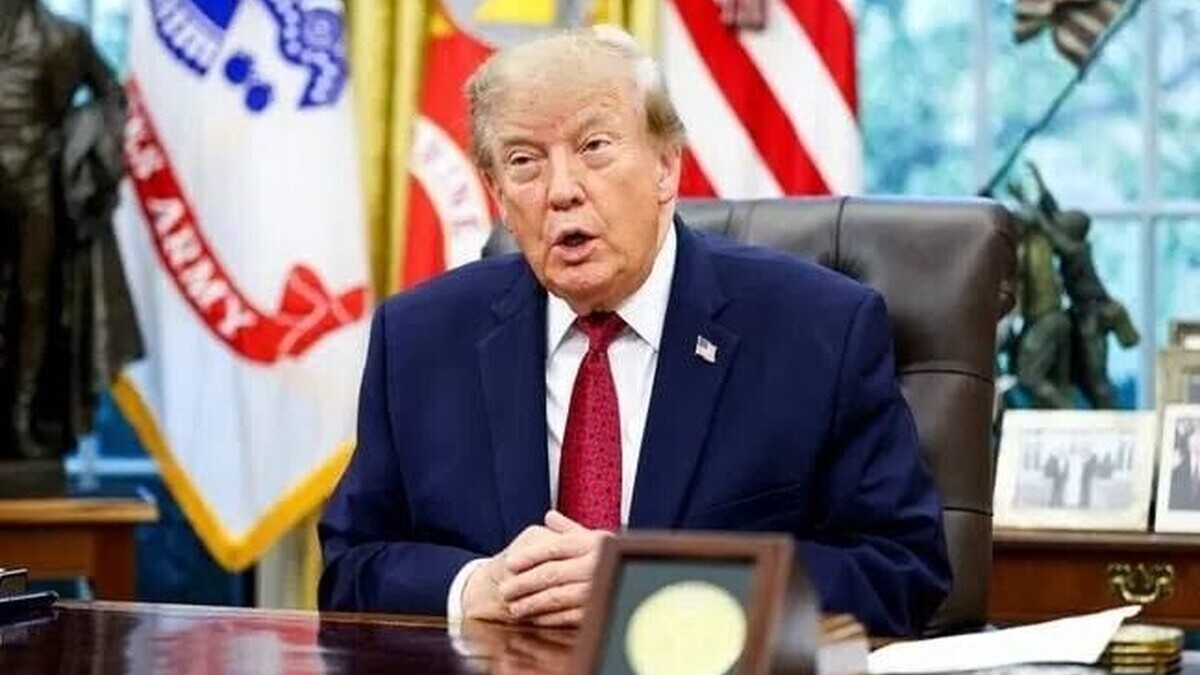
Donald Trump stated on Sunday that a new US military offensive against Iran was "very unlikely" if peace negotiations progressed, while reiterating that the US military remained ready to strike. The two countries have remained at a diplomatic and military stalemate since the start of the conflict in February.
The US president adopted a tone of relative appeasement on Sunday, telling CNN that a resumption of military operations against Iran was "very unlikely" provided Tehran signed "a very solid agreement." This wording leaves the pressure on the Islamic Republic intact , without, however, closing the door to de-escalation.
Trump, however, did not abandon the rhetoric of force. He pointed out that three American aircraft carriers were deployed in the region, "fully armed and ready," and that the US military had identified 38 bridges that could be destroyed "within an hour." "I hit them very hard. You have no idea how hard," he declared, adding that Iran " desperately wanted to make a deal."
The conflict began in late February when Trump ordered strikes against Iran following an Israeli offensive that Tel Aviv described as "preventive." Since then, the US president has repeatedly declared victory and asserted that a peace agreement was imminent or practically finalized. Tehran has consistently denied this version of events.
On the ground, the situation remains far from resolved. Despite American claims of Iran's military and economic weakening, Tehran has maintained offensive capabilities in the region and retains a partial blockade of the Strait of Hormuz. The Houthi rebels in Yemen, allies of Iran, continue to strike targets in Saudi Arabia , particularly in the capital, Riyadh.
The only tangible diplomatic result since the start of hostilities had been the signing of a memorandum of understanding between Washington and Tehran in Islamabad in June. This document expired in August without a final agreement being reached, leaving the two sides in a state of persistent deadlock.
The conflict weighed heavily on the campaign for the US midterm elections, which were held on Tuesday. Republicans lost their majorities in Congress , a setback that Iranian Foreign Minister Abbas Araghchi described as a "shock." He indicated on Sunday that mediators had not resumed their travels since the election and that Tehran was waiting to see how Washington would "digest" the results before deciding on the next steps in the talks.
Qatar, which is playing a mediating role in this matter, has denied rumors that the negotiations have collapsed. Its Prime Minister stated on Saturday that the two sides were still working toward an agreement. Meanwhile, a senior Iranian official indicated that Tehran had submitted a proposal regarding its nuclear program to Washington via Doha. However, the continuation of the talks would be contingent on concessions from the United States, including the lifting of sanctions, the unfreezing of Iranian assets, and the payment of war reparations.




Respond to the article
Be the first to comment on this article.