

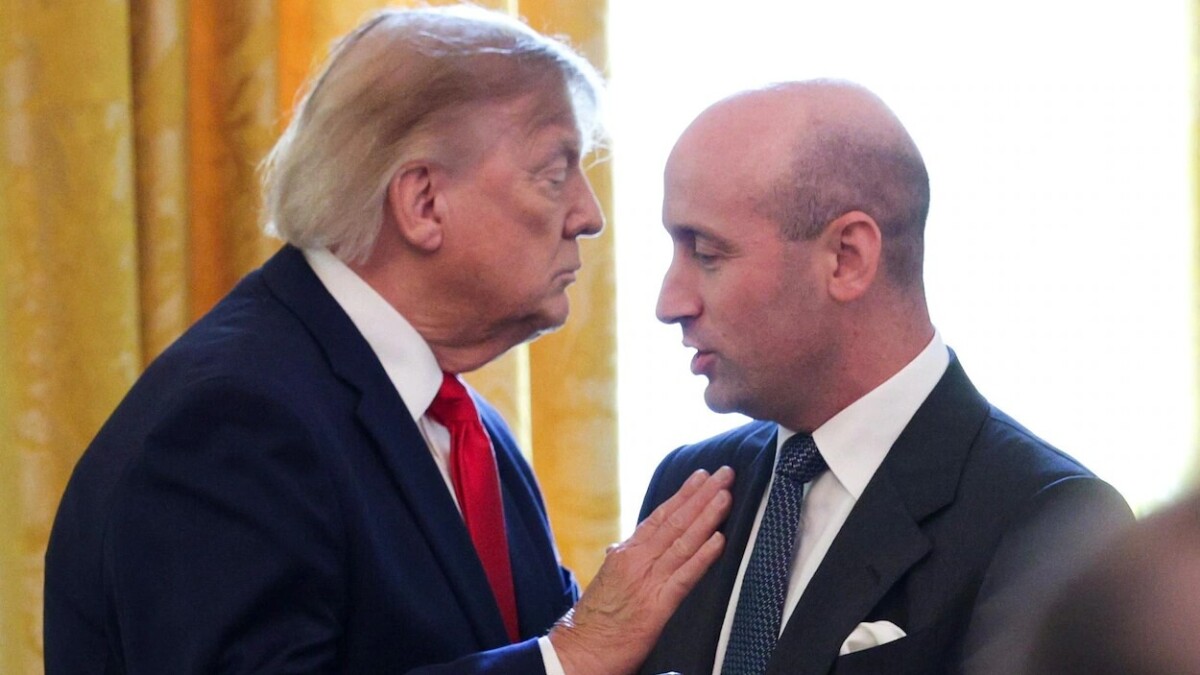
Donald Trump has appointed Stephen Miller as White House Chief of Staff, replacing Susie Wiles. This promotion places one of the most controversial architects of American immigration policy at the top of the presidential apparatus, in the wake of a Republican defeat in the midterm elections.
This is a strong political signal that Donald Trump is sending to his opponents. By choosing Stephen Miller as his new chief of staff, the American president is placing at his side the man who, more than anyone else, embodies the radical nature of his immigration agenda. The appointment was announced on Friday, a few days after the Republican Party lost control of both houses of Congress to the Democrats in the midterm elections.
At 41, Miller is one of the longest-serving figures in Trump's inner circle. He joined the 2016 presidential campaign as a speechwriter, at a time when few believed the New York billionaire would win. Since then, he has never left the inner circle. As deputy chief of staff, he was already considered the principal architect of the administration's immigration policy, notably advocating for federal agents to make 3,000 arrests per day and for expanding the powers of Immigration and Customs Enforcement (ICE).
Trump justified the choice in simple terms: Miller "understands" the issues, is "very good politically," and will be "an excellent manager." Susie Wiles, who had held the position since the presidential inauguration, is joining the political structure of the Trump movement. She described her time at the White House as "the honor of a lifetime."
Beyond immigration, Miller has distinguished himself through positions that have regularly fueled controversy. On the international stage, he has defended extrajudicial strikes against boats in the Caribbean Sea suspected of carrying drugs, as well as the military operation to capture Venezuelan leader Nicolás Maduro last January. In January 2026, he stated on CNN that the United States had the right to seize Greenland, a Danish territory that Trump considers a strategic necessity. "We live in the real world, Jake, a world governed by force, by power. These have been the iron laws of the world since the beginning of time," he told anchor Jake Tapper.
Domestically, Miller was no less inflammatory. During the midterm elections, he called Democrats “extremists, monsters, and crazy people who hate America” on social media and amplified unsubstantiated claims of voter fraud in California and Alaska. He is also credited with orchestrating a behind-the-scenes legislative obstruction strategy to block Democratic initiatives in Congress, with Trump himself announcing that he would make extensive use of his veto power.
The opposition's reaction was swift. New York Democratic Representative Hakeem Jeffries, the likely successor to Speaker of the House , denounced Trump on social media as a "dangerous xenophobe and irresponsible extremist with American blood on his hands," referring to the deaths that occurred during protests against ICE operations. Senator Chuck Schumer, expected to become Senate Majority Leader in January, asserted that Trump had "learned nothing" from the Republican electoral defeat. "Trump couldn't have made a worse choice. Our Democratic majorities will fight him every step of the way," he warned.



Respond to the article
Be the first to comment on this article.