

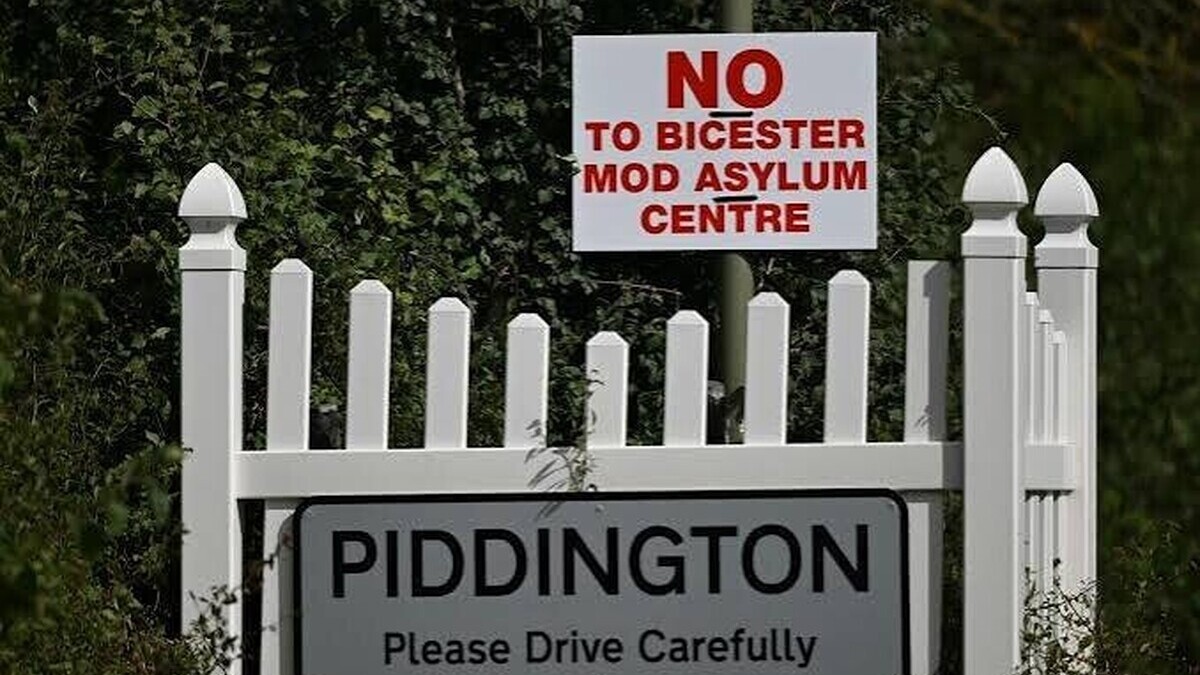
The British government has authorized the conversion of a former military site into a reception center for more than 1,200 asylum seekers, despite strong opposition from residents of Piddington, near Oxford. In September, this village of approximately 350 inhabitants even held a symbolic referendum to "secede" from the United Kingdom . This dramatic mobilization did not prevent London from giving the green light to the project.
The standoff between the residents of Piddington and the British government has just entered a new phase. On Thursday, November 12, Housing and Communities Secretary Angela Rayner granted planning permission for the gradual redevelopment of a former Ministry of Defence site in Bicester, Oxfordshire. The project plans to house up to 1,256 asylum seekers, all adult men, in repurposed military facilities. This decision comes despite months of local protests and concerns raised by local elected officials.
For the Labour government, this initiative is part of a national strategy to reduce the use of hotels to house asylum seekers. These establishments represent a significant expense for public finances and are regularly the subject of political controversy. London therefore wants to prioritize collective accommodation solutions, particularly in former military sites. The authorities assure that these facilities will have permanent security measures, CCTV surveillance, and an organization designed to limit the impact on neighboring communities.
A village of 350 inhabitants that had voted to leave the United Kingdom
In Piddington, the announcement of the project sparked an unusual mobilization. Residents, fearing consequences for their safety, the village's tranquility, and local public services, organized several demonstrations throughout the summer. In September, they decided to escalate their protest by holding a symbolic referendum on the independence of their community. The result was decisive: 285 votes in favor of "secession," compared to only 26 against.
Following this vote, which had no legal standing, the organizers symbolically proclaimed the creation of the "Principality of Piddington." This initiative, widely reported in the British media, was primarily intended to draw attention to the feeling of not being heard by the national authorities. For opponents, the prospect of housing more than 1,200 men in a center located near a town of a few hundred inhabitants raises questions about the capacity and resources available to support the project.
The opposition denounces a decision imposed on the residents
The permit's approval immediately sparked political reactions. Greg Smith, the Conservative MP for the constituency, denounced the decision as unacceptable and vowed to continue opposing the project. Other local officials also expressed reservations, citing transport difficulties, potential strain on healthcare services, and possible consequences for community cohesion. These concerns were raised during the review of the application, but did not lead the government to withdraw the permit.
British authorities advocate a different approach. They believe that developing specialized reception centers will allow for a better distribution of accommodation for asylum seekers and reduce public spending. The Home Office, however, emphasizes that obtaining the permit does not yet constitute a final decision to open the site. The specific conditions for its operation therefore remain to be defined, and opponents have six weeks to challenge the authorization in court.
Immigration remains a source of tension in the United Kingdom
The Piddington case illustrates the difficulties the British government has faced in reorganizing its asylum system. For several years, the accommodation of asylum seekers in hotels and collective facilities has fueled debates about the cost of immigration, security, and the division of responsibilities between the state and local authorities. Several projects to redevelop former military sites have sparked protests, with some residents feeling they were not sufficiently involved in the decision-making process.
The case of this Oxfordshire village has become particularly symbolic due to its independence referendum. While this "secession" has no institutional consequences, it reflects the depth of the disagreement between some residents and the central government. Angela Rayner's decision therefore does not necessarily end the conflict. Between possible legal challenges, local mobilization, and the government's desire to reduce reliance on hotels, the future of Bicester's center remains at the heart of a national debate on British immigration policy.










Respond to the article
Be the first to comment on this article.