

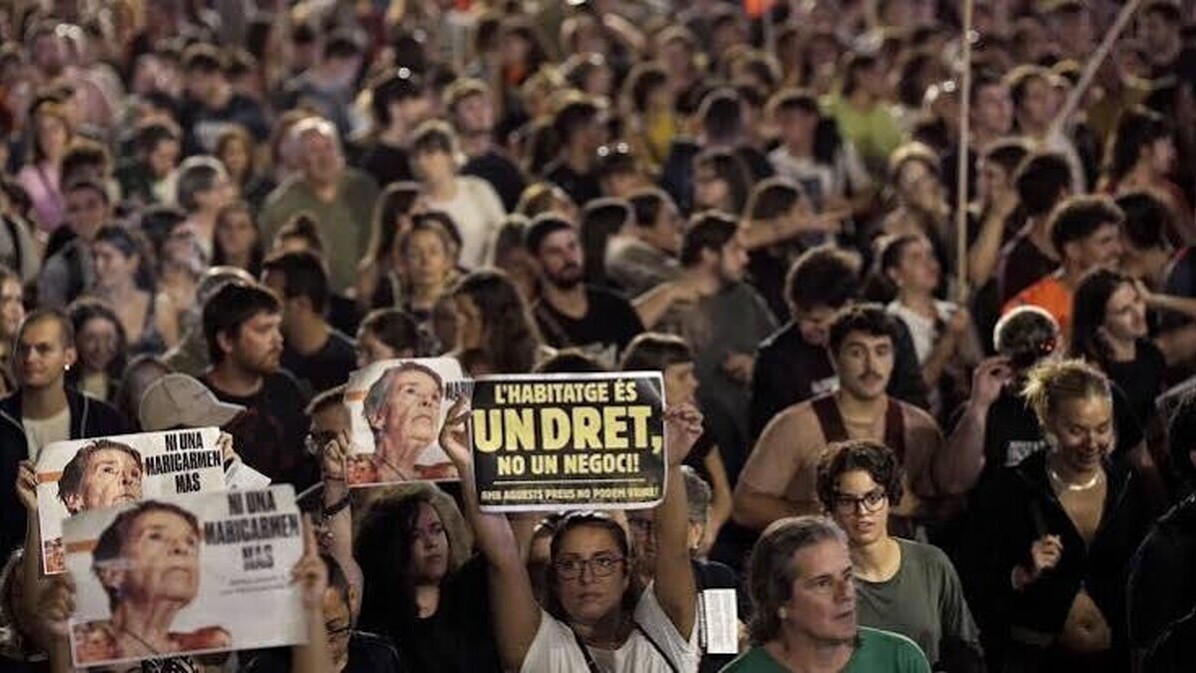
Spain is experiencing on Wednesday, November 11, its first general strike in fourteen years. At the call of the main trade union organizations, employees are invited to stop working to denounce rising rents and purchasing power difficulties. This mobilization comes less than three weeks before the early legislative elections on November 29, in a particularly tense political climate for Pedro Sánchez’s government.
Spain is facing on Wednesday a social movement of unprecedented scale since 2012. The two main trade unions in the country, the Workers’ Commissions (CCOO) and the General Union of Workers (UGT), have called for a general strike to demand measures against the housing crisis and the deterioration of purchasing power. Disruptions are reported in transport, industry, and several public services. Demonstrations are also planned in major cities, notably Madrid and Barcelona. The unions hope to make this day a moment of national mobilization, as housing access difficulties occupy a central place in Spaniards’ concerns.
The movement notably finds its origin in the eviction of Maricarmen Abascal, an 87-year-old Madrilenian who died a few days after being forced to leave her home. Her story sparked a significant wave of indignation and led to several demonstrations in the Spanish capital. Tenant associations have for several years denounced rising rents, evictions, and the difficulties faced by young households in accessing homeownership. According to the Bank of Spain, the country faces a deficit of about 750,000 homes, which could exceed one million by 2028. This shortage contributes to increasing tensions in the real estate market, particularly in large metropolitan areas and tourist regions.
Rents that absorb a considerable share of salaries
The housing issue now constitutes a major problem for part of the Spanish population. According to the latest data from the National Institute of Statistics, the average gross monthly salary is around 2,460 euros. In Madrid, renting a 50-square-meter apartment cost on average 1,170 euros per month in October. This amount represents nearly half of the average gross salary, well beyond the 30% income threshold generally recommended for housing expenses. The situation is particularly difficult for young workers, whose incomes do not always allow them to rent an apartment alone in large cities.
The trade unions demand more effective rent control, better tenant protection, and measures to limit real estate speculation. They also call for greater public authority intervention to develop the supply of affordable housing. The mobilization affects several economic sectors. According to initial estimates communicated by the unions, participation reached 90% in ports and the automotive industry, with production stoppages reported in some factories. These figures, provided by the organizers, have not been independently confirmed. Public transport is also experiencing disruptions, although a minimum service must be ensured.
A mobilization that enters the electoral campaign
This strike occurs in a particularly sensitive political context. In early October, Socialist Prime Minister Pedro Sánchez decided to bring forward the legislative elections to November 29, while they were initially scheduled for 2027. This decision came after the Parliament rejected several government measures aimed at limiting evictions and addressing the housing crisis. The head of government stated that the mobilization should lead to concrete responses from all administrations. His government plans to have certain provisions adopted as early as Thursday by the competent parliamentary body during the electoral period.
The right-wing and far-right opposition strongly criticizes this mobilization. The leader of the Popular Party, Alberto Núñez Feijóo, accuses the unions of intervening in the electoral campaign and reproaches them for not having organized a comparable movement in previous years. Santiago Abascal, president of Vox, also called for the strike to be canceled. Employers denounce, for their part, a mobilization of an electoral nature. The unions reject these accusations and affirm they want to obtain lasting commitments on housing, regardless of the election outcome. Less than three weeks before the elections, this day of strike illustrates the importance taken by social issues in the Spanish public debate, amid tensions around purchasing power, real estate, and government policy.






Respond to the article
Be the first to comment on this article.