

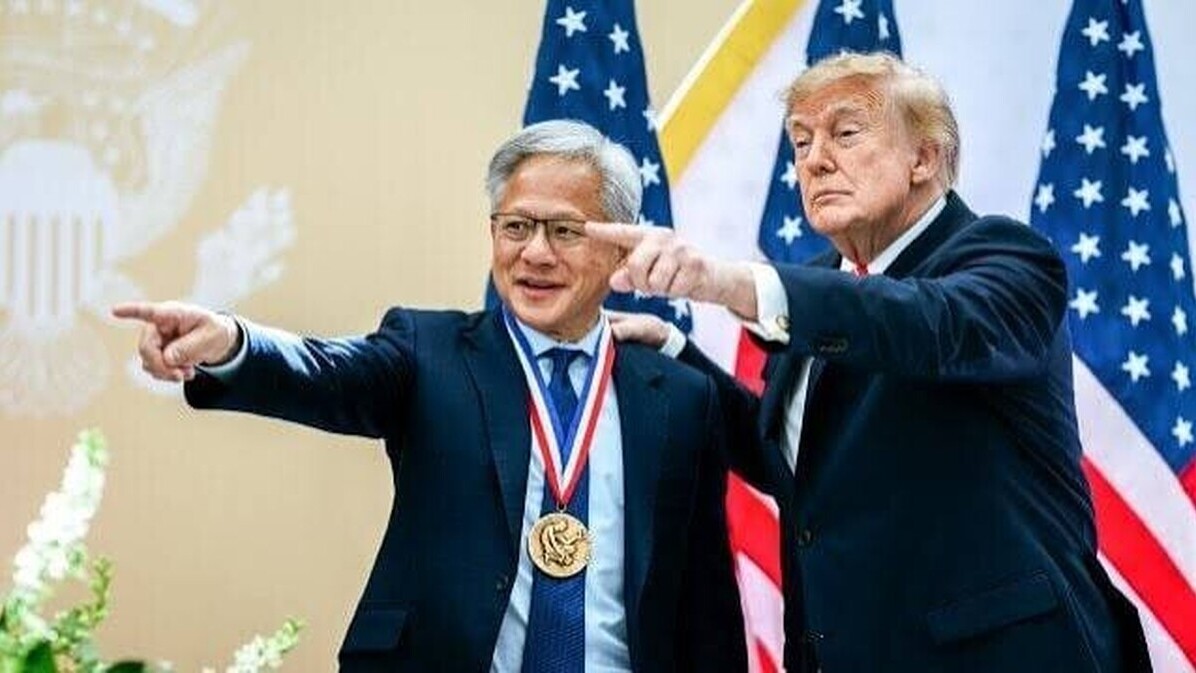
What began as a personal scandal involving Jensen Huang, the former head of Nvidia, is now taking on a major political dimension in the United States. Suspicions of Chinese espionage, possible circumvention of U.S. semiconductor restrictions, and questions about the White House’s stance are putting Donald Trump and several members of his administration under pressure. Republicans and Democrats are demanding explanations on the handling of this sensitive national security matter.
The Nvidia case now extends far beyond Silicon Valley. Following Jensen Huang’s resignation on Thursday, November 12, revelations about his connections with Alice Huang, a Chinese entrepreneur suspected by U.S. intelligence services of working for Beijing, are causing upheaval at the highest levels of the Trump administration. According to information published by the New York Times, the U.S. president was personally warned as early as May about the risks surrounding this relationship. Donald Trump denies having been informed at that time, while lawmakers seek to understand why no firmer measures were taken.
At the center of the inquiries is also Megaspeed, a company based in Singapore and previously led by Alice Huang. This company reportedly acquired several billion dollars worth of Nvidia chips, some of which may have been used by Chinese firms to develop their artificial intelligence capabilities. Investigators are examining the possibility that components subject to U.S. restrictions were illegally transferred to China, notably through infrastructures located in Southeast Asia. These suspicions remain to be confirmed, but they raise a strategic question for Washington: have U.S. controls on sensitive technology exports been properly enforced?
Unprecedented tensions within the Trump administration
The controversy escalated further on Friday, November 13, when Treasury Secretary Scott Bessent publicly criticized the Commerce Department, led by Howard Lutnick. In an interview on CNBC, he explained that several federal agencies had wanted for months to place Megaspeed on a trade blacklist. According to him, the Treasury, Pentagon, State Department, and trade policy offices supported this move, but the Commerce Department did not follow through. This unusual stance reveals significant disagreements within the U.S. government.
Howard Lutnick now finds himself directly exposed. Responsible for enforcing U.S. semiconductor export restrictions, he must answer lawmakers’ questions about authorizations granted to companies linked to Nvidia. Several elected officials are also questioning his ties to the tech sector and potential conflicts of interest that may have influenced certain decisions. The Commerce Secretary has agreed in principle to a Senate hearing as political pressure continues to mount.
Congress Demands Accountability from the White House
The questions do not come solely from the Democratic opposition. Several Republican lawmakers are also seeking explanations about the conditions under which sensitive U.S. technologies may have been accessible to Chinese companies. Republican Senator Jim Banks has notably called for a swift hearing of Howard Lutnick. In the House of Representatives, three committees want to hear from Jensen Huang to determine if national security may have been compromised.
Democrats focus their criticism on the closeness between Donald Trump and the former Nvidia leader. Senate Democratic leader Chuck Schumer is specifically asking what the U.S. president knew about the suspicions regarding Alice Huang and why Jensen Huang continued to enjoy privileged access to the White House. The Nvidia chief had maintained close ties with the Republican administration, notably advocating for easing trade restrictions to allow his company to sell certain chips to the Chinese market.
U.S. Policy Toward China at the Center of Inquiries
Beyond individual responsibilities, this case highlights contradictions in U.S. policy regarding artificial intelligence. Washington has sought for several years to prevent Beijing from accessing the most advanced components, considered essential for developing military technologies and advanced AI systems. At the same time, major U.S. semiconductor companies want to preserve their access to the vast Chinese market, which represents a major commercial outlet.
Nvidia occupies a central position in this delicate balance. Its processors have become indispensable for developing many artificial intelligence models. The company has benefited from the sector’s spectacular growth and close relations with several U.S. political figures. Revelations concerning Megaspeed could now lead authorities to reexamine certain business practices, especially if transfers of prohibited components are confirmed.
A Crisis Also Weakening the Semiconductor Giant
For Nvidia, the consequences go beyond the resignation of its historic leader. Jensen Huang co-founded the company in 1993 and guided its development to become one of the world’s leading technology groups. His sudden departure opens a period of uncertainty regarding governance, business strategy, and relations with U.S. authorities. CFO Colette Kress is temporarily leading the group, while several names are circulating as potential successors.
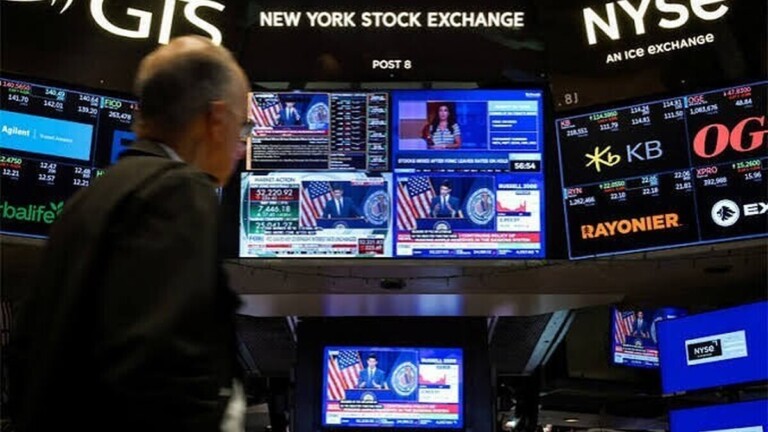
Financial markets are closely monitoring this transition. Nvidia’s stock has sharply declined since the initial revelations amid concerns about the commercial and regulatory consequences of the case. The company also plays a significant financial role in the AI ecosystem, notably through investments in numerous startups. A strategic shift could therefore have repercussions far beyond its own activities.
Donald Trump Faces a Case with Diplomatic Consequences
The crisis comes at a particularly sensitive time for Donald Trump, who is expected soon in China for new talks with President Xi Jinping. The U.S. leader will have to address trade and technological relations between the two powers while his administration is accused of not sufficiently protecting certain strategic technologies. The suspicions against Alice Huang remain contested by Beijing, which denies espionage accusations.
The U.S. Department of Justice also calls for caution. Its head, Todd Blanche, reminded that no definitive conclusion has been reached regarding the alleged activities of the Chinese entrepreneur. This caution highlights the need to distinguish suspicions from proven facts. But on the political front, questions are already multiplying: who knew about intelligence alerts, why were some restrictions not enforced, and to what extent did relationships between tech leaders and the White House influence public decisions?





Respond to the article
Be the first to comment on this article.