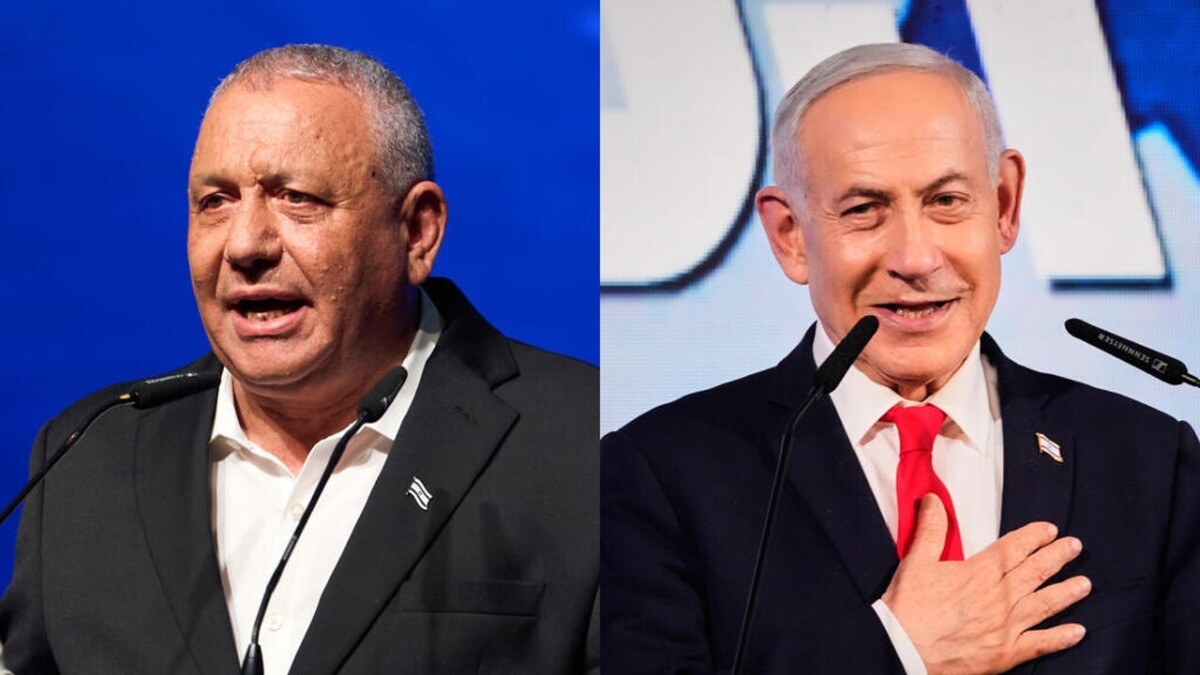
Outgoing Israeli Prime Minister Benjamin Netanyahu is set to meet his rival Gadi Eisenkot this Sunday, November 29, to negotiate the formation of a national unity government. In an effort to reach an agreement, the Likud leader now says he is willing to let his opponent serve first as Prime Minister.
Nearly a month after the legislative elections on October 27, Israel remains stuck in a political deadlock, with no side holding an absolute majority in the Knesset. In a message posted Saturday on the social network X, Benjamin Netanyahu proposed to Gadi Eisenkot to form a government based on alternating leadership of the executive. Citing the “existential” challenges facing Israel, the outgoing head of government states he is willing to set aside their political differences.
The two officials are scheduled to meet this Sunday at the Ministry of Defense in Tel Aviv, starting at 9 a.m. French time. Tasked with forming a new government, Gadi Eisenkot has committed to presenting a coalition before his mandate expires on December 6. The former Chief of Staff of the Israeli army had recently stated he refused to share power with Benjamin Netanyahu.
Several scenarios to resolve the political crisis
To reach the absolute majority of 61 seats out of the 120 in the Knesset, Gadi Eisenkot’s bloc still needs to find new partners. Several possibilities are being considered, including rapprochement with ultra-Orthodox parties, an agreement with Arab parties, or the formation of a national unity government including Likud. However, these options generate disagreements within his own camp.
For Benjamin Netanyahu, forming a national unity government also represents a personal political stake. Still on trial for corruption, the outgoing Prime Minister could thus maintain influence within the executive and continue opposing the creation of an independent inquiry commission into the security failures preceding the attacks of October 7, 2023. At this stage, no coalition agreement has been announced between the two political leaders.
Sources citées dans l’article Compte X de Benyamin Nétanyahou