

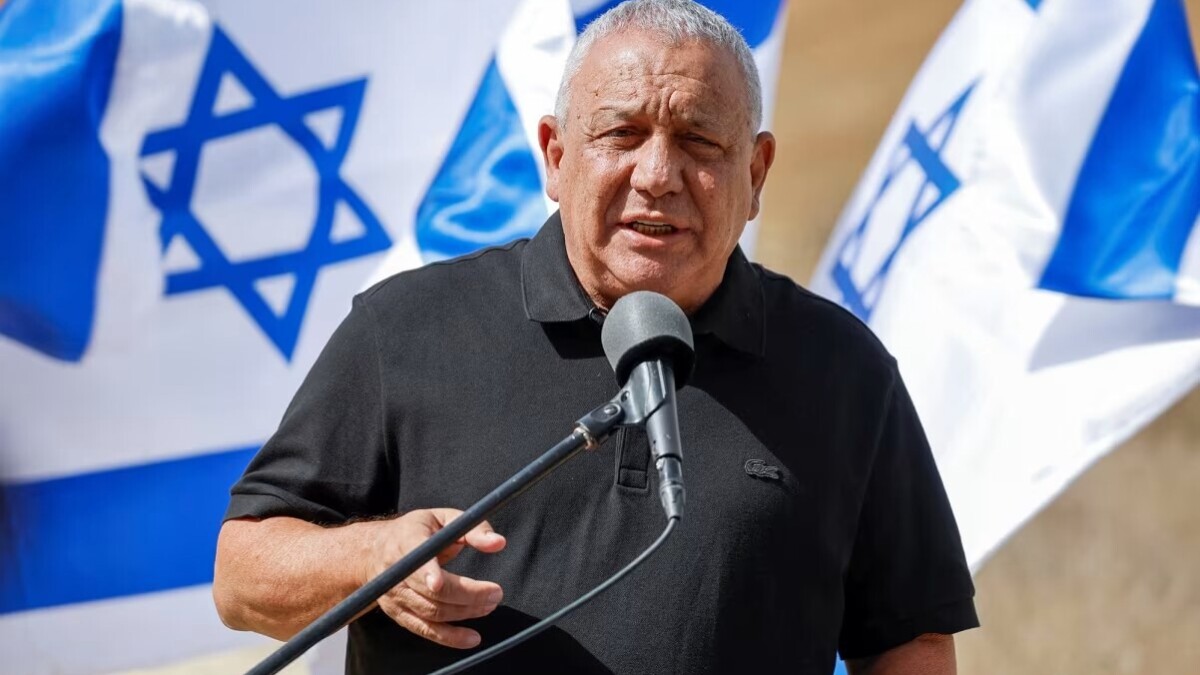
Benyamin Netanyahu may soon have to relinquish power. Following consultations led by Israeli President Isaac Herzog on Thursday, November 5, Gadi Eisenkot received the support of 67 deputies out of the 120 in the Knesset, compared to only 46 for the outgoing Prime Minister. This balance of power places the former Chief of Staff of the Israeli army in a position to be tasked with forming the next government. Isaac Herzog announced he would make his decision on Sunday, November 8, after final discussions with political leaders. For Netanyahu, in power almost continuously since 2009, the prospect of departure is becoming clearer, although no change of government is yet secured.
The shift was decided with the support of Arab parties. After Mansour Abbas’s Ra’am party, which holds eight seats, the Joint List, with eleven deputies, in turn decided to recommend Gadi Eisenkot. These nineteen votes add to the 48 recommendations obtained from four opposition parties: Yashar, Eisenkot’s party, Bennett’s Beyahad, Yaïr Golan’s Democrats, and Avigdor Lieberman’s Israel Beiteinu. Conversely, Netanyahu was weakened by the decision of the United Torah Judaism, his historic ultra-Orthodox ally, not to recommend any candidate. The religious party, which has seven deputies, notably reproaches the Likud leader for not providing the expected guarantees regarding military service exemptions for students of Talmudic schools.
A majority of support that does not yet guarantee a change of government
Despite this lead, Gadi Eisenkot will have to solve a particularly complex parliamentary equation. The 67 deputies who recommended his designation are not necessarily willing to govern together. Naftali Bennett and Avigdor Lieberman have notably expressed their opposition to forming a government dependent on Arab parties. The latter themselves have acknowledged their deep differences with the former Chief of Staff, while explaining their desire to prevent Netanyahu’s return to power. Isaac Herzog also called for caution: although the consultation results seem clear, the actual ability of candidates to form a majority remains uncertain due to vetos among the different parties.
If the Israeli president entrusts him on Sunday with the mission to form a government, Gadi Eisenkot will have 28 days to assemble a coalition, with a possible extension of fourteen days. In case of failure, Isaac Herzog may ask another parliamentarian. Benyamin Netanyahu therefore retains a possibility to return to negotiations, especially since Likud remains the largest party in the Knesset with 27 seats. But the Israeli political landscape has significantly changed since the October 27 legislative elections. By obtaining the recommendation of a majority of deputies, Eisenkot crosses an important milestone towards a possible change of government.








Respond to the article
Be the first to comment on this article.