

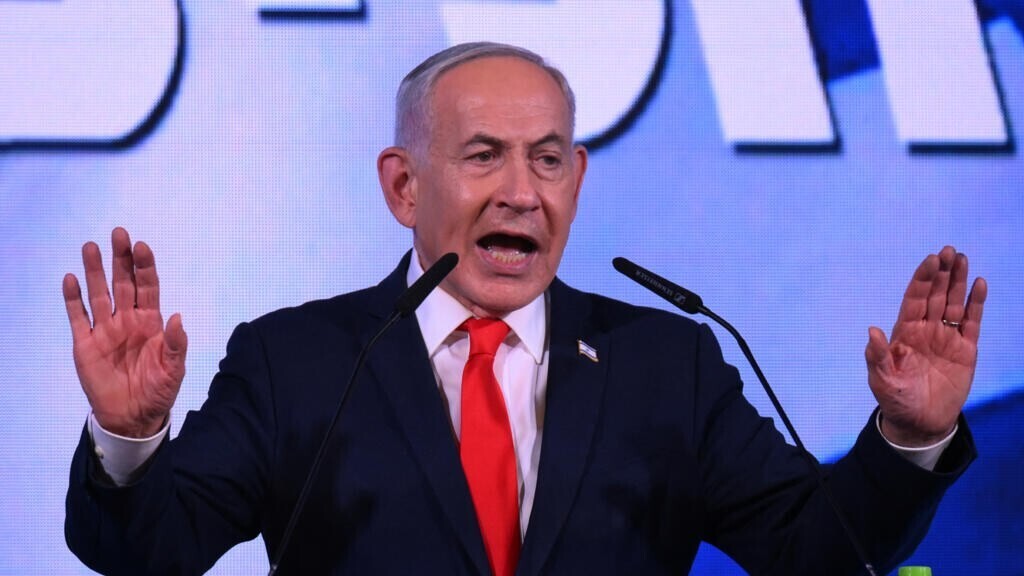
Benyamin Netanyahu has just lost a supporter he could count on for nearly thirty years. On Thursday, November 5, the ultra-Orthodox party United Torah Judaism (UTJ), a traditional partner of the Israeli Prime Minister, announced that it would not recommend any candidate to form the next government. This decision was made during consultations organized by President Isaac Herzog following the legislative elections of October 27. The religious movement, which holds seven seats in the Knesset, had supported Netanyahu in the previous five elections. Its refusal to renew this support constitutes a setback for the Likud leader, who is already deprived of a parliamentary majority.
The October 27 vote did not allow either of the two main camps to obtain the 61 seats necessary to govern alone. While Netanyahu’s Likud remains the country’s leading party with 27 deputies, his nationalist and religious bloc totals only 53 seats. Opposing him, Gadi Eisenkot, former Chief of Staff of the Israeli army and leader of the Yashar party, is trying to assemble an alternative coalition. The withdrawal of UTJ’s support changes the balance of power: according to counts published Thursday by the Israeli press, Eisenkot now benefits from the recommendations of 56 parliamentarians, compared to 46 for Netanyahu. The support of the Arab party Ra’am, with eight deputies, notably contributes to this lead.
The issue of military service at the heart of the rupture
Behind the ultra-Orthodox party’s decision lies a longstanding disagreement over the exemption from military service granted to students of Talmudic schools. UTJ leaders reproach Netanyahu for not having passed legislation guaranteeing these exemptions sustainably, which are essential to their electorate. Before Isaac Herzog, their representatives indicated that this issue would now take precedence over partisan considerations. “We came to talk about issues, not people,” explained MP Yitzhak Pindrus. However, the movement has not announced its support for Eisenkot and could still negotiate its participation in a future coalition, provided it obtains guarantees on the status of religious students.
The decision now rests with President Isaac Herzog, who must designate by November 11 the parliamentarian tasked with attempting to form a government. Gadi Eisenkot holds an advantage in the recommendations gathered, but forming a majority remains particularly complex. The Arab parties, which together won 19 seats, could play a decisive role, even though the main leaders of both blocs have so far refused to govern with them. For his part, Netanyahu remains interim Prime Minister and retains the possibility of negotiating new support. After nearly three decades of alliance with the ultra-Orthodox, the Israeli leader approaches these discussions from a weakened position, while his rival tries to turn the election results into a governmental change.







Respond to the article
Be the first to comment on this article.