

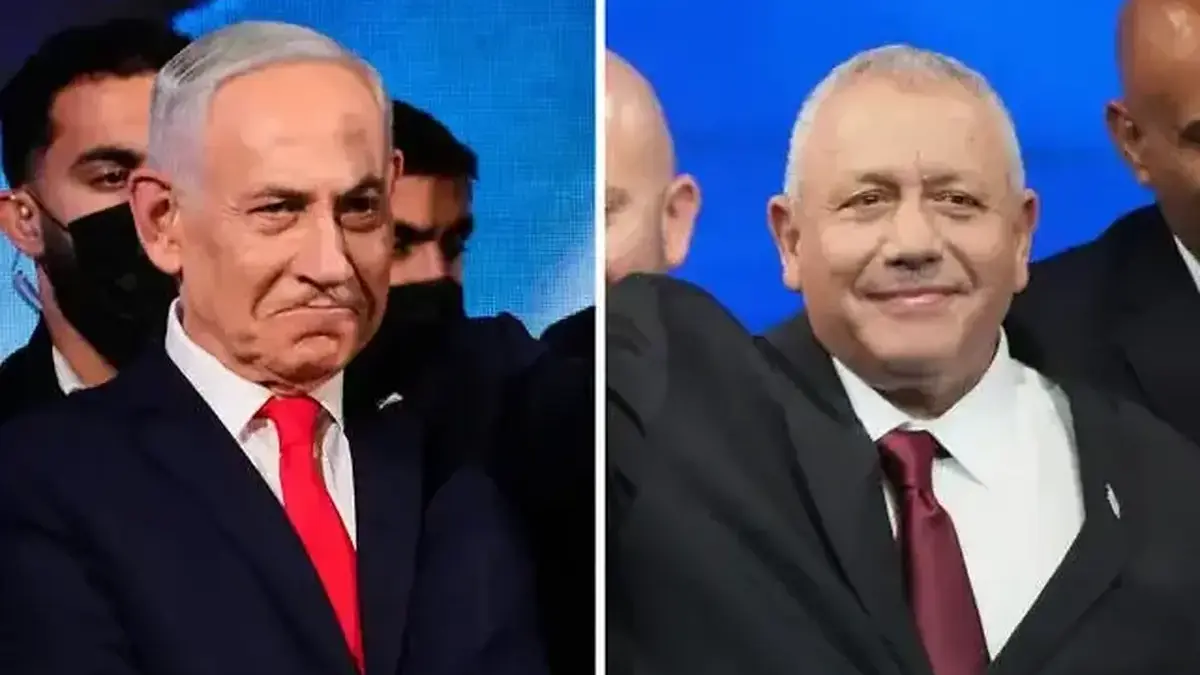
Negotiations to form a new Israeli government resume on Sunday, November 22, between Gadi Eisenkot’s Yashar party and Benjamin Netanyahu’s Likud. Despite their political and personal differences, the two groups seek to determine whether a national unity coalition remains possible. The discussions take place amid a parliamentary deadlock, several weeks after the legislative elections.
Tasked with forming the next government, Gadi Eisenkot is trying to assemble a majority capable of leading Israel. His Yashar party has invited Likud representatives to resume negotiations after an initial round of talks held in mid-November. The discussions will focus on the conditions for a possible expanded coalition and the distribution of governmental responsibilities. The situation remains complex, as none of the main political blocs alone holds a sufficiently strong majority to govern.
Relations between Eisenkot and Netanyahu remain particularly tense. The former Chief of Staff of the Israeli army has committed to promoting a new political direction, while the outgoing Prime Minister seeks to preserve Likud’s influence. Negotiators must also contend with sometimes contradictory positions from other opposition parties. Netanyahu’s party regularly accuses its opponents of lacking the will to reach a compromise, while Yashar asserts its desire to build the broadest possible government.
Naftali Bennett and Yair Lapid at the Heart of the Divisions
Former Prime Minister Naftali Bennett plays an important role in these discussions. After meeting Benjamin Netanyahu in Parliament, he reaffirmed his support for forming a government led by Gadi Eisenkot, while excluding Netanyahu’s continuation as head of the executive. This position suggests a possibility of cooperation with Likud but under a leadership different from that defended by its current leader. Discussions about a possible rotation in the Prime Minister position further complicate the negotiations.
Yair Lapid, another major opposition figure, also advocates the need for a change in leadership. The disagreements therefore concern less the principle of an expanded coalition than the personalities called to lead it and the concessions each party would be willing to accept. The role of Arab parties, parliamentary alliances, and institutional choices also fuel tensions. Political leaders must find a balance between their electoral commitments and the constraints imposed by the composition of the Knesset.
A Race Against Time to Form a Majority
Gadi Eisenkot has a limited timeframe to reach a coalition agreement. If talks with Likud fail, he might seek other partners, notably among ultra-Orthodox parties, or consider a governmental formula relying on external parliamentary support. These scenarios, however, present their own difficulties due to ideological disagreements among the parties involved. The prospect of a minority government also remains delicate in a political system where coalitions are often fragile.
The resumption of talks nevertheless reflects a willingness to keep compromise possibilities open. For Israel, the stakes go beyond rivalries among political leaders: the next government will have to manage security issues, international relations, and the country’s deep internal divisions. The coming days will show whether the discussions between Eisenkot and Netanyahu can lead to a stable majority or if the political deadlock will continue.






Respond to the article
Be the first to comment on this article.