

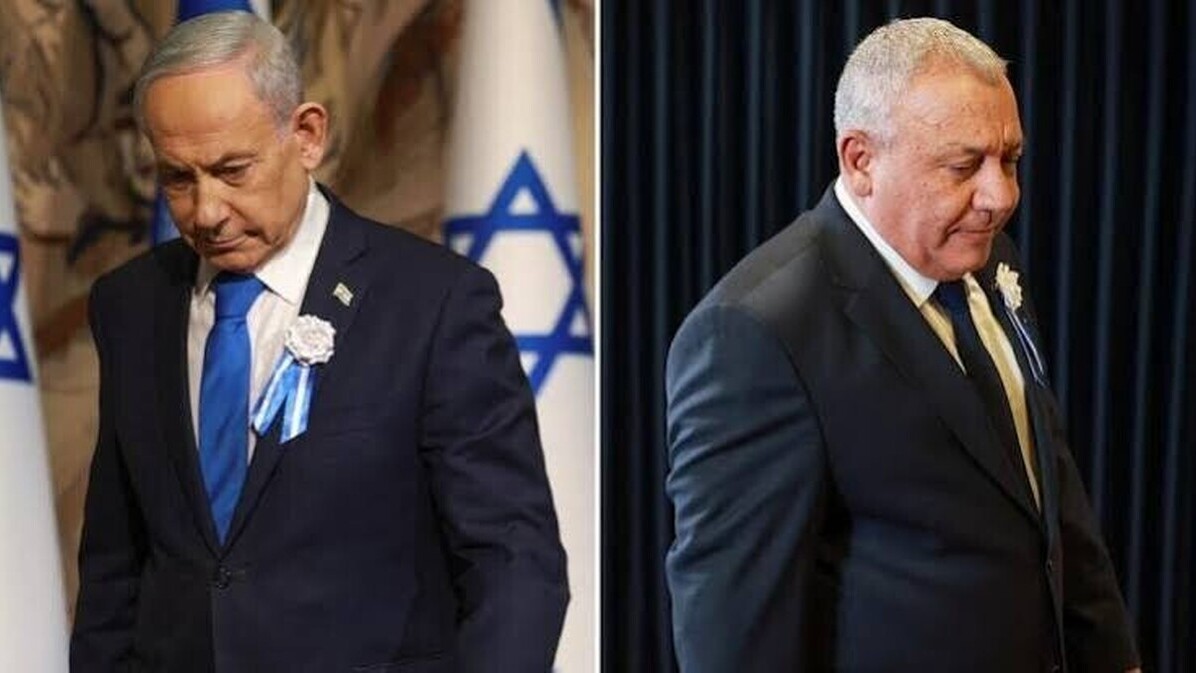
The Israeli political crisis is experiencing a new episode of tensions. Gadi Eisenkot, former Chief of Staff of the army and tasked with forming a new government, believes that Benjamin Netanyahu cannot remain « one minute longer » in power. This statement comes after a particularly controversial speech by the outgoing Prime Minister before the Knesset, while negotiations to form a new government coalition continue.
Gadi Eisenkot strongly condemned the remarks made by Benjamin Netanyahu during the inaugural session of the new Knesset on Tuesday, November 10. The former Chief of Staff called the outgoing Prime Minister’s speech « shameful, » accusing him of fueling divisions within Israeli society. He notably condemned Netanyahu’s attacks against parties representing the Arab minority, whose parliamentary support could play a role in forming the next government. For Eisenkot, this intervention confirms that the Likud leader should no longer hold the office of Prime Minister, even during the political transition period.
This confrontation follows the legislative elections of October 27, which did not allow either of the two main political blocs to obtain an absolute majority. Benjamin Netanyahu’s Likud won 27 seats, but all of its allies hold only 53 of the 120 seats in the Knesset. On his side, Gadi Eisenkot’s Yashar party obtained 21 seats, while his alliance of four formations holds 48. Arab parties have 19 seats, giving them particular importance in parliamentary discussions. Faced with this configuration, President Isaac Herzog tasked Eisenkot with attempting to form a government coalition.
A political rupture after a controversial speech
Tensions between the two leaders intensified when Netanyahu questioned the possibility of governing with the support of Arab parties. The outgoing Prime Minister notably accused his opponents of wanting to depend on parties whose political orientations he contests. Gadi Eisenkot denounced a strategy of division and decided to cancel a meeting initially planned with Likud representatives. This decision reflects the difficulties in establishing dialogue between the two camps, while forming a government requires parliamentary compromises.
The former military chief also wishes to initiate several institutional reforms. His party has presented proposals aimed at creating an official inquiry commission on the Hamas attacks of October 7, 2023, limiting the duration of the Prime Minister’s term, and reversing certain judicial system changes adopted under Netanyahu’s government. These initiatives illustrate the divergences between the two leaders on the functioning of Israeli institutions. They could be examined by Parliament even before the formation of a new government, provided the necessary support is gathered.
Netanyahu seeks to maintain a national unity coalition
Despite his opponent’s criticisms, Benjamin Netanyahu continues to advocate for the formation of a national unity government. On Saturday, November 14, he renewed his call to Gadi Eisenkot, stating that cooperation among the main political formations was necessary to address the security challenges Israel faces. The Likud leader notably insists on the Iranian threat to justify his wish to form a coalition bringing together several centrist and right-wing parties. Eisenkot, however, rejected this proposal, considering that the outgoing Prime Minister’s calls for unity were contradicted by his public statements.
The formation of the next government remains uncertain. Gadi Eisenkot initially has 28 days to gather a parliamentary majority, with the possibility of a 14-day extension. Several configurations can be discussed, including agreements with some formations currently associated with Likud or external parliamentary support. While awaiting the outcome of these negotiations, Benjamin Netanyahu continues to serve as Prime Minister heading a transitional government. The next important parliamentary meeting is scheduled for November 17, with a vote planned on replacing the Knesset president, Amir Ohana. This deadline could provide a first indication of the balance of power within the new assembly.







Respond to the article
Be the first to comment on this article.