

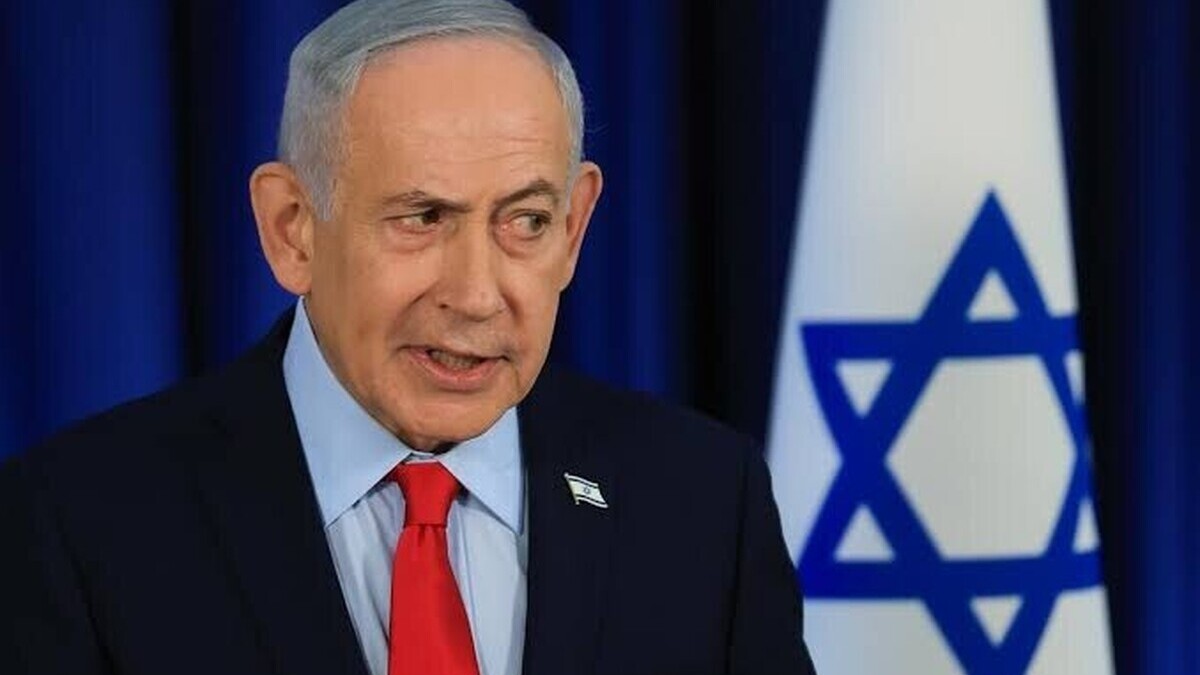
Outgoing Israeli Prime Minister Benyamin Netanyahu reaffirms his determination to definitively end the threat that, according to him, the Iranian regime poses to Israel. Accusing Tehran of seeking to revive its military nuclear program, he considers that overthrowing the Iranian government is the only sustainable solution. These statements come amid high regional tensions and discussions with Washington about a possible resumption of military operations.
Benyamin Netanyahu maintains a particularly firm stance towards Iran. On November 10, during the inauguration of the new Knesset, the outgoing Israeli Prime Minister reaffirmed that the Islamic Republic still represents an existential threat to his country. According to him, the military operations conducted this year against Iranian facilities have weakened Tehran’s capabilities, without permanently eliminating the danger. He accuses Iranian authorities of seeking to rebuild their nuclear program and believes Israeli leaders must continue their efforts to prevent this development.
The Israeli leader had already expressed this objective on October 21, during a military ceremony, stating that overthrowing the Iranian regime was the only way to permanently eliminate the threat. He then indicated that he had conveyed this directive to the Israeli army, Mossad, and security services. These statements are part of an assumed political and military strategy, which no longer limits itself to preventing Iran from acquiring nuclear weapons but also envisions a change of power in Tehran. However, Israeli accusations regarding a resumption of Iran’s military nuclear program have not been independently verified in the available information.
The overthrow of the Iranian regime presented as a strategic objective
For several months, Benyamin Netanyahu has been issuing multiple warnings to Iranian authorities. The Prime Minister considers that the strikes jointly carried out by Israel and the United States since February 2026 have deeply weakened the Islamic Republic. Nevertheless, he believes that Tehran’s remaining military capabilities, particularly in nuclear and ballistic domains, still pose a danger to Israeli security. The leader also accuses the new Iranian Supreme Leader, Mojtaba Khamenei, of continuing the policy of his father, Ali Khamenei, who was killed during the initial strikes of the war.
This position represents a major issue for the future of the Middle East. A strategy explicitly aiming to overthrow Iranian authorities could trigger a new phase of regional confrontation, with difficult-to-predict consequences. Iran retains military capabilities and maintains relations with several armed organizations present in the region. For Israel, the issue therefore goes beyond nuclear facilities and also concerns ballistic missiles, regional influence networks, and the possibility of new attacks on its territory.
Washington at the heart of discussions on a new offensive
The United States occupies a central place in Israeli strategic calculations. U.S. President Donald Trump supported the military operations conducted against Iran, while repeatedly expressing reservations about the timing of a possible resumption of strikes. The economic consequences of the conflict, notably on energy prices and maritime traffic through the Strait of Hormuz, are significant concerns for Washington. American authorities also seek to preserve their military and diplomatic interests in an already deeply destabilized region.
According to information published on November 14 by the Anadolu agency, citing Israeli media, Benyamin Netanyahu reportedly discussed with Gadi Eisenkot, tasked with forming the next government, the possibility of new strikes against Iran. Mossad chief Roman Gofman is also said to have traveled to Washington to discuss the situation with American officials. These steps demonstrate the persistence of Israeli concerns, even though no official decision regarding a new military operation has been announced.
A sensitive political transition period in Israel
Benyamin Netanyahu’s statements come in a particular political context. Following the Israeli legislative elections on October 27, Gadi Eisenkot was tasked with forming a new governing coalition. Netanyahu remains the outgoing Prime Minister during this transition period. The Iranian issue holds an important place in exchanges between political and military leaders, while some strategic decisions could have long-lasting effects on the country.
This situation raises questions about the outgoing government’s room for maneuver. According to Israeli Channel 12, disagreements reportedly emerged between Netanyahu and some military officials regarding the opportunity for new operations against Iran. However, the Prime Minister’s office denied this information. Discussions with Gadi Eisenkot could thus ensure continuity in threat assessment while avoiding major decisions being made without consultation during the political transition.
The risk of a new escalation in the Middle East
The prospect of resuming strikes against Iran raises many concerns about regional stability. The conflict that began in February 2026 has already caused significant economic and military disruptions, notably in the Gulf. Tensions around the Strait of Hormuz, a strategic passage for global hydrocarbon trade, have shown the international consequences that a direct confrontation between Washington, Israel, and Tehran could entail. A new escalation could affect energy markets, trade exchanges, and the security of several neighboring countries.
Iranian authorities consider Israeli and American operations as violations of their sovereignty. Tehran rejects accusations that its nuclear program is intended to produce an atomic weapon, while defending its right to develop civilian nuclear activities. The issue of international verification remains central to determining the reality of Iranian capabilities and associated risks. In this context, negotiation possibilities remain closely linked to military power balances and the positions of the different governments involved.
A political promise with still uncertain consequences
By promising to definitively eliminate the Iranian threat, Benyamin Netanyahu reaffirms one of the main directions of his national security policy. The Israeli leader considers that the operations already conducted have created favorable conditions for a lasting weakening of the Islamic Republic. But turning this objective into political and military reality remains uncertain. Overthrowing a government does not necessarily guarantee the disappearance of its military capabilities, nor the emergence of a power more favorable to regional stability.
The evolution of the situation will now depend on several factors: decisions of the next Israeli government, the position of the American administration, Iranian reaction capabilities, and possible diplomatic initiatives. At this stage, Netanyahu’s statements primarily represent the assertion of a strategic objective, not the announcement of an imminent operation. In a Middle East marked by several years of conflicts, the possibility of a new direct confrontation between Israel and Iran remains a major subject of international concern.






Respond to the article
Be the first to comment on this article.