

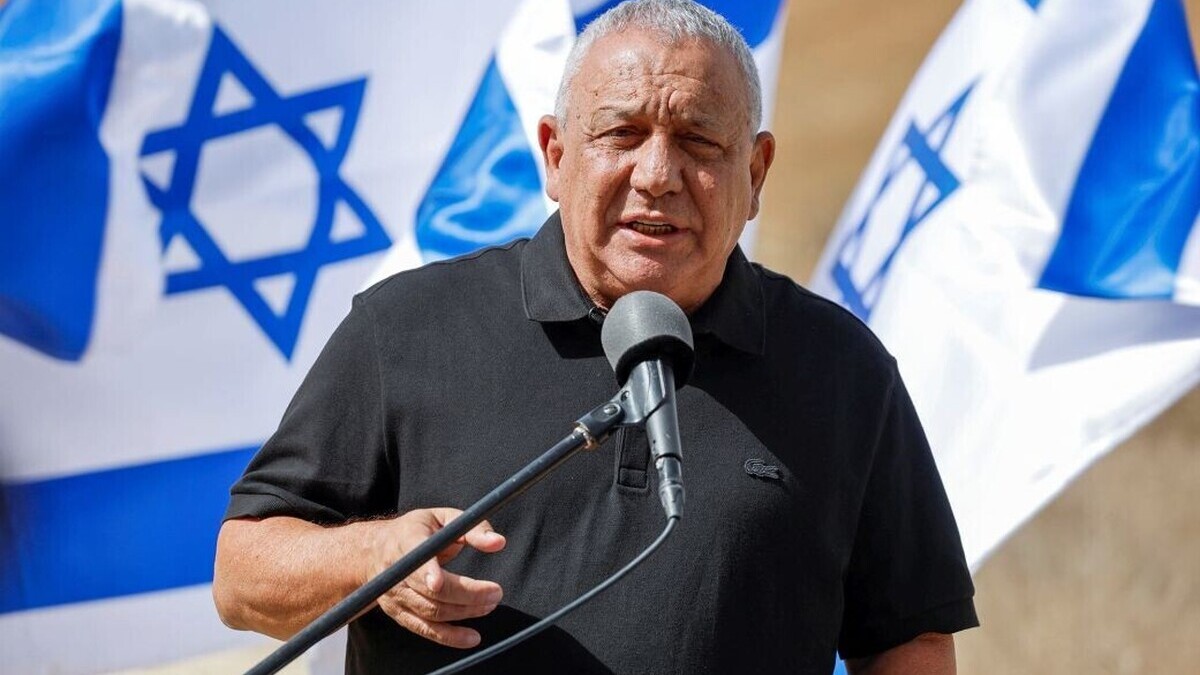
This is a decisive step towards a possible change of government in Israel. President Isaac Herzog announced on Saturday, November 7, his decision to entrust Gadi Eisenkot, former Chief of Staff of the Israeli army and main rival of Benjamin Netanyahu, with the mission to form the next government. The leader of the Yashar party is expected on Sunday at 5 p.m. at the presidential residence in Jerusalem to officially receive his mandate. This decision comes after several days of consultations with the parties represented in the Knesset, after which Eisenkot received the support of 67 deputies, compared to only 46 for the outgoing Prime Minister. A significant setback for Netanyahu, whose coalition lost its majority in the legislative elections of October 27.
The balance of power notably shifted thanks to the recommendations of the Arab parties, which chose to support the designation of Gadi Eisenkot despite their deep political differences with him. Conversely, Netanyahu was deprived of the support of United Torah Judaism, an ultra-Orthodox party that had accompanied him for nearly thirty years. Its seven deputies refused to recommend a candidate, amid disagreements concerning military service exemptions for students of religious schools. President Herzog continued his consultations until Saturday, notably meeting the two main contenders before announcing his choice. For the first time in a long time, Netanyahu is thus excluded from the first attempt to form a government.
A coalition still to be built, despite the 67 supports
Gadi Eisenkot now has 28 days to reach a coalition agreement, with a possible extension of fourteen days granted by the president. But the 67 recommendations obtained during the consultations do not yet constitute an acquired government majority. Several parties in his camp refuse to participate in an executive dependent on the Arab parties, which are nevertheless essential to the majority he currently enjoys. Naftali Bennett and Avigdor Lieberman have notably expressed reservations about this prospect. The former Chief of Staff will therefore have to find a formula to overcome these oppositions, at the risk of seeing his attempt fail despite the support of a majority of deputies during the presidential consultations.
Benjamin Netanyahu has not given up on retaining power. A few hours before Isaac Herzog’s announcement, the Likud leader renewed his call for the formation of a national unity government, warning against a coalition that would depend, according to him, on parties favorable to Hamas. The Eisenkot camp rejected these accusations, denouncing an attempt by the outgoing Prime Minister to preserve his position. If the negotiations initiated by Gadi Eisenkot succeed, Israel could see a change of government after Netanyahu’s long years of political dominance. Otherwise, the president could entrust the mission to another parliamentarian. One thing is now certain: the first mandate to form the government will not return to Netanyahu, but to his main opponent.








Respond to the article
Be the first to comment on this article.