

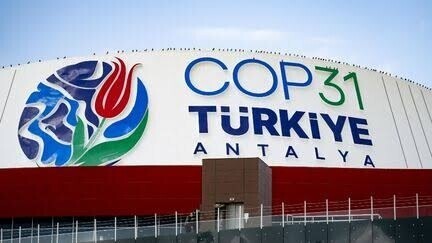
The UN climate summit, held in Turkey, is suspended after more than a day of overtime due to a lack of agreement on a final text. The issue of fossil fuels crystallizes tensions between producing countries and vulnerable nations.
The COP31 negotiations, convened in Antalya under the auspices of the United Nations, were suspended overnight from Saturday to Sunday without an agreement being reached. Delegations, who were supposed to return home Sunday morning, are now postponing their flights to Monday, a sign that the outcome remains uncertain.
The core issue lies in a line missing from the latest draft text: any reference to reducing global demand for fossil fuels was removed under pressure from producing countries led by Saudi Arabia. The European Union, Pacific island nations, Panama, the Solomon Islands, and Ivory Coast refuse to sign an agreement that ignores the role of oil, gas, and coal in climate disruption.
“It is unacceptable to have a COP or a final decision that does not even mention fossil fuels, and we simply will not accept it,” said Juan Carlos Navarro, Panama’s Minister of Environment. French Minister for Ecological Transition, Monique Barbut, echoed this view, denouncing the numerous references to carbon capture and storage in the text, which she considers a license for countries to continue burning hydrocarbons. “We cannot announce to the world that we are now reaching a 1.5-degree temperature increase and act as if nothing is happening,” she stated.
European Commissioner for Climate, Wopke Hoekstra, set his conditions clearly: without the necessary guarantees on climate action, “there will be no agreement.” The UK Secretary of State for Energy, Miatta Fahnbulleh, leading negotiations for London, was more cautious, stating that “discussions remain productive and an agreement is possible.”
A proposal is circulating to break the deadlock: exclude the fossil fuel issue from the final text in exchange for an agreement by oil-producing states, including Saudi Arabia, to derive 35% of their energy consumption from electricity by 2035. Chris Bowen, Australia’s Minister for Climate Change and chair of the negotiations, supports this approach, believing the summit should focus on implementing the transition to clean energy rather than new declarations of principle.
A second sticking point concerns financing. Earlier versions of the text planned to increase funds dedicated to climate adaptation to $120 billion by 2035, a figure the European Union refuses to include. The African group of negotiators, chaired by Zanetor Agyeman Rawlings, Ghana’s Minister of Environment, reacted strongly: “We did not come here to beg; we came to claim what is rightfully ours for our populations who are severely affected by the anthropogenic activities of developed countries.”
For the first time in COP history, the final agreement, officially named the Antalya Accords, could acknowledge that the goal of limiting warming to 1.5 degrees Celsius has been missed. The world would then enter a so-called “overshoot” phase, during which millions more people would be exposed to rising sea levels and extreme heat waves.
The situation is all the more tense as Turkey, the host country, is criticized for its handling of the negotiations: its chief negotiator left some crucial sessions, leaving many delegations feeling “disrespected,” according to an observer present on site. Mohamed Adow, from the organization Powershift Africa, did not mince words: “I can tell you without any doubt that this is the worst COP ever organized.”
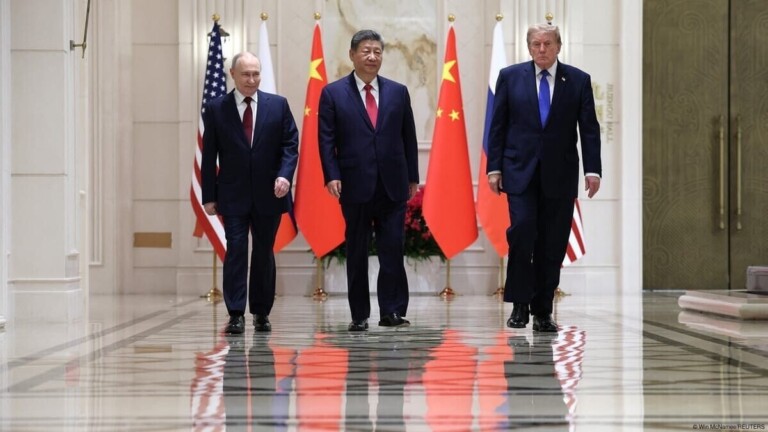
If no consensus emerges, negotiations could be officially suspended and reconvened next year. Such a scenario has occurred only once since the launch of the UN climate conferences in 1995. In the background, the meeting held this week in Shenzhen between Donald Trump, Xi Jinping, and Vladimir Putin, during which the three leaders agreed to increase oil production amid supply disruptions linked to the war in Iran, illustrates the opposing forces at work just as diplomats try to agree on the future of fossil fuels.




Respond to the article
Be the first to comment on this article.