

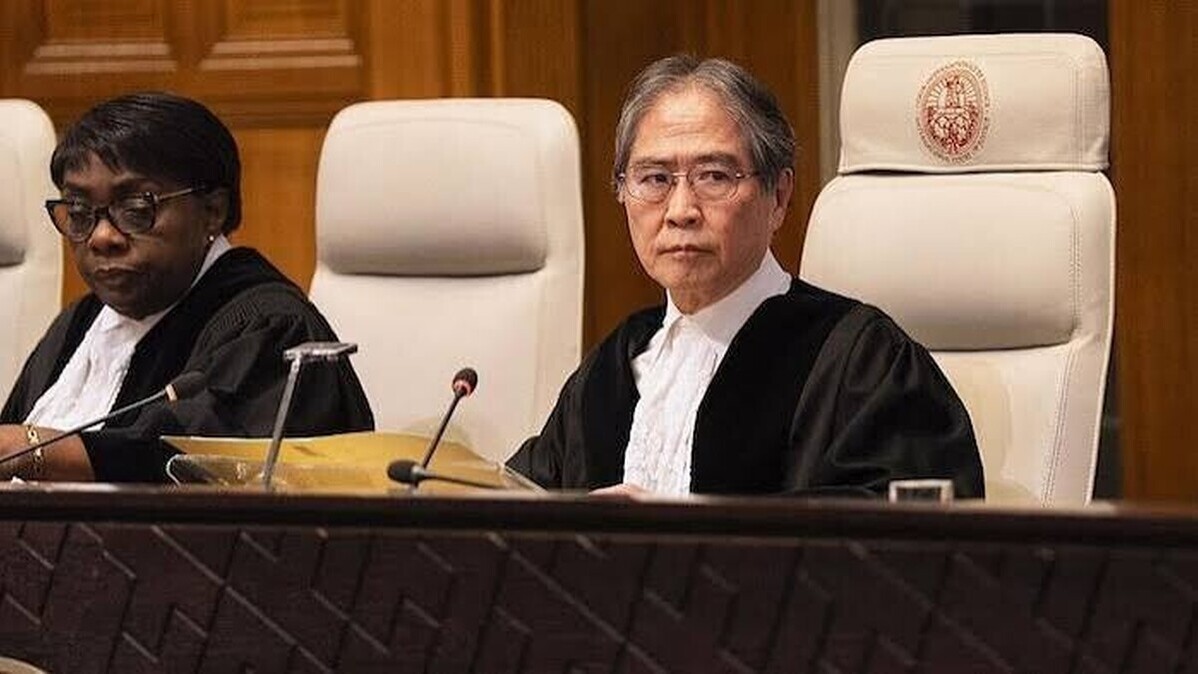
The International Court of Justice has recognized Myanmar’s responsibility for the genocide committed against the Rohingya Muslim minority. This historic ruling, delivered in The Hague, comes nearly ten years after the 2017 violence that caused thousands of deaths and the exodus of hundreds of thousands of inhabitants to Bangladesh. Beyond acknowledging the crimes, the judgment could have major consequences on the interpretation of international law and on other genocide proceedings, notably the one concerning the war in the Gaza Strip.
The International Court of Justice (ICJ), the main judicial body of the United Nations, issued a historic decision recognizing that Myanmar, officially called Myanmar, committed genocide against the Rohingyas. The judges ruled by nine votes to six, following a procedure initiated in 2019 by The Gambia with the support of the Organisation of Islamic Cooperation. The judgment mainly concerns military operations carried out in 2017 in Rakhine State, in the west of the country. These violences caused the death of at least 10,000 people and forced more than 700,000 Rohingyas to flee to Bangladesh. The evidence examined by the Court includes massacres, rapes, torture, and destruction of villages, sometimes set on fire while inhabitants were still inside.
The announcement of the verdict sparked scenes of joy and relief in refugee camps in Bangladesh, where more than one million Rohingyas still live. Hundreds gathered in front of screens to follow the reading of the decision by the Court’s president, Japanese judge Yuji Iwasawa. For this population deprived for years of prospects to return to their country, the judgment constitutes international recognition of the persecutions suffered. It also represents an important step in a long judicial battle to establish the responsibilities of the Burmese state. However, this victory does not guarantee an immediate improvement in the living conditions of refugees, who face precariousness, insecurity, and lack of sustainable prospects.
A decision that redefines how to prove genocide
One of the main issues in this case concerned demonstrating genocidal intent. The 1948 Convention on the Prevention and Punishment of the Crime of Genocide does not limit itself to sanctioning massacres or mass violence. It also requires proving the intent to destroy, in whole or in part, a national, ethnic, racial, or religious group. This requirement is one of the main difficulties encountered in international proceedings. Governments and military officials involved in such violence generally do not state their intentions in public documents. Judges must therefore examine the facts, their repetition, scale, and coherence to determine whether the crimes legally qualify as genocide.
In the Myanmar case, the judges found that the totality of the evidence presented established this intent. The Court notably examined the behavior of security forces and local militias, as well as the nature of the violence inflicted on civilian populations. This approach confirms that genocidal intent can be inferred from a set of behaviors, even in the absence of an explicitly written order. It also emphasizes that the existence of other objectives, such as fighting an insurrection or forcibly displacing populations, does not necessarily exclude an intent to destroy a group. This interpretation could have significant consequences for future cases examined by international justice.
Gaza and Israel: a ruling watched far beyond Myanmar
The scope of this decision goes beyond Southeast Asia. It is particularly observed in the context of the case initiated by South Africa against Israel before the same court, concerning military operations in the Gaza Strip following Hamas attacks on October 7, 2023. Pretoria accuses the Israeli state of violating the Genocide Convention, an accusation firmly rejected by Israeli authorities. While the two cases involve different historical, political, and military contexts, the legal principles clarified in the Rohingya case could influence how judges assess evidence in other proceedings. However, the judgment does not constitute a preliminary decision on the situation in Gaza, as each case must be examined on its own facts.
British lawyer Philippe Sands, a member of The Gambia’s legal team, highlighted the importance of this clarification of international law. According to him, the decision helps better understand the evidentiary requirements applied by the Court when examining a genocide accusation. Legal expert Janina Dill, specialist in international security at Oxford University, also stresses the need to distinguish between different cases. The risk would be to reduce the fate of the Rohingyas to a mere legal precedent, whereas their situation is a human tragedy deserving specific attention. The ICJ decision should thus be understood both as recognition of the crimes committed against this minority and as a contribution to the evolution of international jurisprudence.
A judicial victory that does not yet guarantee justice for victims
The main difficulty now concerns the enforcement of the judgment. Unlike a national court, the International Court of Justice does not have police forces or autonomous mechanisms to directly compel a state to execute its decisions. It has requested Myanmar to provide reparations to the Rohingyas, but implementation could face significant political and material obstacles. Hundreds of villages were destroyed and many families lost their homes, lands, and livelihoods. The issue of reparations thus goes beyond possible financial compensation: it also concerns the restitution of property, recognition of rights, and conditions for a safe return of refugees.
The United Kingdom announced it intends to act so that the decision does not remain without consequences. London requested an urgent meeting of the United Nations Security Council and announced the expulsion of the Burmese defense attaché stationed in the British capital. Other diplomatic measures could follow. However, a more binding international response remains uncertain, notably due to the veto power held by China and Russia on the Security Council. This situation illustrates one of the major contradictions of the contemporary international order: courts can establish a state’s responsibility, but enforcement of their decisions largely depends on governments’ political will.
Nearly ten years after the 2017 violence, the judgment thus represents a major advance without ending the Rohingya tragedy. For the victims, the legal recognition of genocide is an essential step, but it does not replace security, reparations, or the possibility to rebuild a dignified life. Above all, the decision reminds us that international law retains a role in recognizing the gravest crimes, even when proceedings take many years. Its historic significance will now depend on the international community’s ability to transform this condemnation into concrete measures for the affected populations.





Respond to the article
Be the first to comment on this article.