

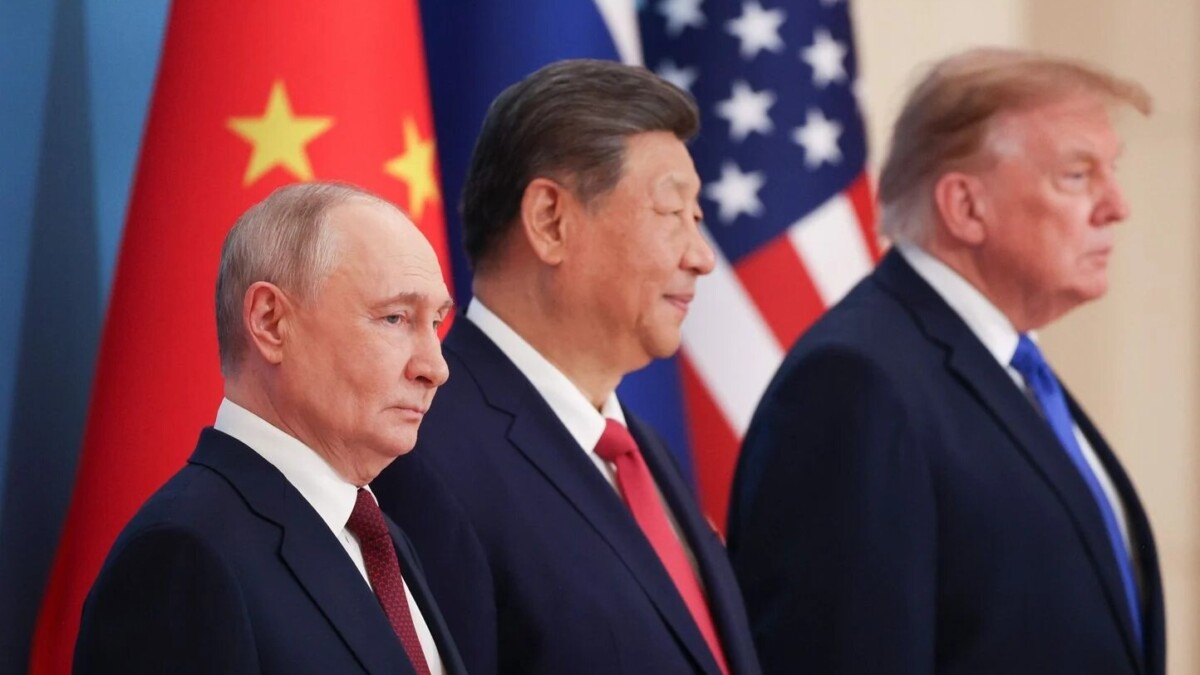
The American, Russian, and Chinese presidents met for the first time together on the sidelines of the APEC summit, signing a joint declaration on nuclear peace and UN reform. Meanwhile, Kyiv faced new Russian drone attacks.
This is an unprecedented meeting in recent diplomatic history. Donald Trump, Vladimir Putin, and Xi Jinping held their first trilateral meeting on Thursday, November 19, 2026, in Shenzhen, southeastern China, on the sidelines of the Asia-Pacific Economic Cooperation (APEC) summit. Ninety minutes of closed-door discussions resulted in a « joint peace declaration » with carefully calibrated wording.
The text states that « a nuclear war cannot be won and must never be fought, » commits the three countries to increasing oil production and supply, and expresses a shared desire to reform the UN to better address global challenges. The declaration also addresses the issue of state officials’ immunity, specifying that « the International Criminal Court and similar institutions must not abuse their jurisdiction »—a wording that will certainly be noted, as Putin is subject to an ICC arrest warrant.
Before the session began, each of the three leaders outlined their priorities. Xi Jinping set the framework by stating that « positive interaction among great powers is not a choice but an absolute necessity. » Putin emphasized the Ukrainian issue as well as food and energy security. Trump, for his part, stressed the « special responsibility » of the three nuclear-armed nations to maintain constructive dialogue, also mentioning the Iranian dossier: « We will not allow Iran to acquire a nuclear weapon. »
Back aboard Air Force One, the American president hailed on social media « a tremendous trip with significant consequences, » announcing a press conference at the White House for the following day. He had previously met separately with Putin, whom he publicly called « my friend, » and Xi Jinping, with whom he says he maintains a « very special » relationship.
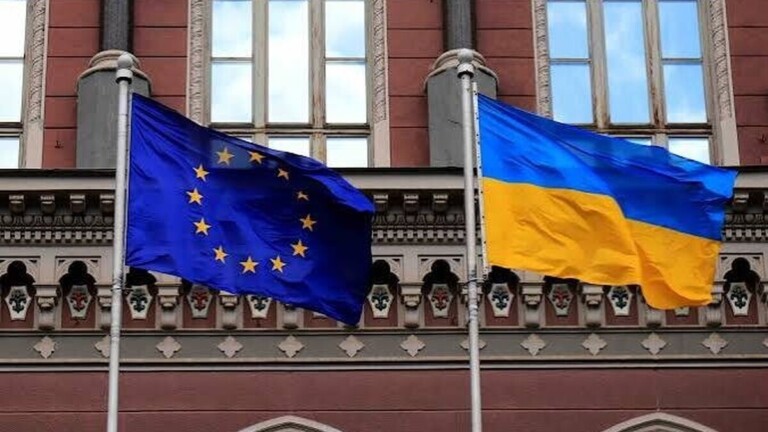
Putin described the meeting as « an important chapter in the history of diplomacy, » while stating that Ukraine and Europe were « not yet ready to make compromises. » However, he indicated that Moscow had invited representatives of the European Union to visit the Russian capital to better understand the European position. The Russian president also compared this summit to the 1945 Yalta Conference, stating that it only « codified the realities born from World War II, » and that « the realities on the ground today must also be accepted. »
These conciliatory statements have a brutal backdrop: while the three leaders were meeting in Shenzhen, Russian drones struck Kyiv. Putin also promised a « much more painful » response after the Ukrainian attack that destroyed the central section of the bridge connecting Russia to occupied Crimea. No mention was made of nearly five years of Russian bombardments on Ukrainian civilian infrastructure.
This summit represents a form of symbolic rehabilitation for the Kremlin: it is the first time since the start of the war in Ukraine that Putin participates in an international gathering alongside leaders from countries such as Canada, Japan, or Australia. Some Russian newspapers have hailed the event as a « diplomatic victory. »
On the American side, the reaction in Congress is mixed. Republican Senator John Curtis said he appreciated the acknowledgment that « nuclear war must never be fought, » but warned that « Vladimir Putin and Xi Jinping are not our friends » and that treating them as such risks « undermining the trust of our allies. » Democratic Senator Jeanne Shaheen was more direct, writing on X that « the president’s friend is a murderous war criminal. »
Xi Jinping concluded by describing the exchanges as « positive, constructive, and very productive, » recalling according to Chinese state television « the history of fighting side by side during World War II. » The initiative for this trilateral meeting reportedly came from Putin himself, according to several sources.



Respond to the article
Be the first to comment on this article.