

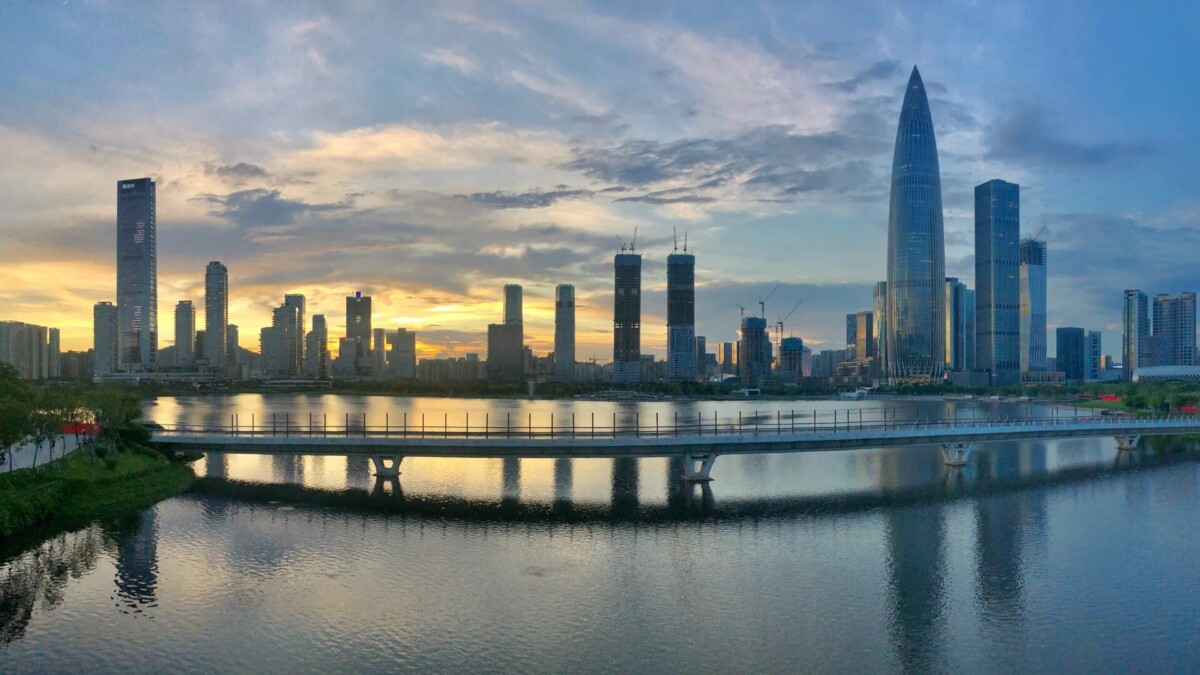
Some are already talking about a new Yalta to be held on November 19 in Shenzhen, China, referring to the historic meeting held in Crimea in February 1945, as the defeat of Nazi Germany was approaching. The three major Allied powers were then trying to organize the end of the war and the post-war balance in the notable absence of Europeans, except Churchill representing the United Kingdom against Stalin for the USSR and Roosevelt for the United States. The greatest global conflicts in history have taken place at the very heart of history, preempting for centuries the Europeans’ ability to ensure their own security and often pushing foreign powers to do so on their behalf. On November 19, this is probably what could happen again with an American ally closer to the Russians and Chinese than ever before. However, it has been clear since Donald Trump’s return, and in a global context of American disengagement from various conflict and tension zones, that Washington would not provide after-sales service for a new war breaking out on the European continent. The United States is not intended to defend indefinitely a Europe that claims an autonomous voice without always consenting to the means of that autonomy. But for Europeans, who are outraged at not being invited to Shenzhen this week, this dependence gives no one the right to negotiate the sovereignty of Europeans or Ukrainians on their behalf. This is a matter for discussion, isn’t it?
In Shenzhen, the risk of a world decided by a few
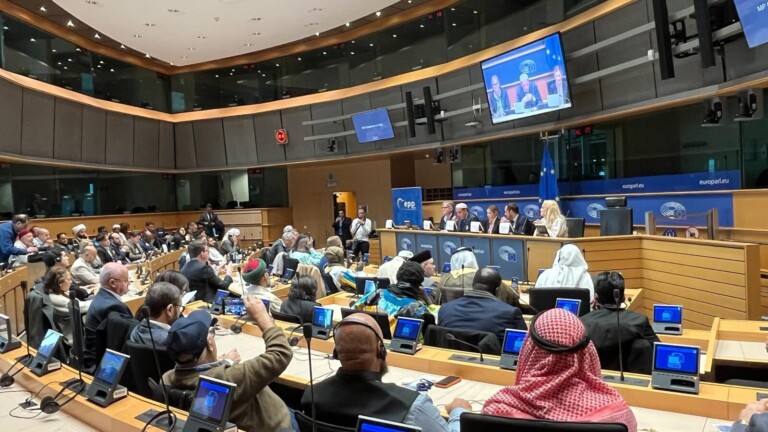
Next Thursday could be a historic moment for the planet as the three greatest leaders of the world, three major military powers, will meet on the sidelines of an APEC (Asia-Pacific Economic Cooperation) meeting. Since Europeans are not members of the organization, their absence is not scandalous, but they know well that the Russia-Ukraine issue will be on the agenda. Therefore, Europe remains directly concerned by the meeting and the decisions that could be made there. It should not be overlooked that nothing might happen at all, as with many past summits and high-level meetings. Nonetheless, it is clear that each will try to advance their interests. For Washington: security, arms control, American priorities. For Moscow: recognition of its status and pursuit of a favorable balance of power. And for Beijing, the host country: diplomatic centrality and defense of its strategic interests. What Europeans fear is the rapprochement based on personal and often emotional grounds: the danger is not only what the three might sign but the establishment of trust, a principle whereby a few powers could speak on behalf of others. But fundamentally, one cannot just be outraged or worried. The real question is why Europe finds it so difficult to prevent this sidelining?
Europeans discover the price of delegated security
Since NATO’s creation in 1949, much of Western Europe has built its security under American guarantee. After the Cold War, many governments favored peace dividends and postponed military investments. Certainly, France has maintained an independent deterrent, a military industry, and intervention capacity, and the United Kingdom, even outside the European Union since Brexit, remains a major military power. However, Europeans’ choices and efforts differ greatly, and their common weakness also lies in their difficulty transforming these national resources into collective power. Americans have been asking member states for years to invest more in their defense. But an additional budget does not immediately produce stocks, available units, intelligence capabilities, or a command chain capable of acting. Buying more is also not enough to reduce dependencies if equipment remains reliant on external suppliers. The awakening is very recent, and three years after the start of the war in Ukraine. Indeed, it was in The Hague in 2025 that NATO allies adopted a target for 2035 of 3.5% of GDP for defense proper, complemented by up to 1.5% for security-related expenditures. This is a future commitment, not capacities already available. But let’s admit it, even if Trump annoys Europeans: it is difficult to demand a perfectly balanced relationship with one’s protector when one depends on them for the decisive means of security.
Blaming Washington will not give Europe the means to exist
Some on the old continent think Americans are handing us over to our enemies/competitors. Certainly, one can fear American concessions made without sufficient consultation, but one cannot yet assert that such an agreement will be concluded in Shenzhen. On the other hand, one can acknowledge the legitimacy of an American demand: yes, the United States has the right to ask Europeans to take more responsibility for their defense. A lasting alliance precisely requires sharing burdens and responsibilities.
To have influence, there is no other way. Europeans urgently need to define the interests they are ready to defend together; produce more equipment and ammunition with coordinated orders; fill their most constraining military dependencies; clarify who negotiates on their behalf and with what mandate; and above all be able to act when Washington chooses not to, as is the case in Ukraine. It is not enough just to finance Kiev’s fight. Because the military solution has certainly not been one for a long time.
European autonomy will not consist of breaking with the United States, but rather becoming an ally capable of contributing, deciding, and, when its interests require it, refusing. One can condemn what may happen in Shenzhen, with the return of regional and predatory powers and the reconstitution of spheres of influence to the detriment of multilateralism dear to Europeans, but it will be necessary to be much more convincing than now to reverse the course of history that seems somewhere already inevitable. In this logic of power relations, we are now at the margin of the world.





Respond to the article
Be the first to comment on this article.