

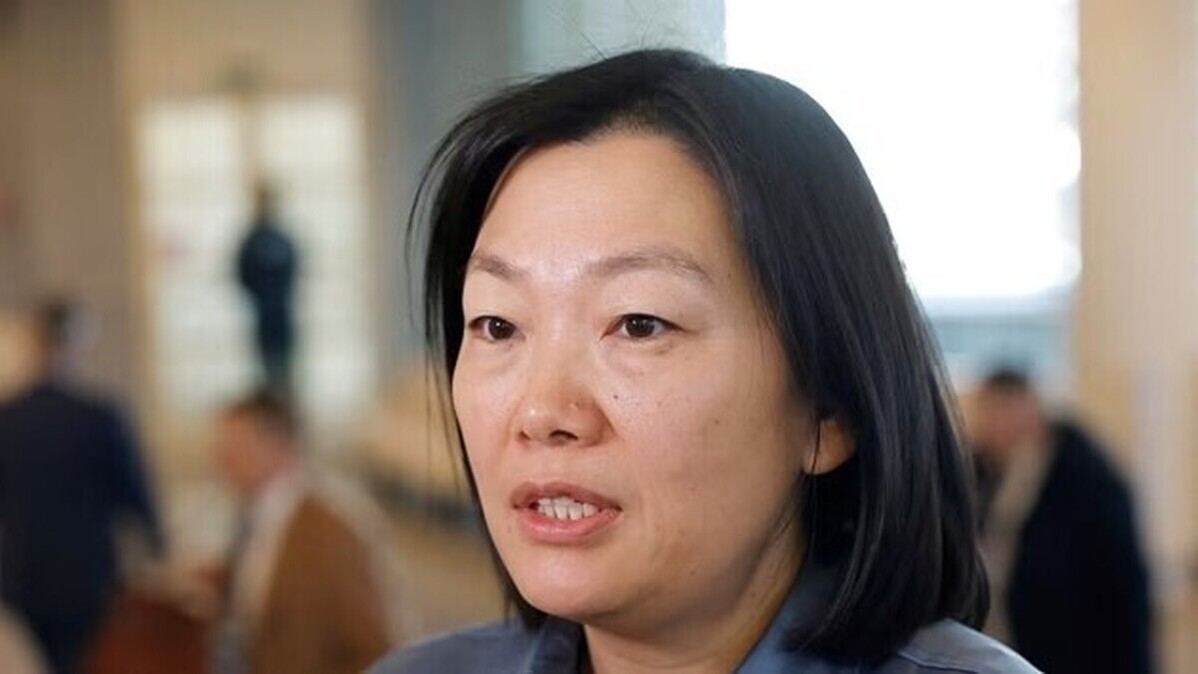
Brussels on Monday added Tatyana Kim, CEO and owner of the Russian e-commerce giant Wildberries, to its sanctions list, accusing her of supporting the Russian war effort in Ukraine. Her assets in the European Union are frozen, and she is banned from traveling within the bloc.
Tatyana Kim, whose fortune is estimated at $8,1 billion, heads Wildberries, Russia's largest online retailer. Born in Grozny, Chechnya, to parents of Korean descent, she is now targeted by the twentieth and some sanctions packages adopted by the European Union since the Russian invasion of Ukraine on February 24, 2022.
European authorities justify this decision by describing Wildberries as "one of Russia's largest taxpayers," but above all by asserting that the platform "operates as a supply network for the Russian military by facilitating the sale of military and dual-use goods." Brussels believes that Kim "supports, materially or financially, and profits from the Russian military-industrial complex."
The executive rejected these accusations this summer, after Ukraine added Wildberries' warehouses to its list of military targets on Russian territory. She then compared her catalog, which includes night-vision goggles, ammunition pouches, and ballistic helmets, to those of Amazon or Alibaba. The Kremlin also denied any involvement of the company in the conflict.
For its part, Wildberries indicated that the European sanctions would have no concrete effect on its activities, as the company has neither assets nor commercial operations within the European Union.
The measure is part of a broader set of sanctions targeting some 50 banks and entities facilitating Russian oil exports, as well as nearly 100 business executives, propagandists, and a major pro-Russian hacking group. Companies based in China, Oman, the Seychelles, and the United Arab Emirates , linked to the sale of oil transported by Russia's shadow fleet of illicit tankers, are also on the list.
Brussels has announced its intention to adopt a new package of sanctions by the end of the year, thus continuing its strategy of economic pressure on Moscow to force President Vladimir Putin to negotiate an exit from the conflict.


Respond to the article
Be the first to comment on this article.