

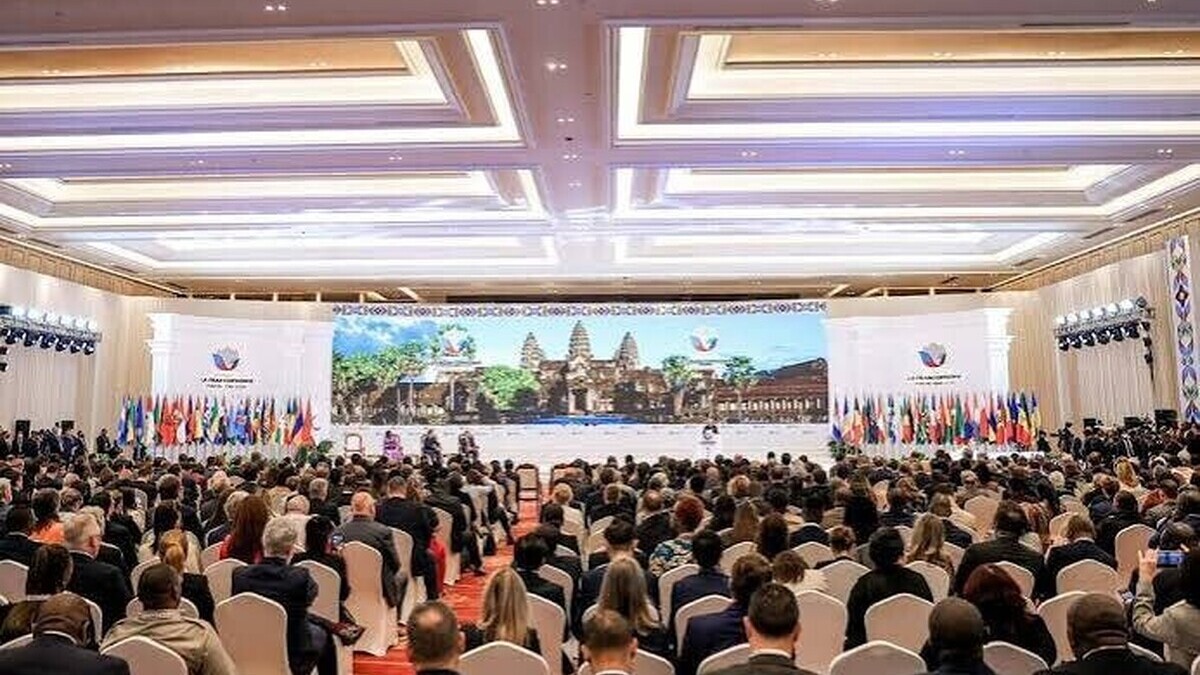
The International Organization of La Francophonie (OIF) decided on Monday, November 16, 2026, to postpone the election of its Secretary-General by one year. Gathered in Phnom Penh, Cambodia, the heads of state and government failed to reach a consensus on the succession of Louise Mushikiwabo. The Rwandan leader will remain provisionally in office, while diplomatic tensions between the Democratic Republic of Congo and Rwanda weighed on the negotiations.
The 20th Francophonie Summit ended with an unprecedented decision. While representatives of member countries were supposed to designate the next Secretary-General of the organization on Monday for the 2027-2030 term, they ultimately chose to postpone the vote by twelve months. According to sources close to the discussions cited by AFP, this decision results from the inability to reach an agreement after two particularly difficult days of negotiations.
Louise Mushikiwabo, head of the OIF since 2019, will retain her functions during this transitional period. The Rwandan official, who was seeking a third term, will not be immediately replaced. According to the terms of the compromise reported at the end of the summit, Rwanda will not present a candidate in the next election. This concession aims to allow the search for a personality capable of better uniting the member states.
Tensions Between Kinshasa and Kigali at the Heart of the Deadlock
The designation of the next leader of La Francophonie became central to diplomatic tensions between the Democratic Republic of Congo and Rwanda. Kinshasa accuses Kigali of supporting the M23 rebel movement active in the eastern part of Congolese territory. Rwanda disputes these accusations, in a regional context marked by several years of violence and political rivalries.
The DRC had warned that a new election of Louise Mushikiwabo could lead to its departure from the organization. Such a decision would have been a major setback for the OIF, considering the demographic and linguistic weight of the country. With approximately 57.3 million French speakers, the Democratic Republic of Congo is the second country with the most French speakers, behind France.
Four Candidates for a Contested Succession
Four personalities were officially candidates for the leadership of the organization. Besides Louise Mushikiwabo, there were former Congolese minister Juliana Lumumba, daughter of Patrice Lumumba, former Romanian Prime Minister Dacian Cioloș, and former Mauritanian minister Coumba Ba. This competition represented an unusual situation for an institution whose leaders have traditionally been designated following diplomatic negotiations.
France and Canada, the main financial contributors to the OIF, had called on delegations to prioritize unity. Despite these efforts, discussions did not result in a consensual candidacy. The 53 full member states and governments ultimately gave up organizing the secret ballot vote initially planned, preferring to extend negotiations until 2027.
A First in the History of La Francophonie
Since the creation of the Secretary-General position in 1997, the International Organization of La Francophonie had always succeeded in designating its leader by consensus. Boutros Boutros-Ghali, Abdou Diouf, Michaëlle Jean, and then Louise Mushikiwabo had successively held this responsibility. The postponement announced in Phnom Penh thus represents a break with the institutional practices observed until now.
This situation occurs as the OIF seeks to strengthen its cohesion and international influence. The organization brings together 90 states and governments, divided among full members, associate members, and observers. It is active notably in cultural cooperation, education, economic development, democracy, and the promotion of the French language.
An Organization Facing Several Diplomatic Challenges
The institutional deadlock also follows the departure of Burkina Faso, Mali, and Niger, which left La Francophonie in 2025. These withdrawals have raised questions about the organization’s place in certain African regions and its ability to maintain political dialogue among governments with sometimes opposing orientations.
The Phnom Penh summit was supposed to emphasize peace, stability, and economic cooperation. Organized for the first time in Cambodia, it marked the return of a major Francophonie event in Southeast Asia, nearly thirty years after the Hanoi summit. But disagreements over the institution’s leadership took center stage in the discussions.
One Year to Rebuild Consensus
The postponement to 2027 must now allow member states to continue their diplomatic consultations and seek a candidacy likely to obtain sufficiently broad support. The temporary maintenance of Louise Mushikiwabo guarantees the administrative continuity of the organization, without immediately resolving the divergences that led to this deadlock.
For the OIF, the coming months will be decisive. Beyond choosing its future Secretary-General, the organization must preserve the participation of its main members, restore dialogue between Kinshasa and Kigali, and continue its cooperation missions. The compromise reached in Cambodia avoids an immediate rupture but leaves open the question of political balance within La Francophonie.



Respond to the article
Be the first to comment on this article.