

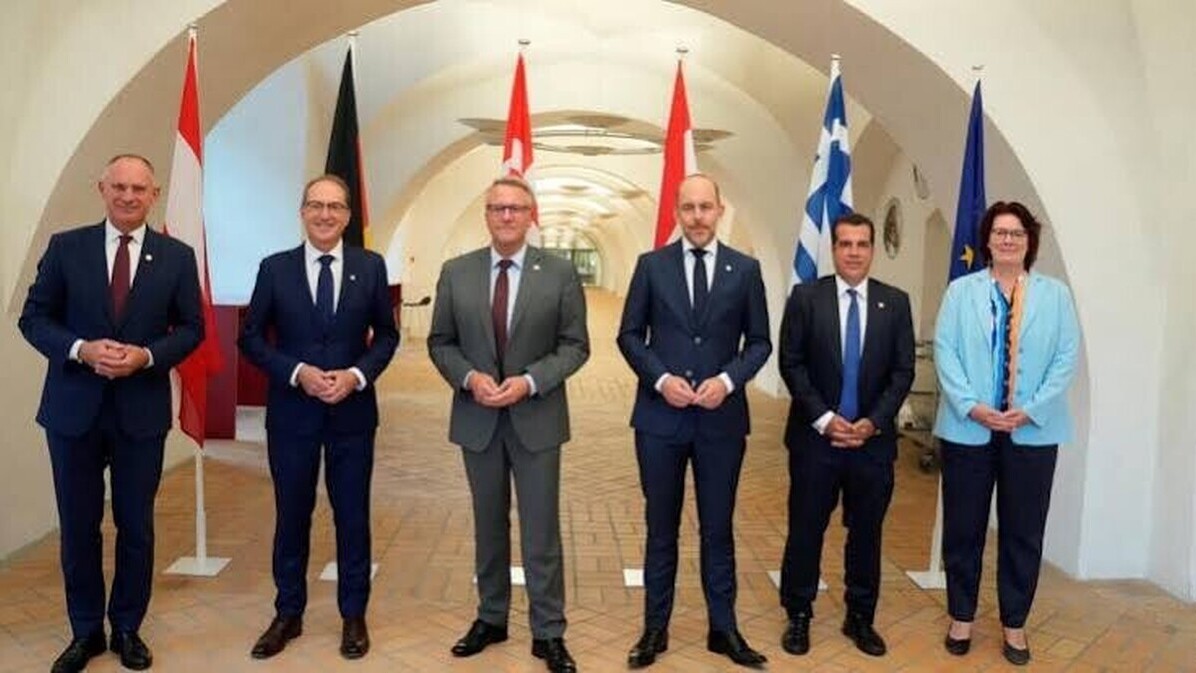
Germany, Austria, Denmark, Greece, and the Netherlands announced on Monday, November 16, 2026, a joint project to transfer migrants who have lost their right to reside in the European Union to Rwanda . This facility, presented as a "return hub," could receive its first occupants in 2027. This controversial initiative marks a hardening of European migration policies.
Five European Union member states wish to experiment with a new form of deportation management. Meeting in Vienna, Austria , their representatives presented an agreement with Rwanda to establish a facility on its territory to accommodate individuals subject to a return order when their return to their country of origin cannot be arranged.
The project brings together Germany , Austria, Denmark, Greece and the Netherlands. It comes in the context of stricter European migration policies, with several governments wishing to increase the number of effective returns of people who no longer have the right to remain.
A first center is planned for 2027
The program is expected to start on a limited scale. According to information released during the negotiations, around one hundred people could be accommodated in the first phase, with approximately twenty participants from each of the five European countries.
The authorities present this step as an experiment designed to assess the practical conditions for the transfer, reception, and support of the individuals concerned. The center could begin operating in the spring or summer of 2027.
Project officials assure that it will not be a closed detention facility. Those transferred could be granted residency status in Rwanda and access integration programs, including vocational training.
Kigali advocates a new possibility for integration
The Rwandan government presents this partnership as a possibility of hosting people who can no longer remain in the European countries concerned.
Rwandan Interior Minister Vincent Biruta defended the idea of offering a new perspective to those transferred. Austrian Chancellor Christian Stocker, for his part, believes this agreement marks a major shift in European migration policy.
For the five governments, the mechanism addresses a recurring difficulty: some deportation decisions cannot be enforced, particularly when the country of origin refuses to issue the documents necessary for return.
Criticisms of fundamental rights
The project, however, is generating significant reservations. Several human rights organizations are concerned about the guarantees offered to those being transferred, particularly when they have no family, cultural, or personal ties to Rwanda.
The United Nations High Commissioner for Refugees has also expressed concerns. These criticisms focus particularly on protection against deportation to countries where people could face persecution, as well as on access to legal remedies and respect for individual rights.
The legal question remains central. States will have to demonstrate that the transfers comply with their international and European obligations, particularly regarding the protection of fundamental rights.
An initiative that divides Europe
While the European Commission has welcomed the search for new solutions to improve returns, not all European leaders share this approach.
Emmanuel Macron has notably expressed reservations about the effectiveness and compatibility of such measures with European values. Other political leaders, on the contrary, believe that return centers located outside the Union could contribute to making migration policies more dissuasive.
The actual launch of the project will still depend on its operational arrangements, its financing and the legal guarantees provided to the people concerned.
With this initiative, the five European states are opening a new phase in the debate on the externalization of migration policies. Its actual effectiveness and human consequences will be closely monitored during the first trials planned for 2027.









Respond to the article
Be the first to comment on this article.