

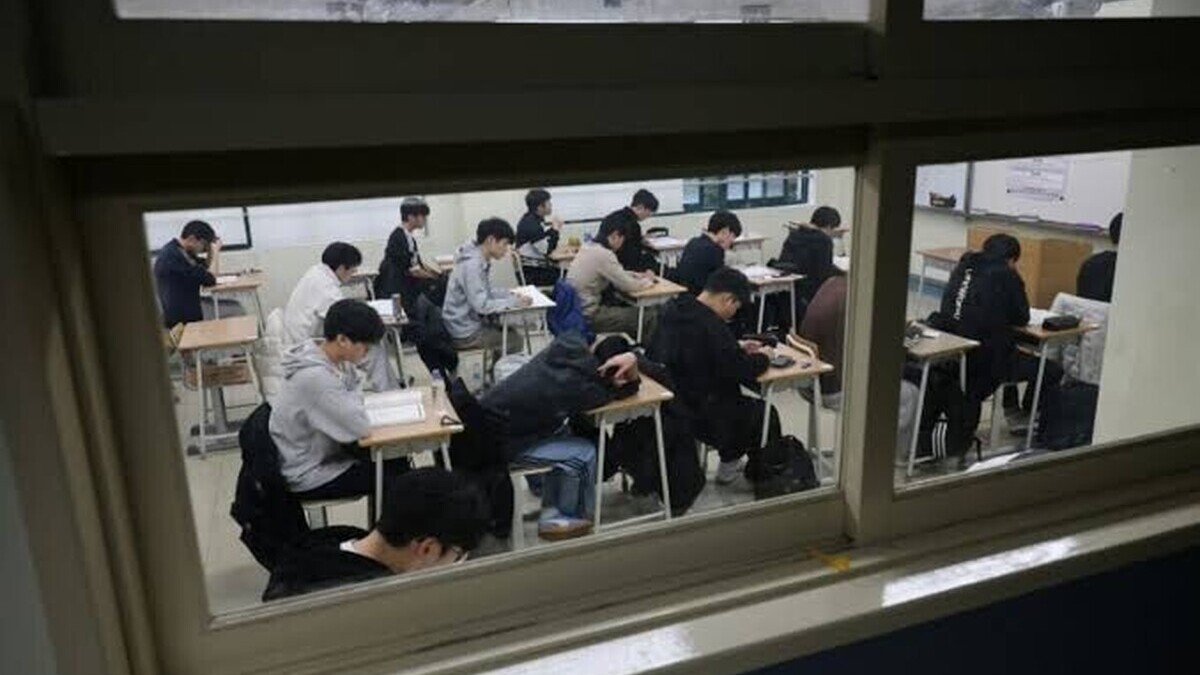
South Korea has decided to temporarily suspend public Wi-Fi networks near centers hosting its national university entrance exam, scheduled for Thursday, November 19. This exceptional measure aims to limit cheating opportunities using artificial intelligence tools, including smart glasses and miniaturized communication devices. This decision illustrates the new challenges posed by digital technologies to exam organization.
South Korean authorities have announced an unprecedented plan to secure the Suneung, the national exam that plays a decisive role in access to higher education. From Wednesday, November 18 at 6 p.m., public Wi-Fi networks and those operated by telecommunications providers must be disabled within a 100-meter radius around exam centers. The measure will remain in effect until Thursday, November 19 at 6 p.m., representing a twenty-four-hour interruption. The country’s main operators, SK Telecom, KT, and LG Uplus, are participating in this operation in coordination with public administrations and local authorities. Schools hosting the exams are also affected by the suspension of certain wireless networks.
The goal is to reduce the risk of cheating using electronic devices capable of communicating with artificial intelligence services. Authorities particularly fear that smart glasses or miniature cameras could discreetly transmit questions to external persons or automated systems. Answers could then be communicated to candidates by various means. The public Wi-Fi shutdown is intended to complicate this type of operation, even though it cannot prevent all wireless communications. Private networks, mobile connections, and tethering from phones cannot be disabled so broadly. South Korean officials thus acknowledge the technical limits of this measure, presented as an additional prevention tool.
A Decisive Exam for Students’ Futures
In South Korea, the Suneung holds a special place in school and family life. The results can heavily influence admission possibilities to the most sought-after universities. The exam mobilizes significant national organization each year, with measures designed to ensure calm and equal conditions for all candidates. Authorities notably adapt certain public services and traffic around exam centers. The decision to temporarily suspend Wi-Fi networks fits into this logic of securing the exam while responding to the emergence of new technologies capable of bypassing traditional surveillance measures. Organizers must now anticipate forms of cheating that no longer necessarily require the visible use of a mobile phone.
However, this initiative raises questions about the effectiveness and proportionality of digital restrictions. Disabling public networks may affect people near the institutions, including those not participating in the exams. It also requires technical coordination among several operators and administrations. In the longer term, schools will likely need to strengthen their control procedures for connected devices and adapt their monitoring methods. Artificial intelligence is already transforming learning practices and assessment methods, but it also creates new risks for exam integrity. In South Korea, this temporary Wi-Fi shutdown reflects authorities’ determination to preserve the credibility of a competition whose results play a major role in students’ academic paths.






Respond to the article
Be the first to comment on this article.