

North Korea announced on Tuesday, November 10, 2026, that it conducted a new high-speed torpedo test in the Sea of Japan. According to the official KCNA agency, this weapon is intended to strengthen the offensive capabilities of the North Korean navy and could enter service as early as the beginning of 2027. This test takes place in the context of accelerated modernization of Pyongyang’s naval forces and ongoing tensions on the Korean Peninsula.
Pyongyang continues to develop its military capabilities with increasing focus on naval warfare. According to the official North Korean news agency KCNA, a new high-speed torpedo system was tested on Monday, November 9, in the waters of the East Sea, called the Sea of Japan by Japanese authorities. The test was reportedly conducted jointly by several military organizations, including the Academy of Defense Sciences, the missile administration, and specialized torpedo research services. North Korean authorities claim the operation verified the operational effectiveness of the new system. They present this program as a further step in the development of advanced military technologies aimed at strengthening the national navy’s means.
North Korea plans to deploy this new weapon starting early 2027. However, the precise technical characteristics of the system have not been made public. Pyongyang has notably not disclosed its range, exact speed, or the type of platform capable of launching it. This lack of information makes independent evaluation of its actual performance difficult. The test follows several experiments dedicated to underwater armaments. In October, North Korean authorities announced the test of a precision torpedo named Zam-2.0, described as using artificial intelligence technologies for target detection and guidance. These claims have not been independently verified but reflect the regime’s stated ambitions in naval weapons.
A North Korean Navy in Full Modernization
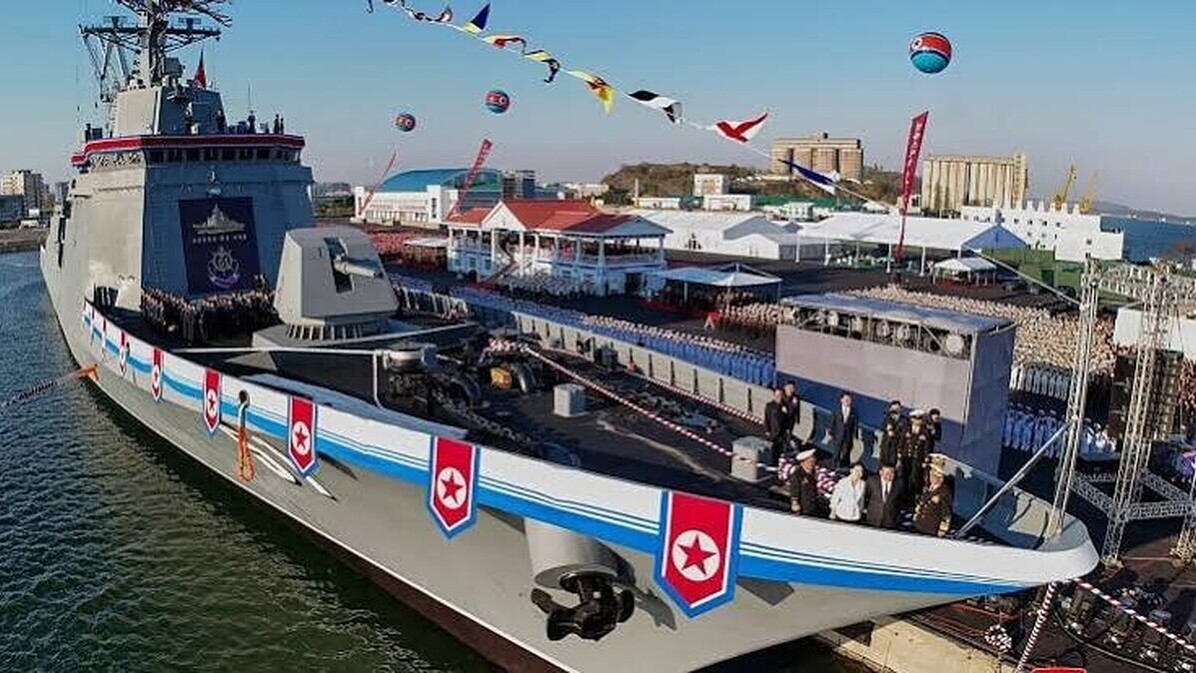
The development of new torpedoes is part of a broader program to modernize the North Korean navy. Long considered technologically inferior to South Korea’s, Pyongyang’s naval forces seek to improve their surveillance, coastal defense, and strike capabilities. The regime is investing notably in new warships, cruise missiles, and underwater equipment. In 2026, North Korea strengthened its fleet with new destroyers of about 5,000 tons, presented as capable of carrying multiple categories of armaments. Leader Kim Jong-un has also expressed his intention to gradually equip his navy with strategic capabilities, notably in the nuclear domain.
Torpedoes hold an important place in this strategy. Unlike missiles that operate in the atmosphere, these weapons move underwater to reach surface ships or submarines. Their effectiveness depends notably on their speed, stealth, ability to identify a target, and resistance to enemy countermeasures. Improvements in propulsion and guidance systems can therefore represent a significant tactical advantage. North Korean authorities claim to have conducted more than 180 tests over the past five years to refine certain technologies associated with their new systems. But the information provided by KCNA remains difficult to verify, and specialists generally must wait for additional data to assess the real scope of these announcements.
New Concerns for South Korea and Japan
North Korean military tests are closely monitored by South Korea, Japan, and the United States. These three countries maintain significant security cooperation and regularly monitor Pyongyang’s ballistic and naval activities. The development of new underwater weapons could complicate maritime surveillance missions and strengthen the North Korean regime’s deterrence capabilities. South Korean authorities consider these announcements part of a communication strategy intended to demonstrate the army’s technological progress. An official from South Korea’s Ministry of Unification emphasized the need to obtain more information before drawing conclusions about the new system’s performance.
This new experiment confirms Kim Jong-un’s priority on strengthening his armed forces. While relations between the two Koreas remain tense, Pyongyang multiplies announcements concerning its missiles, ships, and underwater equipment. The development of faster and potentially more sophisticated torpedoes could alter some regional military balances, even if their operational effectiveness remains to be demonstrated. For Seoul and its partners, the challenge is to monitor these advances while maintaining their defense capabilities. The prospect of entry into service as early as 2027 shows that North Korea intends to continue its military investments at a sustained pace. This new test thus reminds that the modernization of North Korea’s arsenal is no longer limited to ballistic missiles and now concerns all its combat means, including under the ocean surface.







Respond to the article
Be the first to comment on this article.