

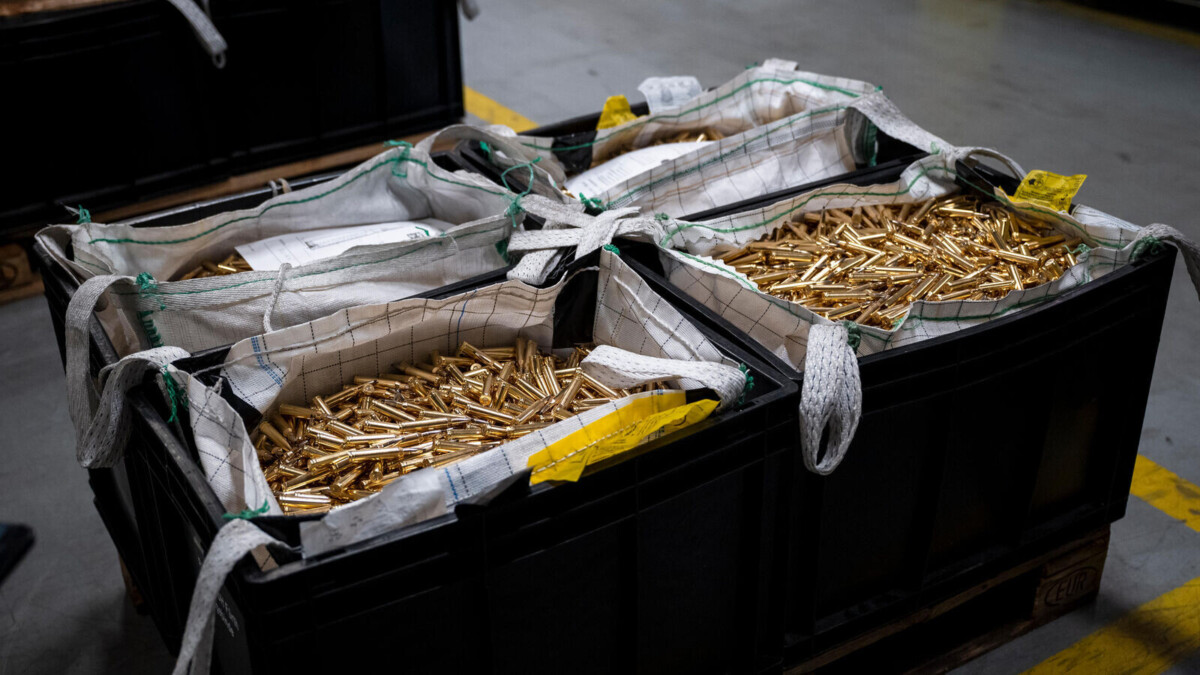
A press investigation reveals that ammunition manufactured in Switzerland was allegedly shipped to Russia despite restrictions on military equipment exports. Approximately 110,000 rounds intended for precision rifles are believed to be involved. This case raises further questions about re-export channels and the ability of states to control the final destination of their sensitive equipment.
Ammunition produced in Switzerland has reportedly entered the Russian army's arsenal despite trade restrictions on military equipment. According to an investigation by the Swiss daily newspaper NZZ am Sonntag, approximately 110,000 rounds of ammunition manufactured at a factory in Thun, in the canton of Bern, were shipped to Russia. This ammunition, intended for precision rifles, is believed to have transited through several countries before reaching its final destination. The case highlights the difficulties faced by authorities in controlling indirect exports of sensitive products, particularly when goods pass through multiple commercial intermediaries.
According to reports, the cartridges transited through Slovenia and Kyrgyzstan. Kyrgyzstan plays a significant role in discussions regarding circumventing sanctions against Russia, due to its trade relations with Moscow and its position within regional supply chains. However, transit through a third country does not, in itself, prove that the original manufacturer committed any wrongdoing. To establish responsibility, authorities must determine the conditions of the successive sales, the export documents used, and any commitments made regarding the final destination of the goods.
Re-export channels complicate the enforcement of sanctions
Switzerland applies strict rules to the export of war materiel. Authorizations may include restrictions preventing re-export without prior agreement. These mechanisms, however, rely on the cooperation of states and companies involved in the supply chain. Once a product has left the manufacturer's territory, its traceability can become more difficult if several companies or jurisdictions are involved. Authorities must then reconstruct the transactions and verify whether the goods have been diverted from their declared destination.
Since the start of Russia's invasion of Ukraine in February 2022, Western countries have increased restrictions aimed at limiting Moscow's access to military equipment and sensitive technologies. These measures target both weapons and certain electronic or industrial components that could contribute to the production of defense equipment. Their effectiveness depends in particular on monitoring intermediaries and international cooperation. Complex trade networks pose a recurring challenge, as they can obscure the identity of the end user behind several seemingly separate transactions.
The Swiss cartridge case illustrates the practical limitations of embargoes. At this stage, it is not possible to determine on its own who might have organized a diversion or under what conditions the ammunition arrived in Russia. Nevertheless, it underscores the importance of export controls, end-user certificates, and investigations into re-export networks. For states seeking to prevent Russian military supplies, the issue is no longer simply about prohibiting certain direct sales; it also involves monitoring the trade routes taken by the products after their initial export.





Respond to the article
Be the first to comment on this article.