

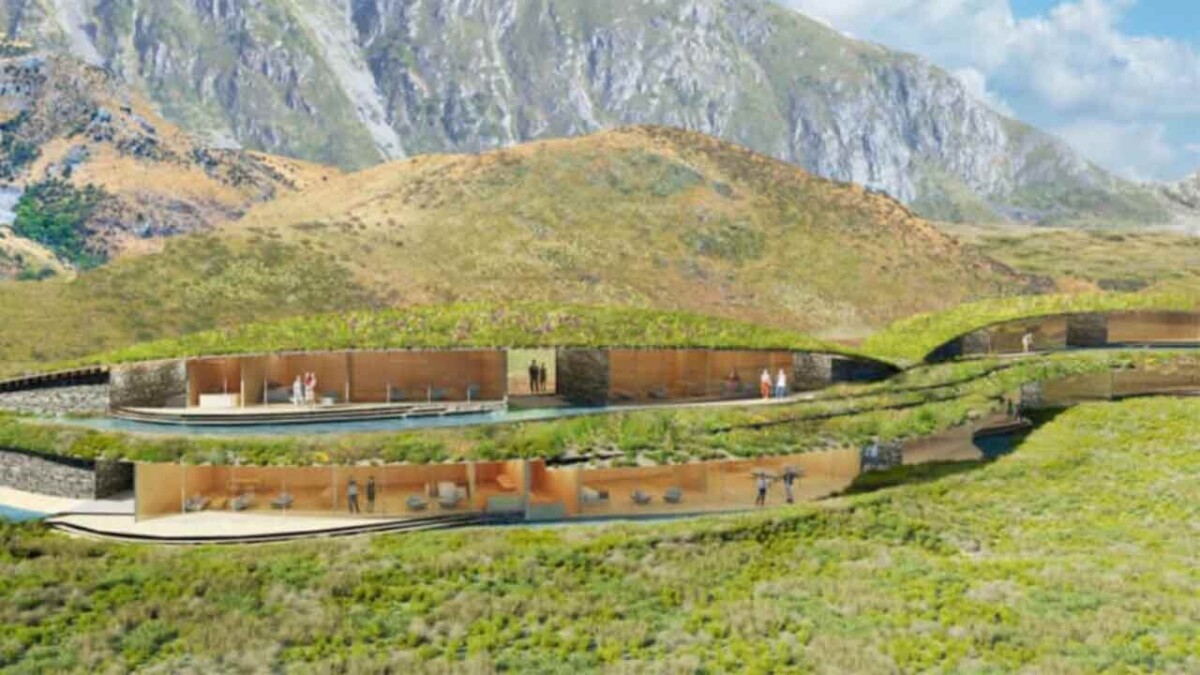
Thousands of kilometers away from the major world powers, New Zealand has established itself as a favored destination for some billionaires seeking protection from potential disasters. Underground bunkers, isolated properties, and self-sufficient residences fuel the reputation of this South Pacific archipelago, sometimes portrayed as an ideal refuge in the event of a global crisis. Behind this fascination lie geographical, economic, and security considerations, as well as many misconceptions.
With its approximately five million inhabitants, vast natural spaces, and distance from major geopolitical hotspots, New Zealand has several characteristics that appeal to wealthy individuals seeking tranquility. The country benefits from stable democratic institutions, significant agricultural production, and a relatively preserved environment. Its geographical isolation, long considered an economic handicap, now appears to some investors as a strategic advantage. In the event of a major international conflict or global health crisis, the distance separating the archipelago from large urban centers could, according to them, limit certain risks.
This reputation has particularly developed within American tech circles. Several Silicon Valley entrepreneurs have expressed interest in New Zealand, sometimes as part of disaster preparedness strategies. Billionaire Peter Thiel, co-founder of PayPal, has become one of the most well-known examples of this trend after obtaining New Zealand citizenship in 2011 and acquiring properties in the country. However, his residential project near Lake Wānaka was rejected by local authorities in 2022 for environmental reasons. While his journey has largely contributed to popularizing the image of a billionaire refuge, it alone does not prove the existence of a vast network of secret bunkers.
Luxury bunkers to survive disasters
Luxury bunkers represent the most spectacular aspect of this fascination with New Zealand. Several companies specializing in underground shelters have claimed to have sold or installed structures in the country. These facilities can theoretically be equipped with air filtration systems, food reserves, power generation devices, and autonomous communication means. Some are designed to allow occupants to live for several weeks or even months without direct dependence on external infrastructure. However, the exact number of bunkers actually built in New Zealand remains unknown, and commercial claims do not always constitute verifiable proof of their existence.
The Queenstown and Wānaka region on the South Island attracts much media attention. Its mountainous landscapes, lakes, and large isolated properties draw a wealthy international clientele. Peter Thiel’s project nevertheless illustrates the limits of this strategy: his residential complex partially integrated into the terrain near Lake Wānaka was rejected in 2022 due to its landscape impact. In May 2024, New Zealand’s environmental court upheld this refusal. This episode serves as a reminder that great fortunes remain subject to local urban planning and environmental protection regulations.
An ideal refuge in case of world war?
Interest in New Zealand also rests on extreme disaster scenarios. Some survivalism advocates believe the Southern Hemisphere could be less directly exposed to the immediate consequences of a nuclear conflict between major powers. The country’s agricultural capacity is another argument: having arable land and significant food production could represent an advantage in the event of prolonged disruption of global trade. But these hypotheses do not guarantee absolute safety. A major nuclear war could cause climatic, economic, and logistical upheavals affecting even countries far from combat zones.
New Zealand also has its own vulnerabilities. Located at the meeting point of two major tectonic plates, it experiences significant seismic activity and remains exposed to earthquakes, volcanic eruptions, and tsunamis. Its economy also depends on international trade for certain equipment, fuels, and manufactured goods. Even a particularly sophisticated bunker could therefore not offer unlimited protection against a prolonged collapse of global infrastructures. Behind its sanctuary image, the archipelago remains a territory facing the same uncertainties as the rest of the planet.
When fear of the future becomes a luxury market
The phenomenon reveals an evolution in the concerns of part of the global economic elite. Where great fortunes traditionally invested in prestigious secondary residences, some now view their properties as insurance against future crises. The Covid-19 pandemic, geopolitical tensions, and climate change worries have increased interest in self-sufficient housing and remote destinations. In New Zealand, this attractiveness also raises questions about land access, landscape protection, and the role of foreign investors in local communities.
The expression “country of bunkers” therefore remains largely a media phrase rather than a statistically demonstrated reality. No public census confirms that New Zealand hosts more private shelters than other countries. But its reputation tells us something about our era: even individuals with considerable wealth seek ways to protect themselves from a future they consider uncertain. At the other end of the world, among mountains, lakes, and preserved landscapes, New Zealand thus embodies a fascinating paradox: a country admired for its quality of life but also imagined as one of the last possible refuges if the world were to shift.
Add a more immersive hookExplain more about the bunker market





Respond to the article
Be the first to comment on this article.