Ten years after the death of Fidel Castro, the island he governed for nearly half a century is going through the most severe crisis in its history. The oil embargo imposed by Donald Trump in January 2026 precipitated an economic and humanitarian disaster whose effects are now measured in years of lost life.
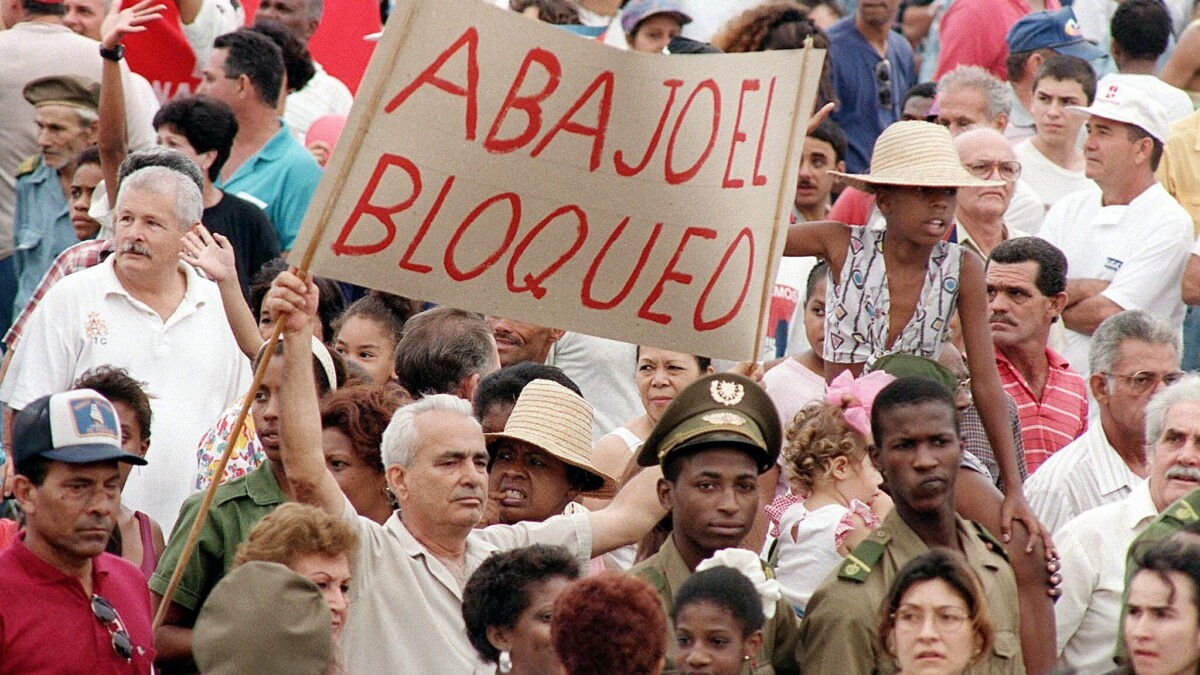
On November 25, 2016, Fidel Castro passed away at the age of 90. A decade later, the regime he founded in 1959 has not disappeared with him, but it faces a threat of an unprecedented nature. Since the beginning of 2026, Cuba has been subjected to a total oil embargo imposed by Washington, accompanied by strengthened economic sanctions. The result is visible in every neighborhood of Havana: prolonged power outages, water shortages, medicines unavailable in pharmacies and resold on the black market at prices inaccessible to the majority of the population.
The World Health Organization confirmed on November 24 that life expectancy in Cuba had declined for the first time since the 1950s. Two of the historical pillars of the Castro regime are collapsing simultaneously: the healthcare system, long presented as a model by Havana, is dying; and the “libreta,” the ration book established in 1962 to guarantee a monthly food basket to every Cuban household, is no longer supplied. The government simply no longer has the means to honor it.
Donald Trump’s decision fits into a specific political sequence. A few weeks before imposing the embargo, the American president had just secured the capture of Nicolás Maduro, the Venezuelan leader who was Cuba’s main energy supporter in the region. Deprived of Caracas’s oil, the island became vulnerable. Trump wanted to turn this vulnerability into collapse by also cutting off all alternative supplies from Mexico or Russia. “There will be no more oil or money going to the island, zero,” he declared.
The American president’s motivations are more symbolic than based on tangible strategic interests. Cuba does not have significant oil reserves and does not represent any major economic stake for the United States. The “extraordinary threat” that Trump brandishes, invoking the island’s ties with Moscow and Beijing, hardly withstands scrutiny, given how weakened the country is. What matters is the image: Cuba is the last communist regime in the Americas, a symbol of resistance to Washington for over sixty years. Bringing it down would be, in the American president’s eyes, a historic victory.
In this matter, the role of Marco Rubio, a Cuban-origin Secretary of State, is central. According to several sources close to the administration, he promised his grandfather in childhood to become president of Cuba. He is the one pushing Trump to maintain and intensify pressure on Havana, driven by personal and family hostility toward the regime. Trump, for his part, has never hidden that he envisioned Rubio at the head of a post-Castro Cuba.
Despite the scale of suffering, the Cuban government has not yielded. The anger movements recorded since the beginning of the year have been incomparable to the popular uprising of July 2021. Police surveillance has intensified, as evidenced by the recent prosecutions against journalist Yoani Sanchez, editor-in-chief of the independent media 14ymedio. The regime has also launched an economic reform of unprecedented scale since the revolution, opening entire sectors of the economy to private entrepreneurs and foreign capital. Foreign Minister Bruno Rodríguez summarized the official position in a recent interview: “For sixty years, American policy toward Cuba has failed… unlike our policy of resistance and adaptation.”
The military option remains present in Trump’s rhetoric, which he has brandished several times since January. The American press reports that the Pentagon has already studied intervention scenarios. A landing of Cuban exiles is immediately ruled out: the memory of the Bay of Pigs, in April 1961, remains too painful. As for a direct operation, it would involve considerable political risk for an administration already weakened by the failure of its intervention in Iran and the midterm election rout. The Cuban regime, cornered but standing, counts on these hesitations to survive another decade.
Sources citées dans l’article Organisation mondiale de la santé