

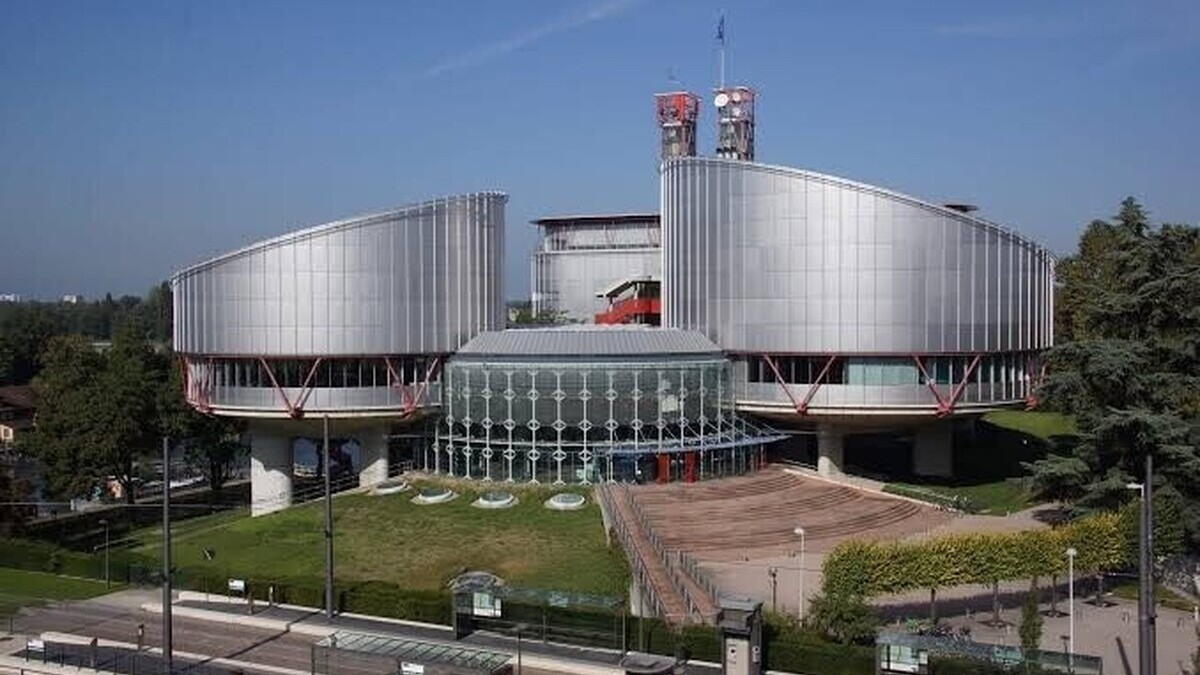
The European Court of Human Rights on Tuesday recognized the right of Council of Europe member states to control their borders in the face of instrumentalized migration, while imposing strict obligations on them to protect vulnerable people.
The decision was expected and its content is nuanced. The European Court of Human Rights (ECHR) issued a ruling on Tuesday recognizing the right of the forty-six member states of the Council of Europe to return migrants to a third country when the migration has been deliberately organized for the purpose of political destabilization, without this in itself constituting a violation of Article 3 of the Convention, which prohibits torture as well as inhuman and degrading treatment.
The case brought before the Court concerned Afghan, Iraqi, and Cuban nationals who had attempted to cross the borders of Poland, Latvia, and Lithuania between 2021 and 2022, a period marked by a migration crisis orchestrated from Belarus. Minsk had then facilitated the movement of thousands of people from third countries to the eastern borders of the European Union , in what the Court now describes as the "instrumentalization of migration."
The applicants claimed they had been violently pushed back without their asylum applications being examined, and argued that their fundamental rights had been violated. The Court partially agreed with them: while it upheld the principle of refoulement in a context of instrumentalization, it reiterated that States retain the obligation to identify and protect individuals particularly vulnerable to ill-treatment, including in situations of intense migratory pressure.
Consequently, Poland, Latvia, and Lithuania were ordered to pay compensation to the plaintiffs for the way they were treated at the border. The Court thus distinguishes between the right to control migration flows, which it recognizes, and the duty of care towards individuals, which it maintains as a non-negotiable obligation.
This ruling comes as five European Union countries announced last week an agreement with Rwanda to create a reception center for rejected asylum seekers awaiting deportation to their country of origin. This project raises serious concerns given Rwanda's human rights record, and the question of whether such a facility is compatible with European standards remains open.









Respond to the article
Be the first to comment on this article.