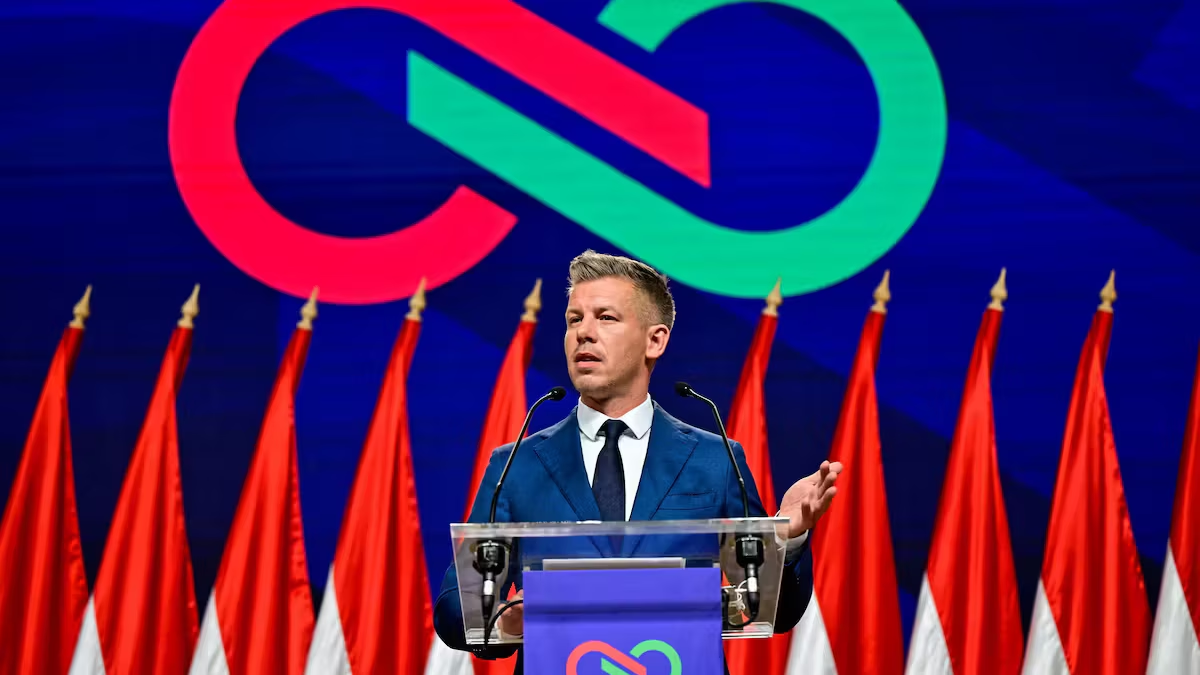
The Tisza party of Prime Minister Peter Magyar presented on Friday a comprehensive bill aimed at reforming Hungarian public media, which for years have been accused by their critics of serving as a mouthpiece for Viktor Orbán’s former government. This initiative is one of the main campaign promises of the new government, which came to power after its decisive victory in the April elections.
The text aims to restore a system of public media that is “independent, transparent, and accountable.” Supporters of the reform believe that current structures have lost their neutrality over the years and that a deep restructuring is necessary to restore public trust.
One of the main proposed changes concerns the MTVA holding company, which currently manages public media. It would be split into several distinct entities. The project also plans to reinstate MTI as an independent national news agency, with the goal of strengthening the autonomy of public information.
The text also provides for the creation of an Independent Public Media Committee. This body would be responsible for protecting editorial independence, overseeing public media finances, and participating in the appointment of their leaders. Its composition would be based on a parity principle, involving representatives from the government, the opposition, and the independent media sector.
Furthermore, a new Public Media Council would be established to ensure compliance with public service principles defined in a specific charter. The bill also includes a reform of the Media Council, the sector’s regulatory body, to ensure more balanced representation and greater transparency in decision-making.
The planned reforms would also lead to the departure of current public media leaders. During the transition period, management would be entrusted to the Minister of Culture, Zoltan Tarr, until new leaders are appointed following an open recruitment process.
Thanks to its constitutional majority, Peter Magyar’s government has the means to pass this reform. The new government presents this project as a major step in restoring democratic institutions, while its opponents await to see if the promises of media independence will be concretely realized.