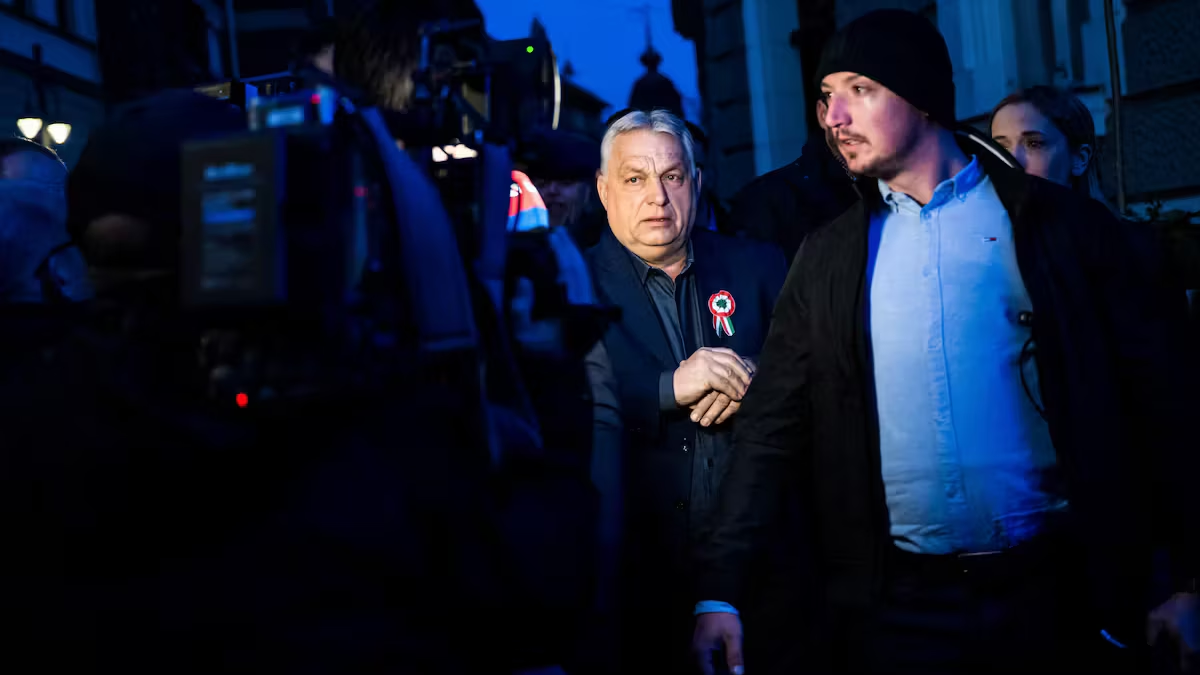
European Union leaders failed to persuade Hungarian Prime Minister Viktor Orbán to lift his veto on a loan intended to support Ukraine, during tense talks in Brussels.
This funding is considered essential for Kyiv in the context of its war against Russia. However, Budapest still blocks the agreement, citing a dispute notably related to the Druzhba pipeline and national energy interests.
Several European officials expressed frustration with the Hungarian position, deemed incompatible with collective efforts to support Ukraine. Some described this blockage as “unacceptable” in the current war context.
Viktor Orbán, known for his more conciliatory relations with Moscow, remains inflexible despite pressure from his European partners. His stance highlights persistent divisions within the EU on the strategy to adopt regarding the conflict.
The current deadlock highlights the limits of unanimity-based decision-making in some European matters, where a single member state can block major initiatives.
While Ukraine’s financial needs remain significant, this paralysis could delay crucial aid, at a time when the country heavily depends on international support to continue its war effort.