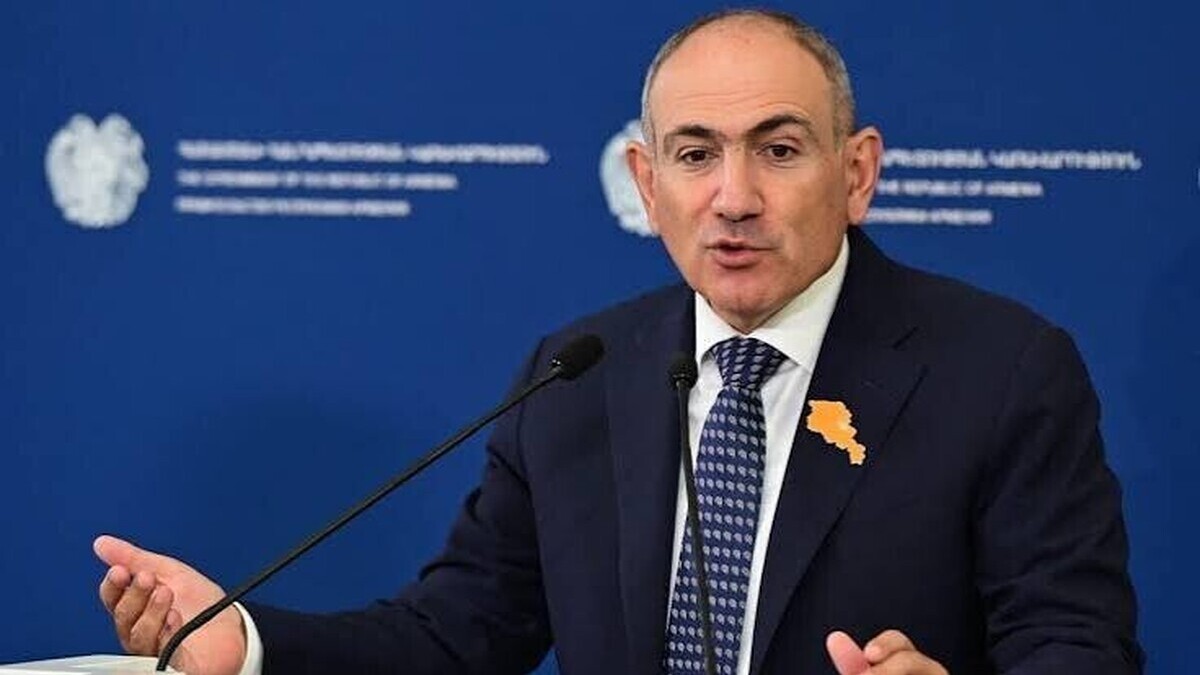
One week before his meeting with Vladimir Putin, Armenian Prime Minister Nikol Pashinyan ruled out on Thursday, November 26, abandoning his country’s EU membership project. This stance comes amid growing diplomatic and economic tensions between Yerevan and Moscow.
The Armenian head of government dismissed any repeal of the law adopted in 2025, which initiates the rapprochement process with the European Union. In early November, Nikol Pashinyan announced his intention to officially submit a membership application by 2028. However, Moscow considers this move incompatible with Armenia’s membership in the Eurasian Economic Union (EAEU), a regional organization dominated by Russia.
Russian authorities have already imposed restrictions on Armenian exports and warned Yerevan that it could lose the preferential tariffs it benefits from on Russian gas. A possible suspension of Armenia’s participation in the Eurasian Economic Union is expected to be examined at the organization’s next summit, scheduled for December 22.
A Historical Alliance Weakened
Expected in Moscow on December 3, Nikol Pashinyan nevertheless hopes that his talks with Vladimir Putin will help ease tensions. The Prime Minister also reaffirmed his intention to gradually end the presence of Russian border guards tasked with monitoring Armenia’s borders with Turkey and Iran. While acknowledging their historical contribution, he wants his country to fully assume this responsibility in the coming years.
Relations between Moscow and Yerevan have significantly deteriorated since Armenia’s military defeat against Azerbaijan in 2020, followed by Baku’s full takeover of Nagorno-Karabakh in 2023. Accusing its historical ally of not providing sufficient protection, Armenia has gradually strengthened its ties with Western powers. However, this diplomatic rapprochement faces the country’s significant economic and energy dependence on Russia.