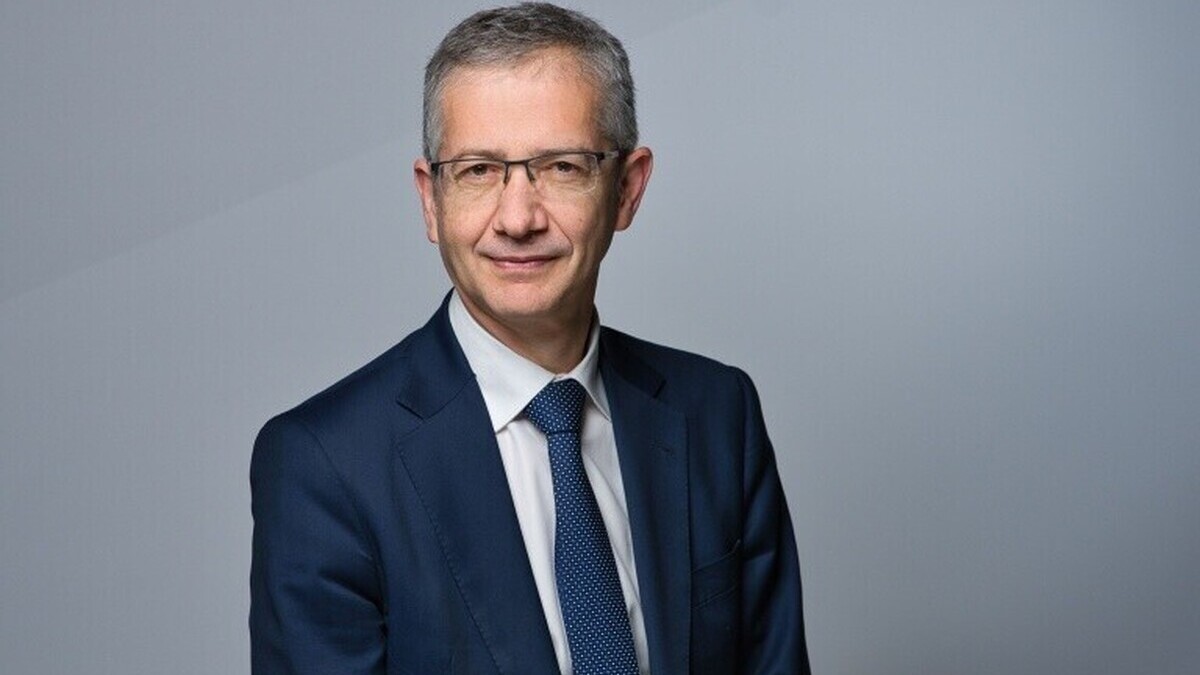
A major change is brewing at the helm of the European Central Bank . On Thursday, November 26, 2026, the leaders of the eurozone countries reached an agreement to appoint Spaniard Pablo Hernández de Cos as Christine Lagarde's successor as President of the ECB. The 55-year-old economist, former Governor of the Bank of Spain and current Director General of the Bank for International Settlements, is expected to take office on February 8, 2027. He would thus become the first Spaniard to lead the European monetary institution since its creation in 1998.
The decision was made at a European summit held in Brussels, after several weeks of negotiations between member states. Two candidates were vying for this strategic position: Pablo Hernández de Cos and the Dutchman Klaas Knot, former governor of the Dutch central bank . The Spaniard notably enjoyed the support of France and Germany, two countries whose influence remains significant in European monetary policy decisions. The Netherlands, which initially backed its own candidate, ultimately agreed to join the consensus around the former Spanish governor, paving the way for his appointment.
This succession is happening sooner than expected. Christine Lagarde, who has headed the European Central Bank since November 2019, announced at the end of October her intention to step down on February 7, 2027, several months before the normal expiration of her term. Her early departure has accelerated discussions among European governments, eager to quickly appoint a new leader for the Frankfurt-based institution. However, the choice of Pablo Hernández de Cos still needs to pass several institutional steps, including consultation with the European Parliament and the ECB Governing Council, before its official confirmation.
An experienced economist facing the challenges of the eurozone
Born in Madrid in 1971, Pablo Hernández de Cos has extensive experience in financial institutions. A graduate in economics with a doctorate, he spent much of his career at the Bank of Spain , where he served as governor from 2018 to 2024. Since July 2025, he has headed the Bank for International Settlements (BIS), based in Basel, Switzerland. This institution plays a central role in cooperation among central banks worldwide. His experience in financial stability, banking supervision, and monetary policy has made him a consensus candidate among European governments.
The future president will have to take the helm of an institution facing several major economic challenges. After several years marked by high inflation, the ECB must maintain price stability while taking into account the economic slowdown and the budgetary difficulties of some member states. Its decisions on key interest rates directly influence the cost of mortgage loans, the financing conditions for businesses, and the returns on certain savings products. The issue of public debt also remains sensitive, particularly in France and several other highly indebted countries. Financial markets will therefore be closely watching the new leader's initial policies.
The reorganization of the European Central Bank is not limited to its presidency. Eurozone leaders have also reached an agreement on two other key appointments. Frenchwoman Laurence Boone is expected to take charge of market operations, while German economist Markus Brunnermeier is tipped to become the institution's chief economist. This renewal comes as several members of the Executive Board are reaching the end of their terms. The final appointments are expected in December, following the completion of European procedures. For Spain, the arrival of Pablo Hernández de Cos would represent a historic step, while for the eurozone, it would usher in a new era in monetary policy, with a non-renewable eight-year presidential term.