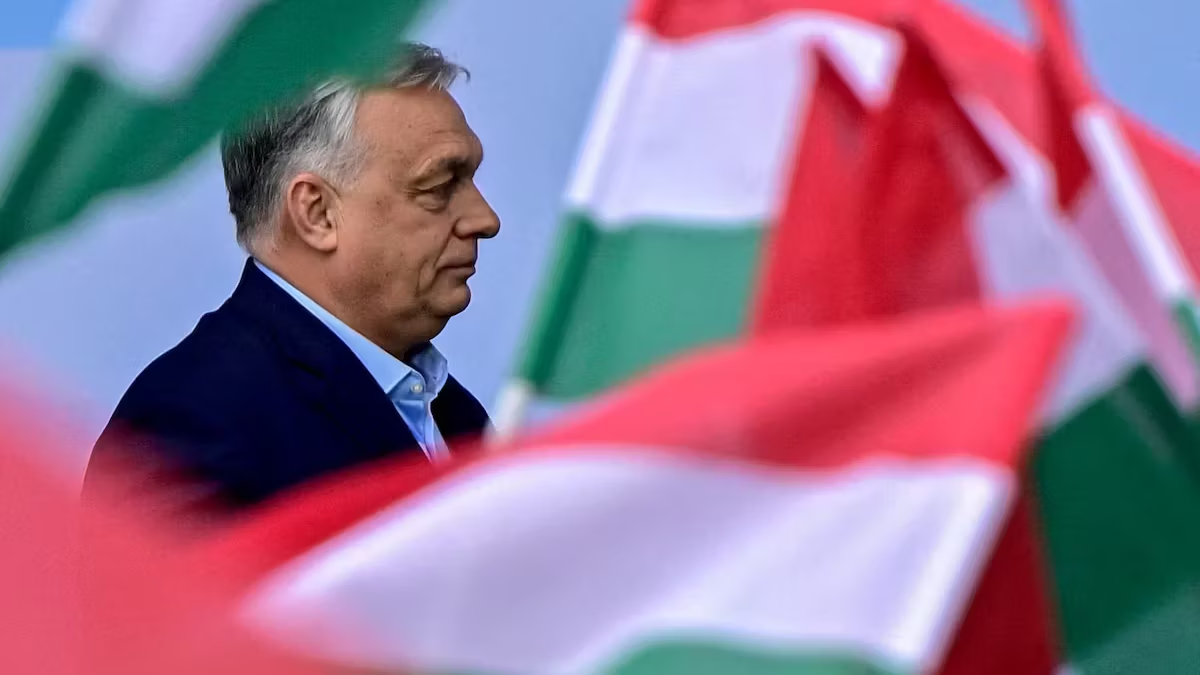
The European Union is closely watching the Hungarian legislative elections on April 12, hoping they will end Prime Minister Viktor Orbán’s repeated blockages on several key issues.
In power since 2010, the leader of the Fidesz party is regularly criticized by his European partners for obstructing major decisions, notably aid to Ukraine.
According to several polls, his party could be defeated by the center-right opposition party led by Péter Magyar.
The latter advocates for closer ties with the European Union and NATO, in a context where Budapest is often accused of drifting away from common European positions.
Despite this possible change, European officials remain cautious about a radical shift in Hungarian policy.
Even in the event of Viktor Orbán’s defeat, they believe certain directions could persist, notably on issues of national sovereignty.
The Hungarian Prime Minister also maintains close relations with Vladimir Putin’s Russia and has moved closer to Donald Trump’s U.S. administration, which has contributed to strained relations with Brussels.
These elections are therefore seen as a key moment for the future of relations between Hungary and the European Union.
They could redefine the political balance within the EU at a time when geopolitical and security stakes are particularly high.
The vote will thus be closely followed by European capitals, hoping for a easing of tensions.