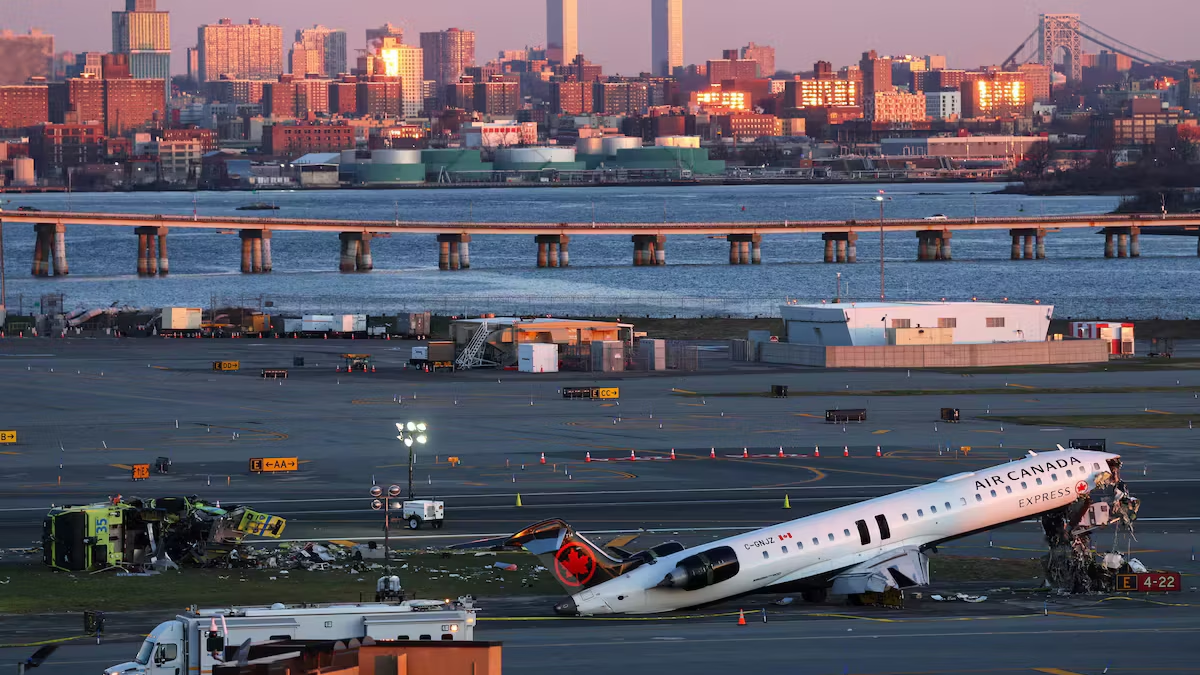
A possible violation of air traffic control procedures is at the heart of the investigation into the collision at LaGuardia Airport, according to a document reviewed by Reuters. The accident, involving an Air Canada plane and a ground vehicle, has revived concerns about safety and working conditions in the U.S. aviation sector.
The events occurred on March 22 around 11:37 p.m., when the aircraft collided with a fire truck. The accident claimed the lives of both pilots, sending shockwaves through the aviation industry and reigniting debates on the safety of ground operations.
According to preliminary information, the air traffic controllers on duty that night may have violated rules by combining air and ground duties before midnight. Such practice is prohibited by procedures established after a previous accident in 1997.
These rules aim to prevent workload overload for controllers by clearly separating air traffic management from ground operations. Failure to comply may have contributed to the confusion that led to the collision.
The investigation is being conducted by the National Transportation Safety Board, which is particularly seeking to determine the precise role of each controller involved at the time of the accident. Authorities are closely examining assigned tasks and decisions made.
This incident highlights a broader issue: the shortage of personnel in U.S. air traffic control. According to several industry professionals, this lack of staff, including supervisors, increasingly leads to combined roles.
This workload increase could raise the risk of errors in already complex environments. Unions and experts have been warning for years about the consequences of these conditions on aviation safety.
The LaGuardia collision thus renews questions about the organization of air traffic control and the system’s ability to guarantee an optimal level of safety. The investigation’s conclusions will be crucial to identify responsibilities and consider possible reforms.