

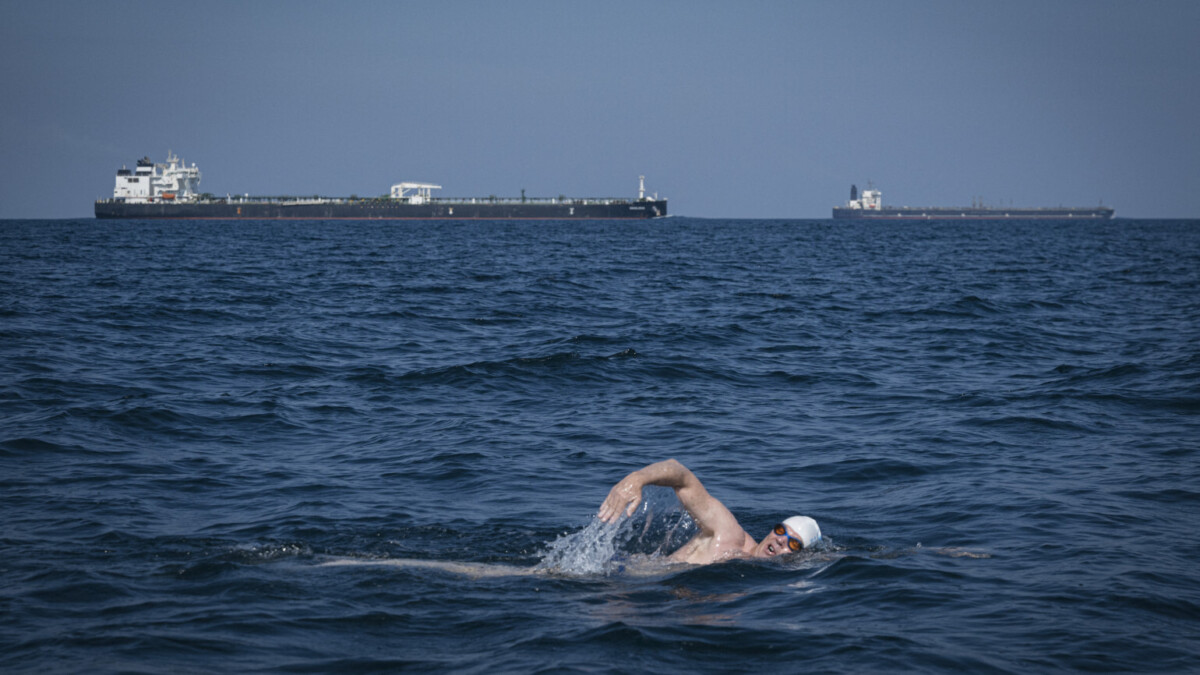
A British swimmer undertook to cross part of the Strait of Hormuz, one of the most strategic maritime passages on the planet, to denounce the environmental consequences of the war in the Middle East. In this particularly sensitive area, located between Iran and the Arabian Peninsula, his initiative takes on both a sporting and activist dimension. The man aims to draw attention to the damage that military operations can cause to marine ecosystems, beyond the human and economic consequences of the conflict.
His testimony describes a particularly harrowing experience. The Briton claims to have felt the power of the detonations caused by the clashes in the region even in the water. “Explosions literally made the sea tremble,” he says. This proximity to military operations illustrates the risks civilians present in conflict zones may face. By choosing swimming as a means of protest, he also intends to make visible a pollution that often remains less publicized than terrestrial destruction.
Fifteen kilometers swimming under missile threat
The 56-year-old swimmer, Lewis Pugh, covered 15 kilometers between November 16 and 18, 2026, along the southern part of the strait, starting from Oman. This operation, overseen by the United Nations, took place near oil tankers exposed to military strikes. On the first day, the Briton claims to have heard two powerful explosions and seen a ship hit about four kilometers from his position. Despite the danger, he continued his effort, notably during a second day marked by four consecutive hours of swimming. However, he did not cross the strait all the way to the Iranian coast.
Beyond the physical feat, Lewis Pugh wants to denounce the ecological consequences of a conflict that also affects marine environments. Since the start of the war, at the end of February 2026, more than a hundred commercial vessels have reportedly been attacked or damaged in the area. Some strikes have caused hydrocarbon leaks that could threaten coral reefs, mangroves, and several animal species. The swimmer considers dolphins, turtles, and seabirds as the forgotten victims of this war. He now wishes to call on international leaders, notably American and Iranian, to demand better protection of this strategic environment.






Respond to the article
Be the first to comment on this article.