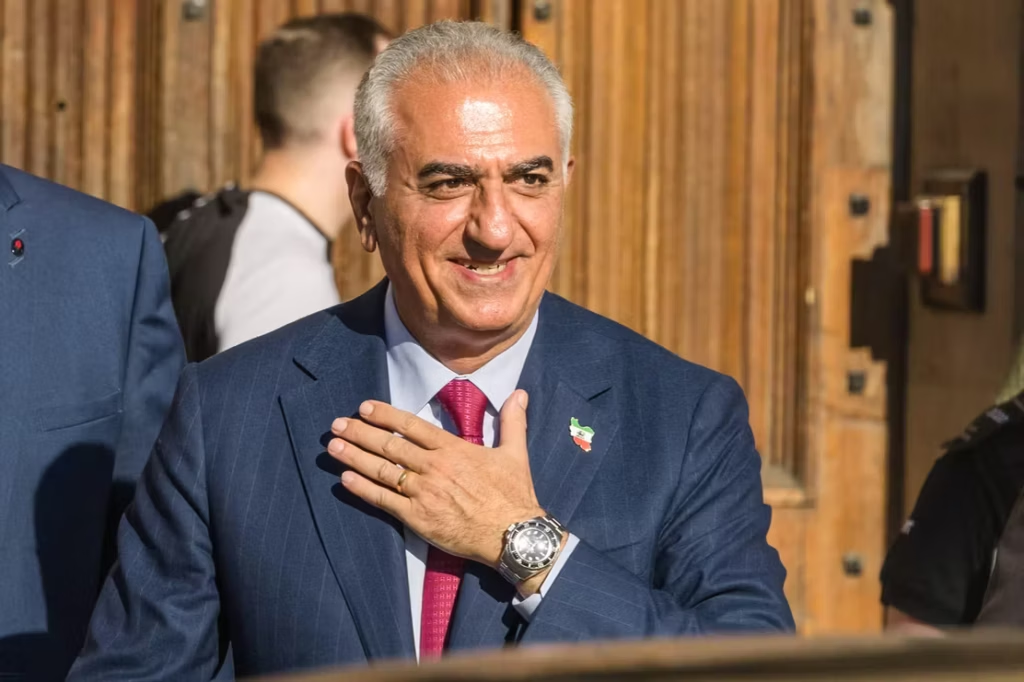
Reza Pahlavi, son of the last shah of Iran overthrown in 1979, stated on Saturday that he is ready to lead a “transition” towards a “democratic and secular future” in Iran. Speaking before a crowd estimated at around 200,000 people in Munich, on the sidelines of the Security Conference, this figure of the Iranian opposition in exile declared his intention to embody the leadership of a political process based on voting.
“I am here to guarantee a transition to a democratic and secular future. I commit to being the leader of the transition” towards a “democratic and transparent process, through the ballot box,” he declared, while intensifying in recent days his calls for mobilization against the Islamic Republic, both inside Iran and abroad.
Earlier in the day, Reza Pahlavi urged U.S. President Donald Trump to support the Iranian people. Based in the United States, he called on Washington to act as the U.S. prepares to strengthen its military presence in the Gulf, with the announced deployment of a second aircraft carrier.
Donald Trump, who has alternated in recent weeks between calls for a negotiated outcome and threats of intervention, explicitly mentioned on Friday the idea of a regime change in Tehran. Asked about a possible “regime change,” he replied: “It seems that would be the best thing that could happen.”
At a press conference, Reza Pahlavi welcomed the statements of the U.S. president and addressed him directly. “The Iranian people have heard you say that help is on the way, and they have faith in you. Help them,” he said, following Donald Trump’s confirmation of the “very soon” deployment of the aircraft carrier Gerald Ford, which is to join the USS Abraham Lincoln in the region.
“It is time to end the Islamic Republic,” the opposition figure further stated, believing that Iranians no longer ask for reforms but for the end of the regime. However, he remains contested within a fragmented Iranian opposition, which does not agree on a common strategy against the authorities in Tehran.
At the same time, a possible resumption of diplomatic talks has been mentioned. After talks resumed on February 6 in Oman, a new negotiation session between Americans and Iranians could take place Tuesday in Geneva, according to Axios, citing a U.S. official and three sources close to the matter. Neither Washington nor Tehran have officially confirmed.
Western countries accuse Iran of seeking to acquire nuclear weapons, which the Islamic Republic denies, stating that its program is exclusively civilian. The United States, supported by Israel, also demands that Tehran limit its ballistic missile program and cease its support for armed groups in the region. According to the organization HRANA, at least 7,008 people—mostly protesters—have been killed in the repression, and more than 53,000 arrested. The NGO Iran Human Rights states that among the detainees, hundreds face the death penalty.