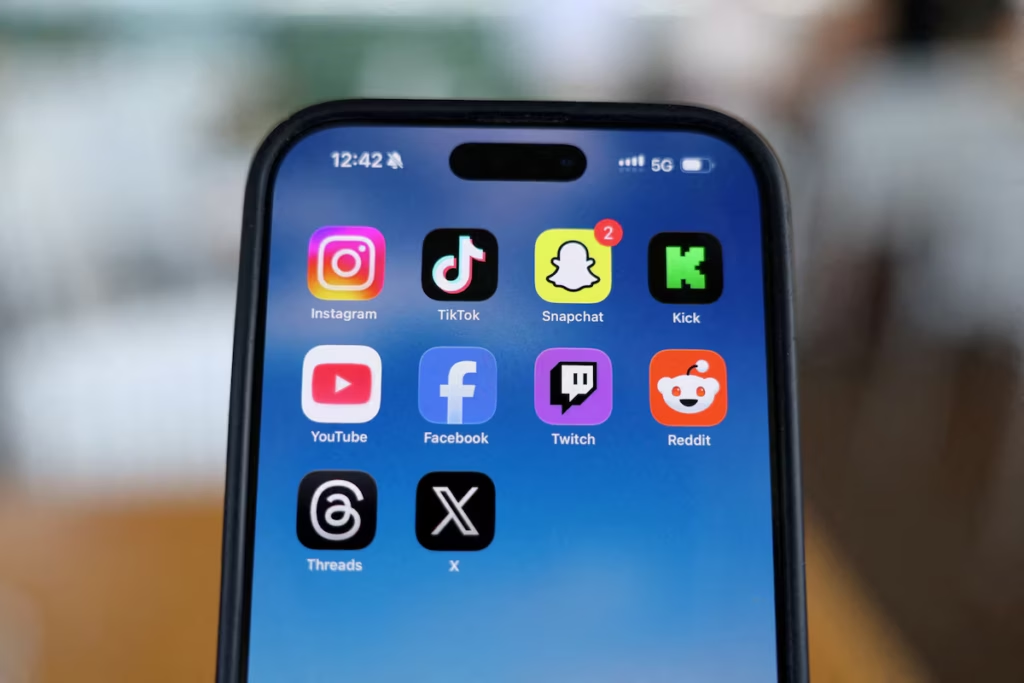
An ally of Indian Prime Minister Narendra Modi has introduced a bill aiming to ban access to social media for teenagers, as the international debate intensifies over the impact of these platforms on youth health and safety.
LSK Devarayalu, a member of parliament and part of a ruling coalition party, believes social media makes children addicted while turning India into one of the largest global data providers for foreign platforms. According to him, this data is then used to develop advanced artificial intelligence systems, whose economic and strategic benefits are mainly captured outside the country.
This initiative comes as several countries tighten their legislation. Australia became last month the first country to ban social media for those under 16. In Europe, France passed a law banning platform access for those under 15, while the UK, Denmark, and Greece are considering similar measures.
The major tech companies involved, including Meta Platforms and Alphabet, have not all responded to the Indian proposal. Meta stated support for parental control tools, while warning that strict bans might push teenagers toward less safe and unregulated sites. The Indian Ministry of Information Technology has not commented.
With about 750 million smartphones and nearly a billion internet users, India represents a key market for social media and currently sets no legal minimum age for access. The 15-page bill, reviewed by Reuters, stipulates that no person under 16 may create or hold a social media account, and that existing accounts be deactivated. It places full responsibility for age verification on the platforms.
Although this is a private member’s bill and not government-sponsored legislation, such initiatives often fuel parliamentary debates and can influence legislative developments. Devarayalu belongs to the Telugu Desam party, which governs Andhra Pradesh state and is a key supporter of the Modi-led government coalition.