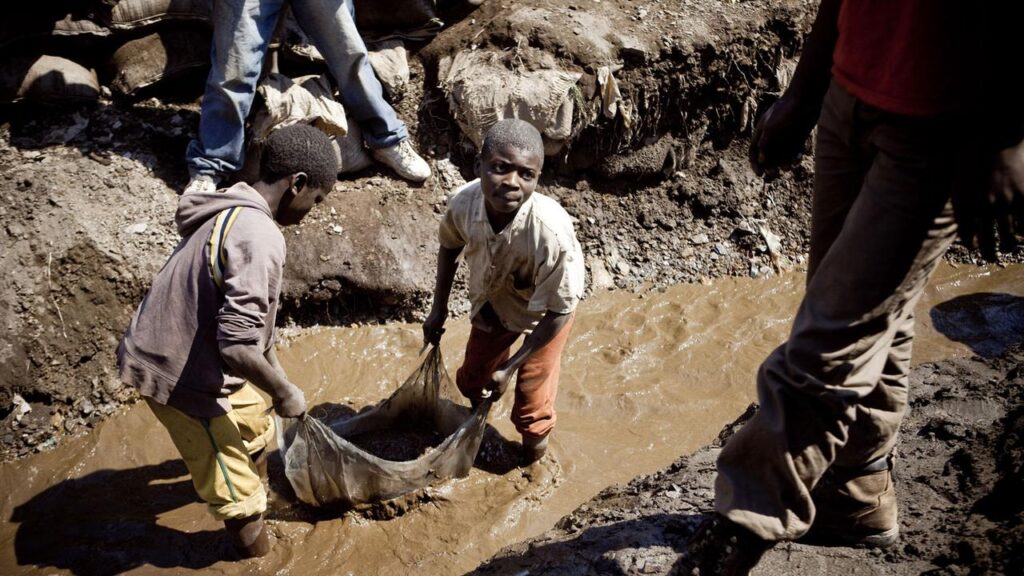
At least 200 people died this week in the collapse of a coltan mine in Rubaya, in eastern Democratic Republic of the Congo, according to local officials. The tragedy occurred on Wednesday, during the rainy season, while residents were extracting the ore artisanally.
According to provincial authorities, the confirmed death toll stands at at least 227, including miners, children, and female traders. Several dozen people were also injured, some seriously, and are being treated in regional health facilities.
The Rubaya area, which produces about 15% of the world’s coltan — an ore processed into tantalum, essential for manufacturing mobile phones, computers, and industrial components — has been controlled since 2024 by the rebel group AFC/M23. Residents often work there for a few dollars a day, under extremely precarious conditions.
According to the United Nations, revenues from the exploitation of the site are used to finance the AFC/M23 insurgency, supported by Rwanda, an accusation Kigali denies. The rebels, who claim to want to overthrow the Kinshasa government and protect the Congolese Tutsi minority, have expanded their control over several mineral-rich areas in the east of the country over the past year.
Local authorities attribute the collapse to soil weakening caused by heavy rains, once again highlighting the dangers related to artisanal mining in a region marked by insecurity and lack of safety standards.