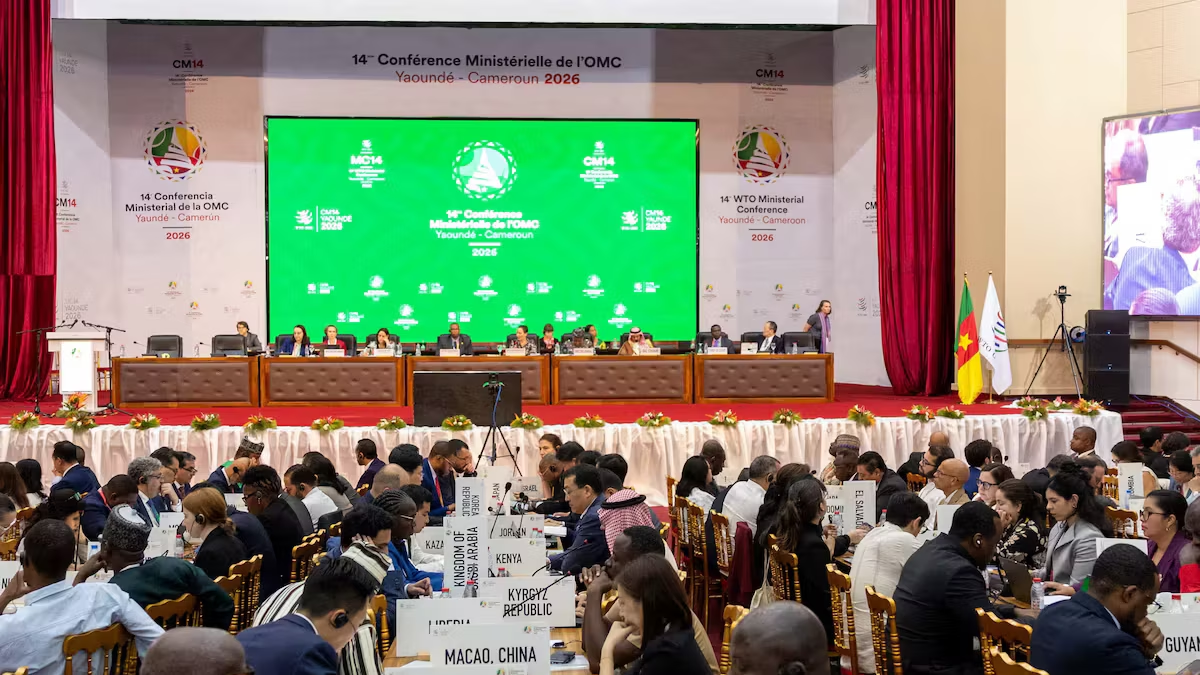
Negotiations at the World Trade Organization are at an impasse between the United States and Brazil over the extension of the moratorium on customs duties applied to electronic exchanges, diplomats gathered in Yaoundé indicated.
At the heart of the disagreement is this mechanism, in place since 1998, which prohibits states from imposing taxes on digital transmissions such as software, music, or film downloads. This moratorium is set to expire soon, and several countries wish to extend it for four years, with an additional year until 2031.
But the positions of Brazil and the United States remain deeply divergent. Washington and its allies advocate for the continuation of the moratorium to support the growth of global digital trade, while Brasilia is more reluctant, citing issues of fiscal sovereignty and development.
This deadlock occurs even as broader discussions within the World Trade Organization appear to be progressing toward an agreement on a set of institutional reforms.
Diplomats present at the ministerial meeting in Cameroon are attempting to bridge the positions, but persistent divergences on this key point could jeopardize a global consensus.
The moratorium on digital customs duties is considered a pillar of the development of the global digital economy, having contributed to the rapid growth of online trade over the past two decades.
Its possible challenge raises concerns among industry stakeholders, who fear fragmentation of digital trade and increased costs for businesses and consumers alike.
As negotiations continue, the outcome of this standoff between major trading powers could redefine the rules of international digital trade for years to come.