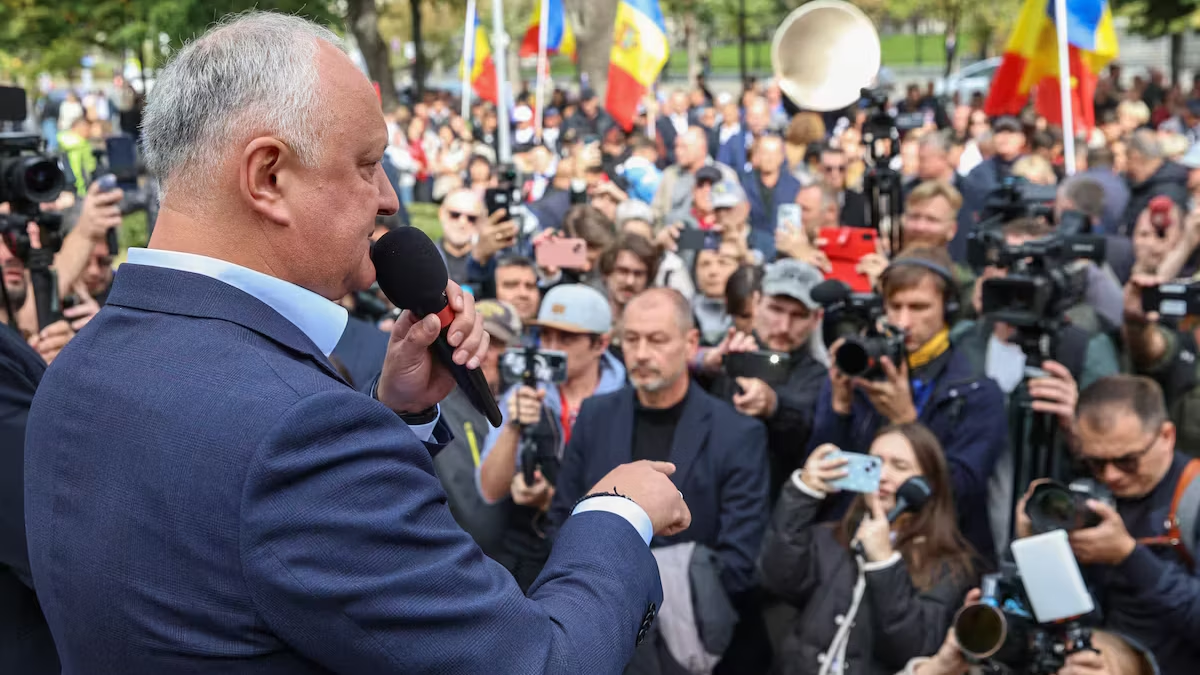
In Moldova, several opposition parties are questioning the legitimacy of the energy emergency declared by the government, arguing that the situation did not justify such a measure.
Parliament last week approved a 60-day state of emergency to facilitate decision-making in the face of a crisis caused by the shutdown of a strategic power line linking Romania to Moldova via Ukraine.
According to authorities, this high-voltage line, which covers up to 70% of the country's electricity needs, was damaged in the context of the war in neighboring Ukraine, requiring several days of repair.
But after the reopening of this infrastructure, announced Saturday by the Ministry of Energy, criticism intensified. The opposition believes the state of emergency was excessive and politically motivated.
The leader of the pro-Russian Socialist Party, Igor Dodon, denounced a "masquerade," claiming that the situation had been exaggerated to justify exceptional powers.
The pro-European government, for its part, defends its decision by citing the seriousness of the threat to energy supply and the need to act quickly in the face of an unpredictable situation.
This episode illustrates the persistent political tensions in Moldova, a country located between the European Union and the Russian sphere of influence, where energy issues are closely linked to geopolitical concerns.
While the electricity situation appears to have stabilized, the debate surrounding the state of emergency could revive internal divisions as future political deadlines approach.