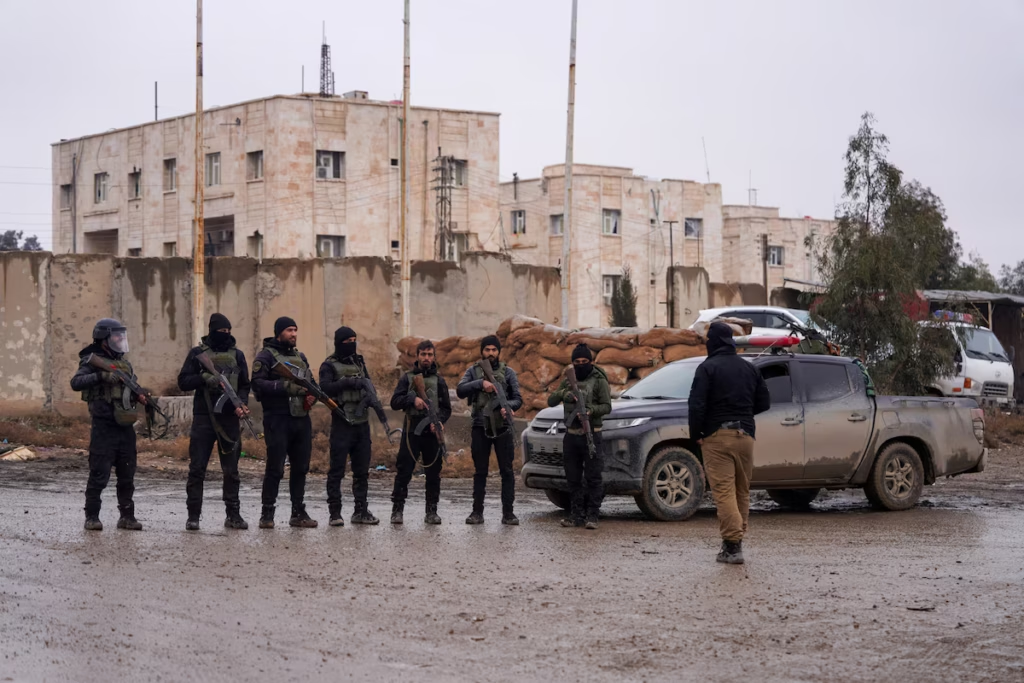
Transfers of Islamic State detainees from Syria to Iraq by the US military have significantly slowed this week, according to seven sources close to the matter, as Baghdad calls on Western countries to repatriate their nationals involved in the jihadist group.
Washington announced on January 21 that it had begun transferring detainees following the rapid collapse of the Syrian Democratic Forces (SDF), predominantly Kurdish, in northeastern Syria, a situation that raised serious concerns about the security of the prisons and camps they administered. The United States initially planned to transfer up to 7,000 fighters to Iraq within a few days.
More than a week later, only about 500 detainees have been moved, according to two Iraqi judicial officials, two security officials, and three diplomats. Among them are approximately 130 Iraqis and around 400 foreigners. An official from the Iraqi Ministry of Foreign Affairs confirmed that the number remains below 500.
According to Iraqi officials and a Western diplomat, Baghdad has asked the United States to slow the pace to allow time to negotiate with other countries for the repatriation of their nationals and to prepare additional prison infrastructure. Iraq, although having already tried and sentenced foreign fighters in recent years, is reluctant to host all 7,000 detainees envisaged, fearing saturation of its judicial and prison system.
Iraqi officials also believe that death sentences could provoke strong criticism from Western countries and human rights organizations. “It’s a trap,” said a senior Iraqi judicial source, emphasizing that many countries opposed to the death penalty nevertheless refuse to repatriate their own nationals.
The dilemma over the fate of thousands of foreign fighters captured after the fall of the self-proclaimed Islamic State “caliphate” in 2014 continues to haunt Western governments. Securing convictions in countries of origin is often legally complex, while repatriation remains politically sensitive and unpopular.
US Secretary of State Marco Rubio reaffirmed that the presence of foreign detainees in Iraq should be temporary and urged states to “assume their responsibilities” by repatriating their nationals to be tried according to their national laws.
Human rights experts, however, warn of risks associated with mass transfers to Iraq, citing the possibility of prolonged detention without fair trial, mistreatment, and executions following contested procedures. For several analysts, repatriation by countries of origin remains the only sustainable solution to resolve this legal and humanitarian deadlock.