Russia is facing an acute labor shortage, exacerbated by the war in Ukraine and the partial mobilization decreed in recent years. According to officials and experts cited by Reuters, the country would need at least 2.3 million additional workers to support its economy, particularly in industrial and manufacturing sectors related to the war effort.
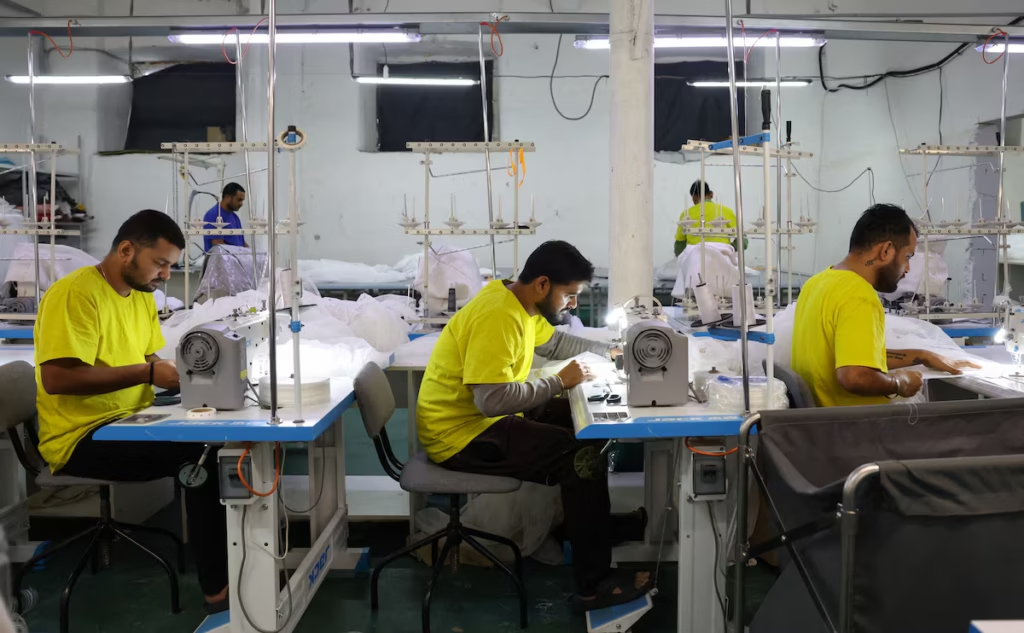
In this context, Moscow is intensifying its efforts to recruit workers from India. Thousands of Indian workers have reportedly been flown to Russia to fill positions in textile factories, construction sites, and other stressed sectors. In Balashikha, near Moscow, several Indian workers were photographed in a textile factory, illustrating this new migratory dynamic.
Traditionally, Russia relied heavily on labor from Central Asia, notably Uzbekistan, Tajikistan, and Kyrgyzstan. But flows from these countries have decreased, partly due to fears related to military mobilization and economic instability. This development has pushed Russian authorities and companies to diversify their recruitment sources.
Migrant labor has become an essential pillar of the functioning of the Russian economy, especially in a context of Western sanctions and pressure on human resources. Authorities seek to maintain industrial production and supply chains while compensating for the departure of mobilized workers or those who have left the country.
For Indian workers, these opportunities represent hope for higher incomes than in some rural regions of India. But their arrival also raises questions about working conditions, social protection, and integration in a country facing major economic and geopolitical challenges.