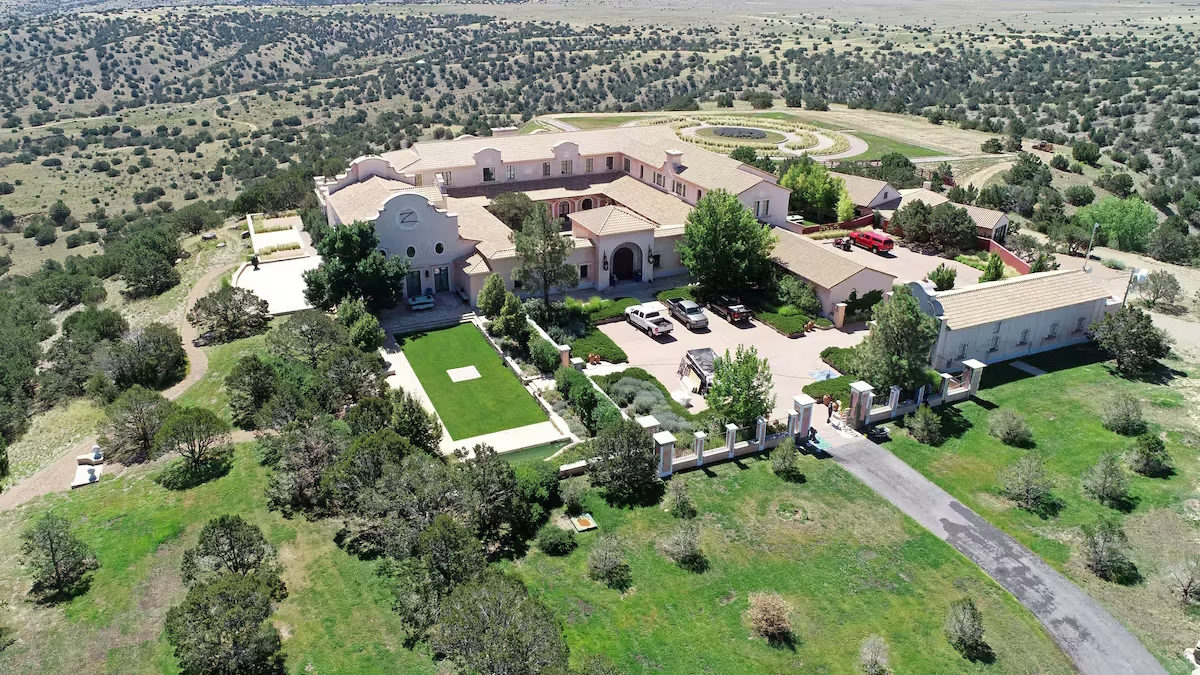
The investigation into Jeffrey Epstein has taken a new turn in the United States, as New Mexico authorities examine his isolated ranch for the first time, reigniting questions about his connections with influential political figures in the state.
Police recently searched the Zorro ranch, located near Stanley, seeking evidence of alleged abuse. Victims claim that the financier, convicted of sexual crimes, committed acts there in a secluded setting, described as a western-themed refuge.
Meanwhile, a “truth commission” established by the New Mexico Legislative Assembly is investigating Epstein’s relationships with local political officials. This initiative, a first in the United States, aims to clarify potential institutional failures that allowed his activities to continue.
The investigations focus notably on his ties with leaders of the state’s Democratic Party, including two former governors and a former attorney general. According to examined evidence, Epstein continued meeting these officials and funding their campaigns well after his 2008 conviction.
According to documents and testimonies, Epstein donated over $160,000 to several election campaigns between 2002 and 2014. In some cases, he was among the main external donors, raising questions about the influence he may have exerted.
The Zorro ranch reportedly played a central role in his sex trafficking network, which extended from the U.S. Virgin Islands to New York and Florida, according to court documents and archives recently released by the Department of Justice.
This new phase of the investigation could shed light on the scope of Epstein’s network and on possible complicity or negligence. It also revives the debate on institutional responsibility in one of the most high-profile scandals of recent decades.